

FINQ's AI-managed ETFs subtly surpass Wall Street in early 2026.
Artificial intelligence has long been anticipated to transform asset management, and by 2026, this expectation is starting to materialize in performance metrics. The AI-managed ETFs from FINQ are presenting early examples of the outcomes when portfolio construction is fully assigned to a systematic, continuously learning model instead of human judgment. Launched on February 5, 2026, on NYSE Arca, these funds have not only matched the S&P 500 but have significantly surpassed its performance.
While the results may appear straightforward, their implications run deeper: AI is no longer merely assisting in investment decisions but is now making them comprehensively.
Notable Performance Early On
As of May 31, 2026, FINQ’s two flagship ETFs have shown impressive results since inception:
- FINQ FIRST U.S. Large Cap AI-Managed U.S. Equity ETF (AIUP): 15.30% return compared to the S&P 500’s 10.07%
- FINQ Dollar Neutral U.S. Large Cap AI-Managed U.S. Equity ETF (AINT): 27.13% return versus the S&P 500’s 10.07%
Since its launch, AIUP has consistently outperformed the benchmark at each month-end. AINT experienced an early month of underperformance but has since reliably outperformed the index.
Market pricing has closely mirrored net asset value: AIUP closed at $28.00 (NAV $27.93), and AINT ended at $31.78 (NAV $31.74), indicating a strong correlation between trading and underlying assets.
The baseline for comparison is clear. The S&P 500 returned 10.07% during the same timeframe, which, while solid historically, falls significantly short of both AI-driven ETFs over a relatively brief period.
Understanding the AI Capital Allocation
Central to both ETFs is FINQ’s proprietary AI framework, designed to continuously rank, select, and weigh index components using real-time data signals. Instead of relying on periodic rebalancing or discretionary analyst decisions, the model analyzes extensive streams of financial and market data for every index constituent, dynamically adjusting exposure based on changing probabilities of outperformance.
The outcome is two distinct applications of the same intelligence system:
- AIUP: A long-only large-cap equity ETF that focuses exposure on top-ranked stocks while ensuring broad alignment with the index.
- AINT: A dollar-neutral long/short strategy that takes long positions in high-ranked stocks while shorting the lowest-ranked shares, effectively highlighting the AI’s relative ranking signal.
This duality allows FINQ to evaluate the intelligence system across two different market exposures: directional and market-neutral.
Significance of Early Outperformance
Short-term ETF performance often isn't sufficient to establish a structural advantage. Markets can be volatile, and early outcomes might simply be results of timing luck.
However, FINQ’s early data reveals a more intriguing trend: consistency. AIUP’s uninterrupted monthly outperformance indicates the model is not merely capitalizing on occasional sector shifts, but is continuously adapting to the changing leadership within the index. AINT’s recovery following its initial underperformance also suggests that the ranking engine might be enhancing its effectiveness in live market conditions.
In both scenarios, the essential assertion remains the same: the speed of adjustment is critical when markets are influenced by macro volatility, sector shifts, and concentrated index leadership.
A New Approach to Portfolio Construction
Traditional active management heavily depends on analyst interpretation layered over fundamental and quantitative signals. FINQ’s methodology eliminates that interpretive layer entirely.
Instead, allocation decisions are generated by an autonomous system that recalibrates positioning with new information as it becomes available, without waiting for human intervention. The system is crafted to react to market changes rather than analyze them post-factum.
This distinction is increasingly crucial in an environment where index performance is frequently dictated by a small group of swiftly changing leaders.
"Autonomous Investing Will Keep Transforming Asset Management"
“These results illustrate the robustness and reliability of our AI framework amidst dynamic market conditions,” stated Eldad Tamir, founder and CEO of FINQ. “I believe that autonomous investing will keep reshaping asset management, with the performance of AIUP and AINT showcasing AI’s growing capacity to adapt, identify opportunities, and respond to market shifts on a large scale.”
His statement highlights a broader shift in industry dialogue, moving from whether AI can participate in portfolio management to whether it can ultimately replace the decision-making layer entirely.
Looking Forward
Both ETFs are still in the early stages of their performance history, and FINQ acknowledges the standard caveat: past performance does not guarantee future results. Nonetheless, the early trend is significant as it is not based on a single concentrated bet or isolated market condition.
Rather, it represents an ongoing system attempting to outperform an index in real time, a feat traditionally challenging for human-managed approaches to maintain over longer durations. Whether this early advantage endures will depend on the model's performance across various macroeconomic conditions. For now, the message
Other articles
 Samsung's upcoming Ultra watch could be receiving a significant battery upgrade.
Samsung's upcoming Galaxy Watch Ultra might deliver the battery enhancement that many users have been anticipating. The Galaxy Watch Ultra 2 is projected to be released in the next few weeks, and a recent report indicates that it could feature a significantly bigger battery compared to the models from 2024 and 2025. As per SamMobile, the Galaxy Watch Ultra […]
Samsung's upcoming Ultra watch could be receiving a significant battery upgrade.
Samsung's upcoming Galaxy Watch Ultra might deliver the battery enhancement that many users have been anticipating. The Galaxy Watch Ultra 2 is projected to be released in the next few weeks, and a recent report indicates that it could feature a significantly bigger battery compared to the models from 2024 and 2025. As per SamMobile, the Galaxy Watch Ultra […]
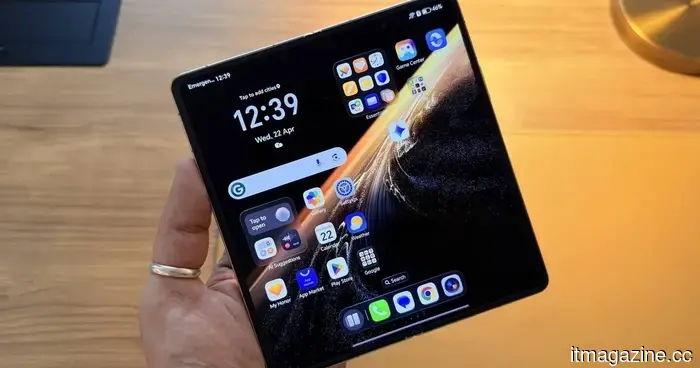 Honor Magic V6 review: I had my doubts about this stylish foldable, but it exceeded all expectations.
The Honor Magic V6 stands out as the most well-rounded large foldable device available. It is the first to achieve both IP68 and IP69 ratings, features the finest camera system among large foldables, and delivers battery life that outmatches many traditional smartphones. The only drawbacks are the crease and a complex performance setup, but these do not detract significantly from the overall recommendation.
Why Apple developed a third-party AI system for Siri and chose not to showcase it at WWDC.
The beta version of Apple's iOS 27 includes an Extensions framework for Claude, Gemini, and ChatGPT integrated within Siri, although this functionality was not highlighted during the WWDC 2026 keynote.
Honor Magic V6 review: I had my doubts about this stylish foldable, but it exceeded all expectations.
The Honor Magic V6 stands out as the most well-rounded large foldable device available. It is the first to achieve both IP68 and IP69 ratings, features the finest camera system among large foldables, and delivers battery life that outmatches many traditional smartphones. The only drawbacks are the crease and a complex performance setup, but these do not detract significantly from the overall recommendation.
Why Apple developed a third-party AI system for Siri and chose not to showcase it at WWDC.
The beta version of Apple's iOS 27 includes an Extensions framework for Claude, Gemini, and ChatGPT integrated within Siri, although this functionality was not highlighted during the WWDC 2026 keynote.
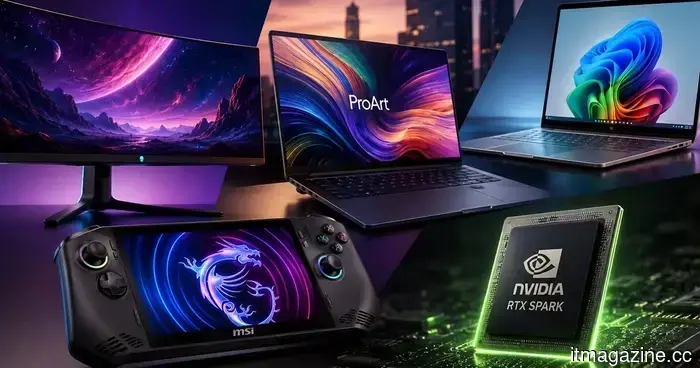 From handheld devices to monitors, these were the most significant transformations at Computex 2026.
After experiencing firsthand at Computex 2026, these four technology categories distinguished themselves by transforming monitors, handheld gaming, creator laptops, and ARM computing through significant innovations.
From handheld devices to monitors, these were the most significant transformations at Computex 2026.
After experiencing firsthand at Computex 2026, these four technology categories distinguished themselves by transforming monitors, handheld gaming, creator laptops, and ARM computing through significant innovations.
 De Beers invests in blockchain technology as the demand for lab-grown diamonds increases.
GIA has purchased a 30% stake in Tracr, the blockchain provenance platform from De Beers, amidst a decline in natural diamond prices and an increase in market share for lab-grown diamonds.
De Beers invests in blockchain technology as the demand for lab-grown diamonds increases.
GIA has purchased a 30% stake in Tracr, the blockchain provenance platform from De Beers, amidst a decline in natural diamond prices and an increase in market share for lab-grown diamonds.
 Canada's Carney likens the closure of Anthropic to the 2008 financial crisis, cautioning about the implications of AI.
PM Carney stated that the shutdown of Fable 5 and Mythos 5 illustrates the risks associated with over-dependence on a limited number of AI models, likening it to the systemic threats seen in 2008.
Canada's Carney likens the closure of Anthropic to the 2008 financial crisis, cautioning about the implications of AI.
PM Carney stated that the shutdown of Fable 5 and Mythos 5 illustrates the risks associated with over-dependence on a limited number of AI models, likening it to the systemic threats seen in 2008.
FINQ's AI-managed ETFs subtly surpass Wall Street in early 2026.
FINQ's two AI-managed ETFs, AIUP and AINT, have surpassed the S&P 500 in performance since their debut on NYSE Arca in February 2026, achieving returns of 15.30% and 27.13% respectively, compared to the benchmark's 10.07%.