

Purchasing a laptop could soon include an immediate carbon score, courtesy of AI.
When looking for a new laptop, many consumers evaluate specifications such as performance, battery life, display quality, and cost. However, a new AI-driven initiative may soon introduce an additional factor to consider: carbon footprint.
Researchers are creating AI agents that can calculate and present the environmental impact of consumer electronics in real-time, potentially providing buyers with instant sustainability information before making a purchase. This initiative seeks to bring the emissions transparency seen in platforms like flight booking services to the consumer tech sector.
Currently, users can effortlessly compare carbon emissions from various flights using tools like Google Flights. In contrast, similar data is often challenging to obtain when it comes to electronics, despite the considerable environmental ramifications linked to the production, shipping, and usage of devices such as laptops, smartphones, and tablets.
The proposed AI system would automatically collect information from various sources, including manufacturing details, supply chain data, energy usage estimates, and transportation information, to generate an environmental score readily understandable to consumers. The intent is to make sustainability as visible and accessible as product prices and specifications.
AI could simplify sustainability information
One of the main difficulties for environmentally conscious buyers is the intricacy of carbon accounting. Assessing the total emissions for a laptop may require examining material extraction, component production, assembly, transportation, packaging, and long-term energy usage.
Researchers think that AI agents are particularly well-suited to manage this complexity, as they can gather, process, and summarize vast amounts of environmental data much quicker than traditional reporting techniques. Rather than requiring consumers to navigate lengthy sustainability reports, AI could produce clear, straightforward comparisons between competing products.
The technology might also enhance transparency among manufacturers. Companies could be more inclined to share detailed environmental data if AI systems start factoring sustainability metrics into purchasing decisions.
This broader initiative arises amid increasing concerns about technology's environmental effects, including those of artificial intelligence itself. Data centers, AI training, hardware manufacturing, and cloud infrastructure all contribute to rising global energy consumption, making sustainability reporting an increasingly vital issue across the tech sector.
Future shopping may include environmental scores along with prices
The idea extends beyond just laptops. Researchers foresee AI agents eventually assisting consumers in assessing the environmental impact of various products, including smartphones, appliances, vehicles, and household items.
Such systems might also develop into personal shopping aides that automatically recommend products based not only on price and features but also on sustainability preferences. Although this technology is still in the works, it signifies a broader movement towards greater transparency in consumer decision-making. Just as nutrition labels have transformed food purchasing habits, carbon-impact information could eventually affect how consumers choose technology products.
For shoppers, this indicates that future laptop purchases may involve more than just comparing processors and battery life. An AI-generated carbon score could become a crucial element in determining which device they decide to buy.


Other articles
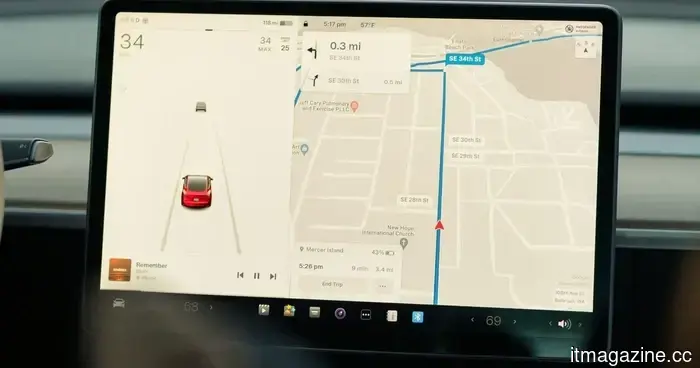 Chinese drivers have come up with a rather absurd method to trick Tesla Autopilot, and it includes using doll heads.
Reports indicate that Chinese Tesla owners are utilizing small doll heads, images, and flashing screens to deceive the Autopilot's driver-monitoring cameras into believing they are focused on the road.
Chinese drivers have come up with a rather absurd method to trick Tesla Autopilot, and it includes using doll heads.
Reports indicate that Chinese Tesla owners are utilizing small doll heads, images, and flashing screens to deceive the Autopilot's driver-monitoring cameras into believing they are focused on the road.
 Users of the Galaxy S25 are finally receiving some of the One UI 8.5 AI features that were previously missing.
With the June update, Galaxy S25 users are finally receiving Prioritize Notifications, Summarize Notifications, and File Summaries, after these features were omitted in the initial One UI 8.5 release.
Users of the Galaxy S25 are finally receiving some of the One UI 8.5 AI features that were previously missing.
With the June update, Galaxy S25 users are finally receiving Prioritize Notifications, Summarize Notifications, and File Summaries, after these features were omitted in the initial One UI 8.5 release.
.jpg) This Adam Driver film is among the three underrated movies on Prime Video that you should check out this weekend (June 12-14).
This weekend, Prime Video's hidden gems include a low-budget sci-fi thriller, an Oscar-nominated dark comedy from Sweden, and a subtle exploration of everyday life.
This Adam Driver film is among the three underrated movies on Prime Video that you should check out this weekend (June 12-14).
This weekend, Prime Video's hidden gems include a low-budget sci-fi thriller, an Oscar-nominated dark comedy from Sweden, and a subtle exploration of everyday life.
 Andrew Yang states that the upcoming wave of startups will focus not on developing AI, but on reducing the cost of living.
Yang contends that as AI reduces wages, the opportunity lies in startups that lower expenses for consumers. His Noble Mobile offers refunds. However, investors prefer AI solutions instead.
Andrew Yang states that the upcoming wave of startups will focus not on developing AI, but on reducing the cost of living.
Yang contends that as AI reduces wages, the opportunity lies in startups that lower expenses for consumers. His Noble Mobile offers refunds. However, investors prefer AI solutions instead.
Purchasing a laptop could soon include an immediate carbon score, courtesy of AI.
Scientists are creating AI agents that can determine a product's carbon footprint instantly, which could assist consumers in making more eco-friendly buying choices.