
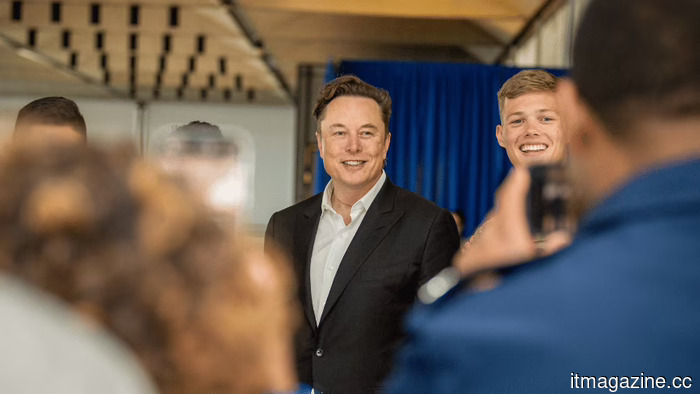
SpaceX secures $75 billion in the largest initial public offering to date, while Japan receives $2.2 billion.
TL;DR: SpaceX has raised $75 billion in history's largest IPO, pricing 555.6 million shares at $135 each, leading to a valuation of $1.77 trillion. Japanese retail investors accounted for $2.2 billion of the offering through Mizuho, Rakuten, and SBI.
SpaceX commenced trading on Nasdaq today under the ticker SPCX after raising $75 billion in the largest initial public offering ever. This surpasses the previous record held by Saudi Aramco, which raised $29.4 billion in 2019, making SpaceX's offering approximately 2.5 times larger.
A regulatory filing on Friday revealed that Japanese investors purchased $2.2 billion worth of shares, acquiring 16.3 million Class A shares, equating to about 3% of the total offering. Japan was among the few countries outside the U.S., including Australia, Canada, and parts of Europe, where retail investors had direct access to buy shares.
Details of the Japan allocation
Mizuho Financial Group's U.S. investment banking unit is one of the 23 underwriters for this deal. It managed the Japanese allocation via its local brokerage and two online platforms, Rakuten Securities and SBI Securities. SpaceX initially aimed to secure $2 billion from Japanese investors but increased the target to $2.5 billion due to high demand. The final figure of $2.2 billion represents the largest first-time share sale in Japan since JX Advanced Metals’ IPO last year.
The global overview
Investor demand reached about $250 billion, resulting in the offering being nearly four times oversubscribed. BlackRock reportedly made a $5 billion order. Goldman Sachs led the underwriting syndicate, which includes Morgan Stanley, Bank of America, Citigroup, and JPMorgan Chase among the lead managers.
At the $135 per share price, SpaceX's fully diluted valuation stands around $1.77 trillion, making it the seventh largest publicly listed company in the United States, surpassing Tesla’s market cap of approximately $1.6 trillion. If underwriters exercise the full over-allotment option, total proceeds could potentially reach $86.25 billion.
What SpaceX has become
SpaceX has evolved beyond just a rocket company. Following its acquisition of Elon Musk's AI venture xAI in a stock transaction in February 2026, it has transformed into a conglomerate encompassing reusable rockets, satellite internet, and AI infrastructure. Its S-1 filing reported $18 billion in consolidated revenue for 2025, along with a net loss of $4.9 billion. The Starlink division generated $11.4 billion in revenue and $4.4 billion in operating profit, accounting for 61% of total sales and all of the company’s profitability, while the xAI segment recorded an operating loss of $6.35 billion.
Musk's voting power
Musk owns approximately 42% of SpaceX’s equity but holds around 82% of its voting rights due to a dual-class share structure, where his Class B shares have disproportionate voting power. This grants him unilateral control to elect or remove a majority of the board.
The S-1 prospectus indicates there are 849.5 million Class A shares and 5.57 billion Class B shares, a structure that limits public shareholders' governance influence regardless of their financial stake.
Who will benefit
The IPO is anticipated to create around 4,000 millionaires among SpaceX's employees, including engineers, cooks, and administrative staff who received equity as part of their compensation. SpaceX reserved up to 5% of shares for employees and their associates.
Established in 2002, SpaceX operated as a private company for 20 years, funding its activities through government contracts, private equity, and Starlink revenue. The IPO now allows ordinary investors to purchase shares directly.
Concerns to note
SpaceX is currently unprofitable on a GAAP basis, with the xAI segment contributing to the $4.9 billion net loss. The ability of Starlink's profits to grow quickly enough to offset the costs incurred by xAI remains uncertain. Musk's 82% voting control implies that public shareholders have little influence over strategic decisions, including future acquisitions and capital allocation. The $1.77 trillion valuation suggests growth rates that no company has ever maintained at this scale, as noted by Fortune, and the integration of xAI adds execution risks that did not exist when SpaceX was solely a launch and satellite business.
Other articles
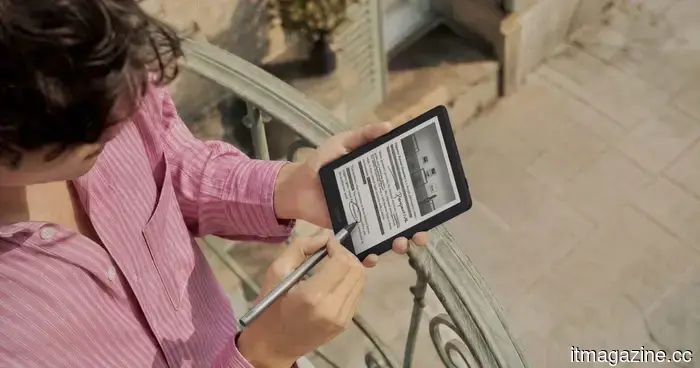 Boox's compact e-reader, designed for comfortable handling, will delight book lovers with its stylus and charming appearance.
The Boox Go 6 Gen II has been introduced as a compact 6-inch e-reader that supports stylus use, allowing users to annotate books, take brief notes, and conveniently carry it as a lightweight travel companion.
Boox's compact e-reader, designed for comfortable handling, will delight book lovers with its stylus and charming appearance.
The Boox Go 6 Gen II has been introduced as a compact 6-inch e-reader that supports stylus use, allowing users to annotate books, take brief notes, and conveniently carry it as a lightweight travel companion.
 Alibaba has made a $1.5 billion bid for the grocery chain Pupu, which doubles Sun Art's offer.
Alibaba is proposing $1.5 billion for the Chinese grocery platform Pupu, which is more than twice the competing offer from Sun Art Retail. This agreement would escalate its rivalry with Meituan in the instant delivery sector.
Alibaba has made a $1.5 billion bid for the grocery chain Pupu, which doubles Sun Art's offer.
Alibaba is proposing $1.5 billion for the Chinese grocery platform Pupu, which is more than twice the competing offer from Sun Art Retail. This agreement would escalate its rivalry with Meituan in the instant delivery sector.
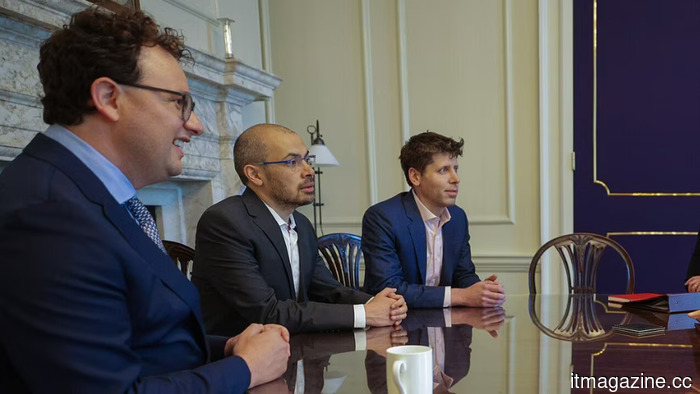 AI competitors Altman, Amodei, and Hassabis are heading to the G7 summit.
The CEOs of OpenAI, Anthropic, and Google DeepMind will be present at the G7 in France next week, as two of the three get ready for significant IPOs and encounter scrutiny regarding AI governance.
AI competitors Altman, Amodei, and Hassabis are heading to the G7 summit.
The CEOs of OpenAI, Anthropic, and Google DeepMind will be present at the G7 in France next week, as two of the three get ready for significant IPOs and encounter scrutiny regarding AI governance.
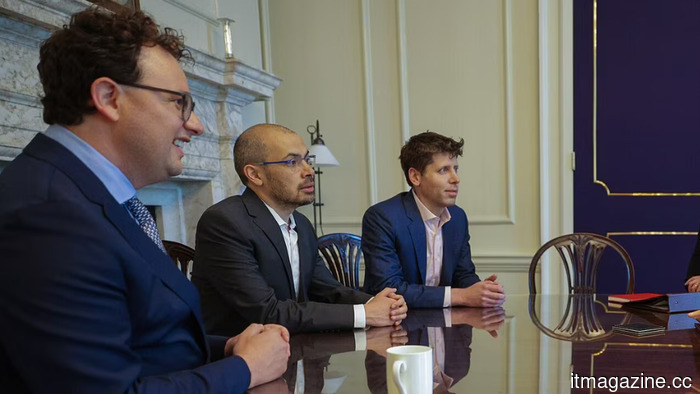 AI competitors Altman, Amodei, and Hassabis attend the G7 summit.
CEOs from OpenAI, Anthropic, and Google DeepMind are set to participate in the G7 in France next week, coinciding with two of them getting ready for significant IPOs and dealing with oversight regarding AI governance.
AI competitors Altman, Amodei, and Hassabis attend the G7 summit.
CEOs from OpenAI, Anthropic, and Google DeepMind are set to participate in the G7 in France next week, coinciding with two of them getting ready for significant IPOs and dealing with oversight regarding AI governance.
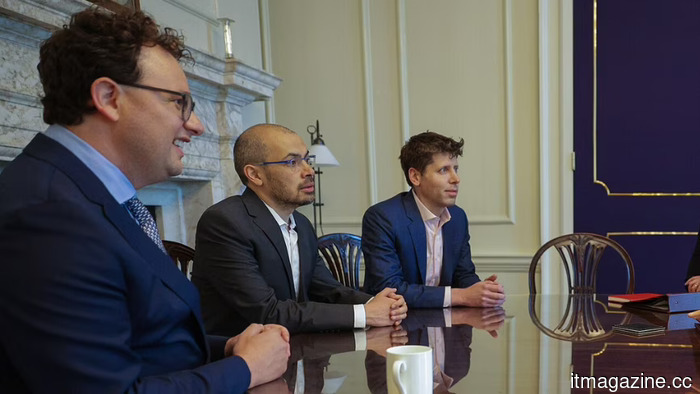 Leaders in AI, including Altman, Amodei, and Hassabis, are set to attend the G7 summit.
CEOs of OpenAI, Anthropic, and Google DeepMind are set to participate in the G7 meeting in France next week, with two of them gearing up for significant IPOs while dealing with scrutiny over AI governance.
Leaders in AI, including Altman, Amodei, and Hassabis, are set to attend the G7 summit.
CEOs of OpenAI, Anthropic, and Google DeepMind are set to participate in the G7 meeting in France next week, with two of them gearing up for significant IPOs while dealing with scrutiny over AI governance.
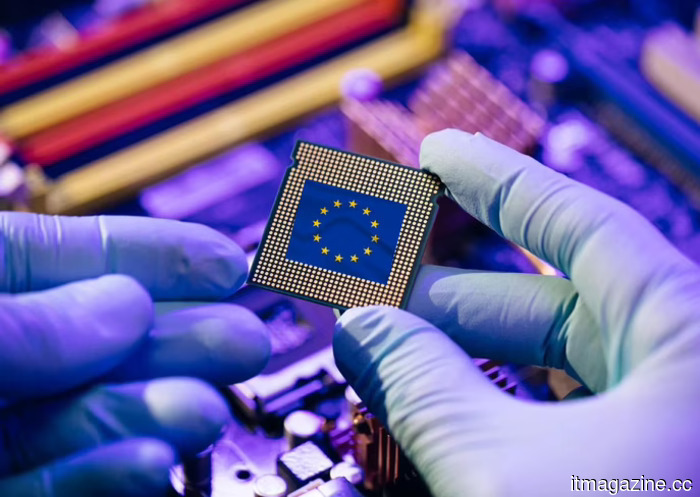 Infineon inaugurates a €5 billion semiconductor factory in Dresden, marking the first success of the EU Chips Act.
Infineon's €5 billion Smart Power Fab will officially open on July 2 in Dresden, where it will manufacture power chips for AI data centers. This marks the first significant achievement of the EU Chips Act following the cancellation of Intel's project in Magdeburg.
Infineon inaugurates a €5 billion semiconductor factory in Dresden, marking the first success of the EU Chips Act.
Infineon's €5 billion Smart Power Fab will officially open on July 2 in Dresden, where it will manufacture power chips for AI data centers. This marks the first significant achievement of the EU Chips Act following the cancellation of Intel's project in Magdeburg.
SpaceX secures $75 billion in the largest initial public offering to date, while Japan receives $2.2 billion.
SpaceX starts trading on Nasdaq at a share price of $135 following a $75 billion IPO, which is 2.5 times greater than the record set by Saudi Aramco. Japanese retail investors purchased $2.2 billion worth of shares.