
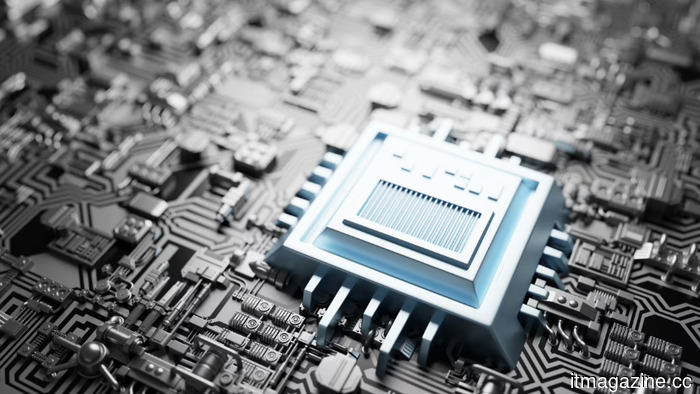
Nvidia's Vera CPU is its alternative route back into China.
Nvidia has begun promoting its Vera CPU to clients in China. Orders can be placed immediately, with deliveries potentially starting as early as August, according to a Reuters report on Friday, which referenced three individuals familiar with the discussions.
This move appears to be a workaround disguised as a product launch. Nvidia's business in China has been significantly impacted by US export regulations. In October, Jensen Huang stated that the company’s market share in that region had declined to nearly zero. The introduction of the Vera CPU could serve as a pathway for re-entry.
The reason the Nvidia Vera CPU might evade restrictions stems from its chip classification. The US export controls predominantly focus on high-end GPUs rather than general-purpose CPUs, making the sale of a processor less complicated.
However, it is not entirely straightforward. It remains uncertain whether Nvidia will require an export license for the advanced CPU like Vera. The differences with GPUs are notable: the US has permitted around ten Chinese companies to acquire the H200, but none have been delivered due to Beijing's reluctance to approve imports in favor of domestic chips.
Huang has suggested some possibilities, responding last month in Taipei to whether Nvidia’s CPU forecasts included China by saying, “I would think so.”
Vera represents Nvidia’s inaugural standalone data-center CPU, which is an Arm-based chip designed for AI applications and is currently in full production. Nvidia claims it operates up to 1.8 times faster than competing processors, with Anthropic and OpenAI being among its initial users.
The price point is significant, as a single Vera chip costs "well north" of $20,000 before discounts, and a rack featuring 256 chips is priced at around $10 million, as per SemiAnalysis. Nvidia anticipates generating $20 billion in revenue from Vera by the end of January, considering the Chinese market too large to disregard.
The timing is also favorable. The focus of the AI competition is shifting from training models to executing them, and this inference work relies more heavily on CPUs. Demand is so high that Intel has informed Chinese buyers of six-month waiting periods.
Vera also poses a challenge to Intel and AMD, as it directly competes in the CPU market traditionally dominated by x86 chips. Selling in China, where there is a shortage of server CPUs, expands the competition. The leader in GPUs is now targeting the processor market as well.
Although there is interest, actual adoption is uncertain. A significant Chinese cloud provider is looking to order over 300 servers, each equipped with two Vera chips, for initial testing. Currently, Chinese companies intend to operate Vera solely in their overseas data centers.
Large-scale implementations are not guaranteed and will depend on software compatibility, as well as the costs associated with transitioning from domestic chips. The Chinese government is also strongly advocating for self-reliance. Interestingly, Alibaba and ByteDance are mentioned as collaborators on Vera, even as China develops its own alternatives.
Thus, this approach serves as a side entry rather than a direct access point. Nvidia has established a legal pathway to resume selling in China, while its top GPUs remain restricted, and a gray market has emerged, with B300 servers priced around $1 million within China. The actual commitment from Chinese buyers, who might prefer to manufacture their own solutions, will ultimately determine the success of this initiative before the August deadline.
Other articles
 UK technology leader urges pension funds to support AI startups.
Liz Kendall promises legal changes to direct institutional capital towards British tech companies, yet American firms continue to hold a dominant position in AI contracts from the UK government.
UK technology leader urges pension funds to support AI startups.
Liz Kendall promises legal changes to direct institutional capital towards British tech companies, yet American firms continue to hold a dominant position in AI contracts from the UK government.
 UK under-16 social media prohibition: what Starmer is preparing to implement
Keir Starmer is expected to declare a ban on social media for those under 16 in the UK within the coming days. The child-safety organizations that advocated for this measure warn that an outright ban might have unintended consequences.
UK under-16 social media prohibition: what Starmer is preparing to implement
Keir Starmer is expected to declare a ban on social media for those under 16 in the UK within the coming days. The child-safety organizations that advocated for this measure warn that an outright ban might have unintended consequences.
 The current Series E values the neobank at a level lower than its peak in 2021.
The ongoing Series E values the US neobank at $1.5 billion, which is a third less than its peak in 2021, despite a 70% increase in revenue for the third consecutive year. The aim is to go public.
The current Series E values the neobank at a level lower than its peak in 2021.
The ongoing Series E values the US neobank at $1.5 billion, which is a third less than its peak in 2021, despite a 70% increase in revenue for the third consecutive year. The aim is to go public.
 Discussions about a merger between SpaceX and Tesla become more serious following the IPO.
On its inaugural public day, SpaceX suggested the possibility of merging with Tesla, and a former director indicated that it was plausible. Here's why the discussions about a SpaceX-Tesla merger are significant.
Discussions about a merger between SpaceX and Tesla become more serious following the IPO.
On its inaugural public day, SpaceX suggested the possibility of merging with Tesla, and a former director indicated that it was plausible. Here's why the discussions about a SpaceX-Tesla merger are significant.
 Claude Fable 5 restrictions: targeted at China, affected AI researchers.
Anthropic created Claude Fable 5 restrictions to prevent access for China's AI laboratories. The strongest opposition originated from Western researchers, and the company has responded by reconsidering its stance.
Claude Fable 5 restrictions: targeted at China, affected AI researchers.
Anthropic created Claude Fable 5 restrictions to prevent access for China's AI laboratories. The strongest opposition originated from Western researchers, and the company has responded by reconsidering its stance.
 Mistral is engaged in discussions regarding funding at a valuation of €20 billion.
According to Bloomberg, Mistral is currently in discussions to secure approximately €3 billion in funding at a valuation of around €20 billion, which is nearly double the price the European AI leader had in September.
Mistral is engaged in discussions regarding funding at a valuation of €20 billion.
According to Bloomberg, Mistral is currently in discussions to secure approximately €3 billion in funding at a valuation of around €20 billion, which is nearly double the price the European AI leader had in September.
Nvidia's Vera CPU is its alternative route back into China.
Shut out of the Chinese market for GPUs, Nvidia is now promoting its Vera CPU. Orders are currently being accepted, with deliveries expected to start in August, and CPUs are subject to less restrictive export regulations.