

UK technology leader urges pension funds to support AI startups.
Britain’s Technology Secretary, Liz Kendall, has committed to enhancing efforts to direct institutional investment into UK tech firms. During an appearance on Bloomberg TV at London Tech Week, Kendall mentioned that the government would pursue legal reforms regarding the management of pension funds. “You can expect to see more movement on that quite soon,” she stated. The interview took place prior to Defence Secretary John Healey's unexpected resignation due to a funding dispute with the Treasury.
**The Pension Initiative**
This initiative builds on a voluntary agreement made last year, where 17 major UK pension providers committed to investing at least 10% of their defined-contribution default funds into private markets by 2030, with a minimum of 5% designated for domestic assets. This pledge is anticipated to generate about £25 billion for UK businesses. Chancellor Rachel Reeves hasn’t dismissed the possibility of making this allocation mandatory. In April, she obtained parliamentary approval to compel pension funds to allocate part of their assets domestically, after the House of Lords dropped its opposition following government concessions.
**A "Muscular" Investment in British AI**
Kendall described this strategy as part of a wider shift toward a “more active, more muscular government that makes strategic investments in areas where Britain excels.” She emphasized the need for the country to become an “indispensable partner” in the global tech framework to exert greater influence over AI.
This rhetoric was supported by spending pledges unveiled earlier in the week. Kendall revealed a £1.1 billion AI hardware initiative, which includes £400 million for chip procurement and £150 million allocated for purchasing next-generation inference chips from British companies this summer.
**The American Issue**
Despite these national ambitions, American companies have largely reaped the rewards of the UK’s AI adoption so far. Anthropic was awarded a contract to develop an AI-driven assistant for GOV.UK, while Palantir Technologies secured a £240.6 million analytics deal with the Ministry of Defence in January.
The reliance on foreign firms has sparked political pushback, with British lawmakers recently advocating to terminate Palantir’s £330 million NHS contract, citing concerns over data sovereignty. The government is currently reviewing whether to exit the deal when a break clause can be invoked in 2027.
**The Context of London Tech Week**
These commitments were announced during London Tech Week, during which AMD pledged up to £2 billion over five years and cloud provider Nebius promised around £1.7 billion for UK AI infrastructure. Critics, however, have pointed out that much of this infrastructure still depends on American technology.
This challenge lies at the core of Britain’s AI strategy. Initiatives like the Cosine-led Lumen Sovereign project, aimed at creating the first domestically-developed frontier AI model, are still in the preliminary stages. Meanwhile, Palantir is facing increasing opposition throughout Europe, with Germany's military recently excluding it from a defense cloud procurement.
**Caveats**
Kendall’s assertion that the government will pursue “legal reforms” related to pension fund regulations lacks specificity, with no timeline or legislative details provided. The 5% domestic investment commitment from pension providers is voluntary and its compliance is not currently assessable. Although Reeves now possesses the authority to mandate domestic allocations, she has consistently indicated she does not intend to exercise this power. The £1.1 billion hardware initiative is spread across several programs and years, diluting its apparent impact. Furthermore, while the government promotes its chip procurement as a means of supporting British companies, the nation’s leading chipmakers, Graphcore and Alphawave IP, have already been acquired by foreign entities.
Other articles
 Claude Fable 5 restrictions: targeted at China, affected AI researchers.
Anthropic created Claude Fable 5 restrictions to prevent access for China's AI laboratories. The strongest opposition originated from Western researchers, and the company has responded by reconsidering its stance.
Claude Fable 5 restrictions: targeted at China, affected AI researchers.
Anthropic created Claude Fable 5 restrictions to prevent access for China's AI laboratories. The strongest opposition originated from Western researchers, and the company has responded by reconsidering its stance.
 The latest Tesla FSD update includes a new feature that showcases a preview of your vehicle's parking strategy.
The update to Tesla's FSD 14.3.4 introduces a new on-screen message that displays as the vehicle nears its destination, outlining how it intends to park.
The latest Tesla FSD update includes a new feature that showcases a preview of your vehicle's parking strategy.
The update to Tesla's FSD 14.3.4 introduces a new on-screen message that displays as the vehicle nears its destination, outlining how it intends to park.
 Comments on Reddit are now receiving video responses, and this feature may be more beneficial than it appears.
Reddit's implementation of video comments might enhance the usefulness of replies in communities focused on DIY, cooking, makeup, fitness, and tutorials, as demonstrating a step visually can often be clearer than describing it in words.
Comments on Reddit are now receiving video responses, and this feature may be more beneficial than it appears.
Reddit's implementation of video comments might enhance the usefulness of replies in communities focused on DIY, cooking, makeup, fitness, and tutorials, as demonstrating a step visually can often be clearer than describing it in words.
 Boox's compact e-reader, designed for comfortable handling, will delight book lovers with its stylus and charming appearance.
The Boox Go 6 Gen II has been introduced as a compact 6-inch e-reader that supports stylus use, allowing users to annotate books, take brief notes, and conveniently carry it as a lightweight travel companion.
Boox's compact e-reader, designed for comfortable handling, will delight book lovers with its stylus and charming appearance.
The Boox Go 6 Gen II has been introduced as a compact 6-inch e-reader that supports stylus use, allowing users to annotate books, take brief notes, and conveniently carry it as a lightweight travel companion.
 UK under-16 social media prohibition: what Starmer is set to implement.
Keir Starmer is expected to reveal a ban on social media for individuals under 16 in the UK within a few days. The child-safety organizations that advocated for this measure warn that an all-encompassing ban might have negative consequences.
UK under-16 social media prohibition: what Starmer is set to implement.
Keir Starmer is expected to reveal a ban on social media for individuals under 16 in the UK within a few days. The child-safety organizations that advocated for this measure warn that an all-encompassing ban might have negative consequences.
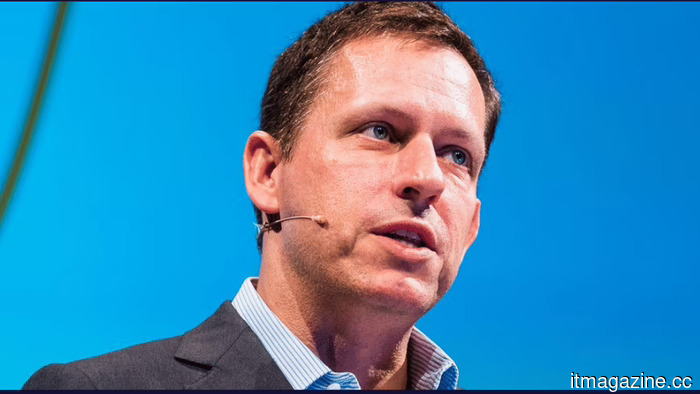 Founders Fund's investment in SpaceX is now valued at more than $50 billion.
Founders Fund has invested approximately $600 million in SpaceX over the course of nearly two decades. At the valuation associated with the IPO, the value of Founders Fund's stake in SpaceX is over $50 billion, theoretically.
Founders Fund's investment in SpaceX is now valued at more than $50 billion.
Founders Fund has invested approximately $600 million in SpaceX over the course of nearly two decades. At the valuation associated with the IPO, the value of Founders Fund's stake in SpaceX is over $50 billion, theoretically.
UK technology leader urges pension funds to support AI startups.
Liz Kendall promises legal changes to direct institutional capital towards British tech companies, yet American firms continue to hold a dominant position in AI contracts from the UK government.