

India's Avataar AI has introduced a video model priced at $0.005 per second, which is 27 times less expensive than competitors.
Avataar AI has introduced Varya, an open-weight video model priced at $0.005 per second, which is 27 times more affordable than its competitors. Developed under India’s AI Mission, Varya accurately reflects Indian culture. Based in Bangalore, Avataar AI claims that Varya is one of the first domestically created video AI models in India, offering video generation at around $0.005 per second, equivalent to 0.48 rupees. According to founder Sravanth Aluru, a former investment banker at Deutsche Bank and alumnus of Microsoft and IIT Mumbai, this price point is significantly cheaper than similar open-source video models.
The cost efficiency stems from a process known as distillation. Avataar utilized Alibaba’s Wan 2.2, a publicly accessible video generation model, and streamlined it into a more efficient version that completes its functions in four steps rather than 50. This optimization enables Varya to generate videos ten times faster at a much lower expense. Competing models like Veo, Kling, Luma, and Runway usually charge at least $0.10 per second.
Varya does not seek to match the quality of advanced models from the US and China. Models such as ByteDance’s Seedance, Kuaishou’s Kling, and Alibaba’s Wan are advancing motion realism and audio generation well beyond what Varya provides. Instead, Varya focuses on scalability and accessibility in a country with a population of 1.4 billion, where cost-effectiveness is prioritized over peak performance.
What sets Varya apart is its cultural specificity. Unlike Western-trained models that require adaptation, Avataar used carefully selected data to train Varya to accurately depict Indian clothing, cuisine, architecture, festivals, and daily life. Global models largely based on Western data often produce culturally inaccurate results, limiting their effectiveness in Indian sectors such as business, education, and public services.
Varya will be made available on India’s AIKosh portal, a centralized government repository for AI models and datasets. Avataar is among the 12 startups chosen for the IndiaAI Mission, a $1.2 billion initiative offering selected companies subsidized GPU computing in exchange for publicly sharing their models.
Avataar has secured $55 million in funding from Peak XV Partners and Tiger Global. Initially, the company focused on developing video tools for e-commerce, and Varya marks its first foundational model, showcasing a trend among Indian startups to create sovereign AI rather than relying on Western infrastructure. Earlier this year, other companies like Sarvam and BharatGen also launched their foundational models under the same initiative.
India’s approach to AI differs from that of Europe and China. Its goal is not to create the largest model but to develop models that cater specifically to its population at prices that the market can support. With Varya priced at $0.005 per second, it aims to test whether an affordable and culturally relevant video model can achieve faster adoption than a more advanced yet costly Western counterpart. In a landscape where AI startups are increasingly focused on local requirements at scale, the answer may indeed be affirmative.
Other articles
 Five cloud security errors that originate at the architectural level.
Nodir Safarov, a Cloud Architect at SOTI Inc., highlights the five architectural shortcomings that contribute to the prevalent security vulnerabilities in enterprise cloud systems, ranging from the issues of post-deployment patching to configuration drift, along with the design principles that can avert these problems.
Five cloud security errors that originate at the architectural level.
Nodir Safarov, a Cloud Architect at SOTI Inc., highlights the five architectural shortcomings that contribute to the prevalent security vulnerabilities in enterprise cloud systems, ranging from the issues of post-deployment patching to configuration drift, along with the design principles that can avert these problems.
 Spotify is introducing editor-hosted videos to New Music Friday, allowing you to connect with the individuals behind the playlist.
Spotify's New Music Friday will now include short-form videos from its editorial team highlighting selections and artist narratives. This feature is being launched for both free and premium users in the US.
Spotify is introducing editor-hosted videos to New Music Friday, allowing you to connect with the individuals behind the playlist.
Spotify's New Music Friday will now include short-form videos from its editorial team highlighting selections and artist narratives. This feature is being launched for both free and premium users in the US.
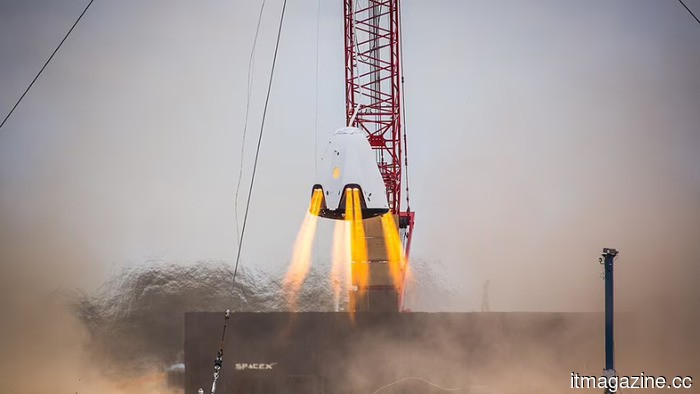 Eighty residents of Texas are filing a lawsuit against SpaceX, claiming that the rocket launches are actually damaging their homes.
A class-action lawsuit claims that the launches of SpaceX's Starship resulted in foundation cracks, broken pipes, and distorted floors in residences near Starbase. Housing prices have increased twofold.
Eighty residents of Texas are filing a lawsuit against SpaceX, claiming that the rocket launches are actually damaging their homes.
A class-action lawsuit claims that the launches of SpaceX's Starship resulted in foundation cracks, broken pipes, and distorted floors in residences near Starbase. Housing prices have increased twofold.
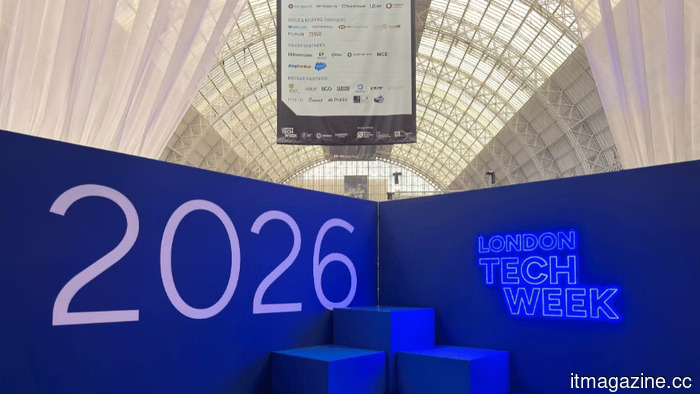 London Tech Week 2026: the AI billions and a royal milestone
London Tech Week 2026 summary: a £1.1 billion hardware initiative for the UK, AMD's £2 billion investment, Nebius's £1.7 billion project, expansion of US giants, and Prince William's inaugural Homewards panel.
London Tech Week 2026: the AI billions and a royal milestone
London Tech Week 2026 summary: a £1.1 billion hardware initiative for the UK, AMD's £2 billion investment, Nebius's £1.7 billion project, expansion of US giants, and Prince William's inaugural Homewards panel.
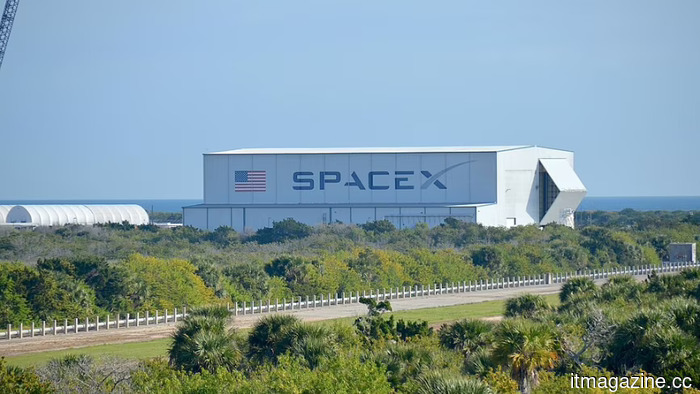 SpaceX leased Colossus 1 to Anthropic because it was unable to get the data center operational for Grok.
Bloomberg: SpaceX experienced latency problems and chip incompatibilities while connecting Colossus 1 to its other data centers. It leased the facility to Anthropic for $1.25 billion per month.
SpaceX leased Colossus 1 to Anthropic because it was unable to get the data center operational for Grok.
Bloomberg: SpaceX experienced latency problems and chip incompatibilities while connecting Colossus 1 to its other data centers. It leased the facility to Anthropic for $1.25 billion per month.
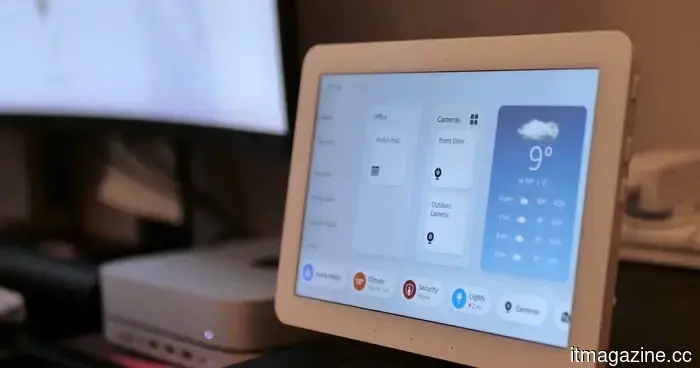 Amazon's Echo Hub has just transformed into the control center that your smart home has been missing.
Amazon is significantly updating its Echo Hub, enhancing the smart home control panel to be much more functional than in the past. The most notable improvements may not be what you anticipate.
Amazon's Echo Hub has just transformed into the control center that your smart home has been missing.
Amazon is significantly updating its Echo Hub, enhancing the smart home control panel to be much more functional than in the past. The most notable improvements may not be what you anticipate.
India's Avataar AI has introduced a video model priced at $0.005 per second, which is 27 times less expensive than competitors.
Avataar AI introduced Varya, an open-weight video model for India priced at $0.005 per second. It showcases Indian clothing, cuisine, and festivals that are often overlooked by Western models.