
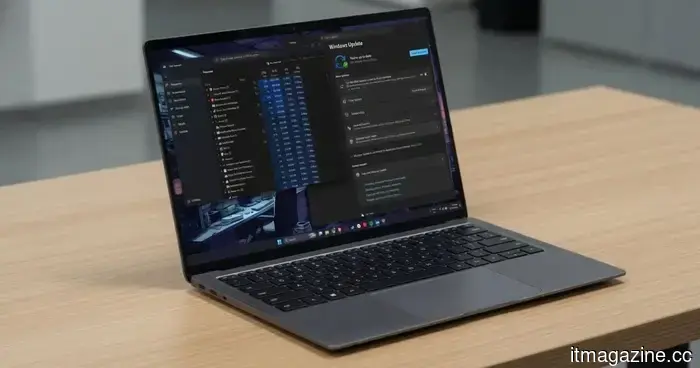
Your Windows 11 PC can now natively execute AI tasks, even if it doesn't have the Copilot+ designation.
For almost a year, Microsoft has been indicating that the future of AI on Windows revolves around Copilot+ PCs. To access the most advanced local AI features offered by Microsoft, users needed a computer equipped with a dedicated Neural Processing Unit (NPU). That was the understanding. However, it seems Microsoft is changing the game.
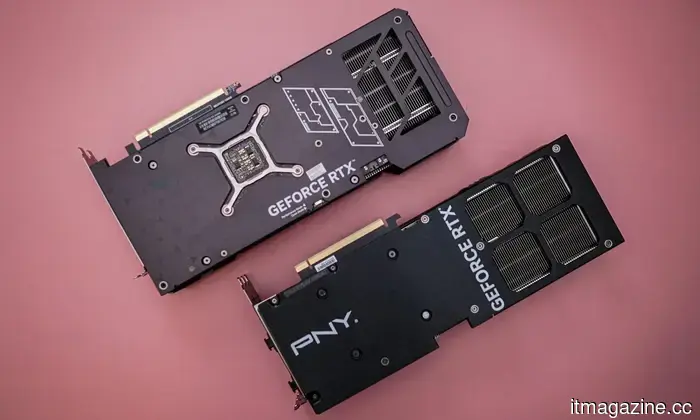
Newly released information reveals that the Language Model APIs in Windows 11 can now function on non-Copilot+ PCs, as long as they have an Nvidia GeForce RTX 30-series GPU (or a newer version) with a minimum of 6GB of VRAM. On the surface, this appears to be an update geared towards developers. Yet, it may signify one of the most important changes in Microsoft’s AI strategy for PCs since the launch of Copilot+ last year. More significantly, it prompts a long-standing question since the rise of AI PCs: Did we actually need NPUs at all?
The era of CoPilot+ exclusivity has always felt somewhat uncomfortable
When Copilot+ PCs were introduced in June 2024, Microsoft marketed them as the gateway to local AI experiences on Windows. To qualify as such, a device needed 16GB of RAM, SSD storage, and an NPU capable of achieving at least 40 TOPS of AI performance. The messaging implied that these specialized chips were vital for running AI tasks locally. While this was true concerning efficiency, it didn't convey the entire picture.
Anyone knowledgeable about AI hardware understood that GPUs could effectively handle these tasks. In fact, modern graphics cards often outperform NPUs when it comes to running language models and generative AI applications. This is the reason many enthusiasts experimenting with local AI tools, ranging from small language models to image generators, have relied on GPUs for years. Yet, native AI experiences in Windows remained confined to devices with the Copilot+ label.
This resulted in a peculiar situation. A gaming PC with an RTX 4070 had ample power to run AI models locally, but lacked access to Microsoft's native AI framework due to the absence of an NPU. Conversely, a lighter laptop with a qualifying NPU could use it. The recent change doesn’t eliminate that gap completely, but it certainly narrows it significantly.
Microsoft seems to be preparing for AI without NPUs
With the newly available Language Model APIs, developers can now utilize local AI capabilities on compatible Nvidia hardware. Microsoft announced that these APIs can operate on non-Copilot+ systems featuring RTX 30-series GPUs or newer, as long as they have a minimum of 6GB of VRAM. These APIs rely on Phi Silica, Microsoft’s compact on-device language model. Applications can employ it for activities like summarizing text, rewriting content, converting text into tables, formatting information, and generating responses from inputs.
Consider it a lightweight, local iteration of the AI features typically associated with services like ChatGPT. The key difference is that everything is processed directly on the device instead of being sent to the cloud. This is essential for two reasons. First, privacy — if AI processing occurs on your PC, sensitive files, notes, emails, and drafts do not need to leave the machine. Second, performance — local AI features can function instantly without reliance on cloud servers, subscriptions, or an internet connection.
An intriguing aspect is Microsoft’s approach to distributing these capabilities. If an application requires Phi Silica, Windows can retrieve the necessary model via Windows Update and run it locally on compatible hardware. Thus, the operating system is starting to regard AI models as another component of Windows, rather than as a premium feature limited to a certain category of PCs. This represents a noteworthy philosophical change.
Is this the beginning of the end for CoPilot+ exclusivity?
However, don’t get too carried away; this does not imply that every AI feature will suddenly be accessible on older Windows machines. Features such as Recall, Click to Do, and certain AI-driven creative tools still seem to be tied to systems equipped with NPUs. Currently, the expanded support is limited to Language Model APIs, which mainly focus on text-based AI experiences.
Yet, history indicates that these barriers seldom remain in place indefinitely. Once Microsoft proves that local AI can operate effectively on common RTX hardware, it becomes increasingly challenging to defend why specific AI experiences should remain exclusive to NPUs. Developers are unlikely to be concerned whether the AI workload is running on an NPU or a GPU, as long as the experience is satisfactory. Consumers will certainly not care either. This is why this update feels more impactful than the change in documentation might imply.
For now, it’s just one API, but it also marks Microsoft’s first significant move toward recognizing something many PC enthusiasts have pointed out all along: capable GPUs were never the obstacle. And if local AI can operate seamlessly on millions of existing RTX-powered PCs, the difference between a “Copilot+ PC” and an ordinary Windows PC may begin to matter much less than Microsoft originally intended.

Other articles
 The June update for Windows 11 enhances the responsiveness of your Start menu and Search, making them feel significantly quicker.
The June update for Windows 11 introduces the Low Latency Profile for all users of 24H2 and 25H2, a CPU enhancement method that significantly improves the speed of Start, Search, and Action Center.
The June update for Windows 11 enhances the responsiveness of your Start menu and Search, making them feel significantly quicker.
The June update for Windows 11 introduces the Low Latency Profile for all users of 24H2 and 25H2, a CPU enhancement method that significantly improves the speed of Start, Search, and Action Center.
 Jabra Evolve3 75 review: After wearing this work headset for several weeks, I found it to be quite impressive.
The Jabra Evolve3 75 is a high-end product, and despite its premium price, it excels as an excellent microphone, features a stylish design, boasts impressive battery life, supports wireless charging, and delivers sufficient quality for music listening.
Jabra Evolve3 75 review: After wearing this work headset for several weeks, I found it to be quite impressive.
The Jabra Evolve3 75 is a high-end product, and despite its premium price, it excels as an excellent microphone, features a stylish design, boasts impressive battery life, supports wireless charging, and delivers sufficient quality for music listening.
 Bluesky introduces group chats and shifts focus to communities as growth levels off at 44.8 million users.
Bluesky has introduced group chats for as many as 50 individuals and is developing communities similar to those found on Reddit. This shift occurs amid a slowdown in user growth and as X discontinues its own community features.
Bluesky introduces group chats and shifts focus to communities as growth levels off at 44.8 million users.
Bluesky has introduced group chats for as many as 50 individuals and is developing communities similar to those found on Reddit. This shift occurs amid a slowdown in user growth and as X discontinues its own community features.
 Bezos's Prometheus secures $12 billion at a $41 billion valuation to develop AI for engineering physical products.
Jeff Bezos's AI company Prometheus has secured $12 billion in funding from JPMorgan, Goldman Sachs, and BlackRock, achieving a valuation of $41 billion. The startup is developing an "artificial general engineer."
Bezos's Prometheus secures $12 billion at a $41 billion valuation to develop AI for engineering physical products.
Jeff Bezos's AI company Prometheus has secured $12 billion in funding from JPMorgan, Goldman Sachs, and BlackRock, achieving a valuation of $41 billion. The startup is developing an "artificial general engineer."
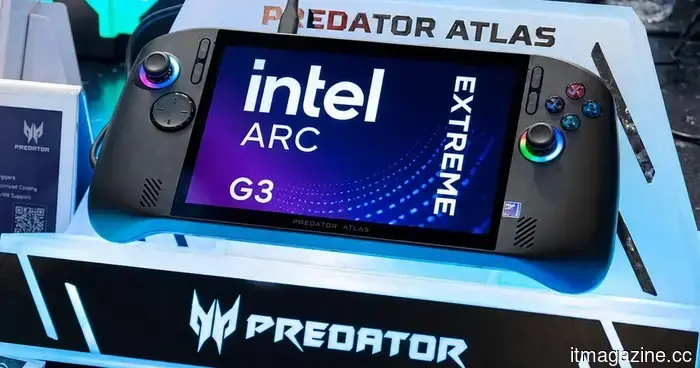 Intel’s Arc G3 Extreme might provide the unexpected turn that handheld gaming has been looking for.
I had the opportunity to try out MSI's Claw and Acer's Predator Atlas, both powered by Intel's Arc G3 Extreme, at Computex, and the outlook for handheld gaming appears to be very encouraging.
Intel’s Arc G3 Extreme might provide the unexpected turn that handheld gaming has been looking for.
I had the opportunity to try out MSI's Claw and Acer's Predator Atlas, both powered by Intel's Arc G3 Extreme, at Computex, and the outlook for handheld gaming appears to be very encouraging.
 Meta introduces a desktop version and an AI assistant to its Edits, a competitor to CapCut.
Meta's Edits app will introduce an AI assistant that utilizes Instagram data to propose video ideas, along with a desktop version. Over fifty percent of Reels viewers engage with Edits content on a daily basis.
Meta introduces a desktop version and an AI assistant to its Edits, a competitor to CapCut.
Meta's Edits app will introduce an AI assistant that utilizes Instagram data to propose video ideas, along with a desktop version. Over fifty percent of Reels viewers engage with Edits content on a daily basis.
Your Windows 11 PC can now natively execute AI tasks, even if it doesn't have the Copilot+ designation.
Microsoft's recent AI move may render millions of current Windows PCs much more significant than previously anticipated.