

US AI leaders are converging on London. Here's the reason.
US AI companies are rapidly establishing a presence in London like never before, transforming the British capital into a key competitor to San Francisco, while simultaneously complicating things for local startups that find themselves alongside these tech giants.
Recently, Anthropic has secured office space for 800 employees in London’s Knowledge Quarter, which is about four times its current workforce there; OpenAI has launched its first permanent UK office; the coding tool developer Cursor plans to set up its London headquarters this summer; Google is relocating teams to a new 11-story building in King’s Cross; and Databricks, Salesforce, and the Nvidia-supported video startup Runway are all expanding their staff or workspace.
The statistics reflecting this surge are notable: AI companies signed leases for 565,000 square feet of office space in London during the first four months of 2026, with an additional 288,000 square feet under negotiation, compared to 211,000 square feet for the entirety of 2025 and 130,000 in 2024.
Why the interest in London, and why now? The driving force is talent and funding. "It’s all about talent," stated Mike Wiseman, head of campuses at the developer British Land, to CNBC, highlighting London as “one of the few global markets” able to support international growth.
Additionally, the city is a major financial hub, providing AI firms with what analysts refer to as easy access to venture, growth-equity, and corporate-development networks necessary for pursuing commercial revenue.
The clustering of companies creates a self-reinforcing dynamic: Anthropic’s new location is in the same Knowledge Quarter as OpenAI, Google DeepMind, Meta, Synthesia, and the self-driving firm Wayve. Currently, London has more AI companies with 50 or more employees than San Francisco.
This is the favorable outcome the UK government has been pursuing, including through priority-access agreements with OpenAI, DeepMind, and Anthropic. However, there is an aspect that the optimistic narrative tends to overlook.
The same well-capitalized American companies are driving up the salaries of engineers and researchers that British startups rely on, and Dan Hyde, who leads the executive-search firm Erevena, cautions that this activity is putting strain on local startups and making it challenging to attract top talent.
A founder vying with Anthropic’s salary packages faces an unequal playing field, and the UK has invested years in trying to retain talent, such as its DeepMind alumni, to create companies domestically instead of feeding into the US giants.
This trend shows no signs of slowing down.
The leasing records are expected to be broken again in the year's second half, and the trajectory indicates one thing: London is solidifying its status as the leading AI hub outside of the United States. The open question remains whether Britain will maintain a significant share of this industry or merely serve as a venue for others. For now, the city is securing the offices, jobs, and prestige.
The greater challenge lies in whether it can retain these companies, a question that those in the field are watching closely.
Other articles
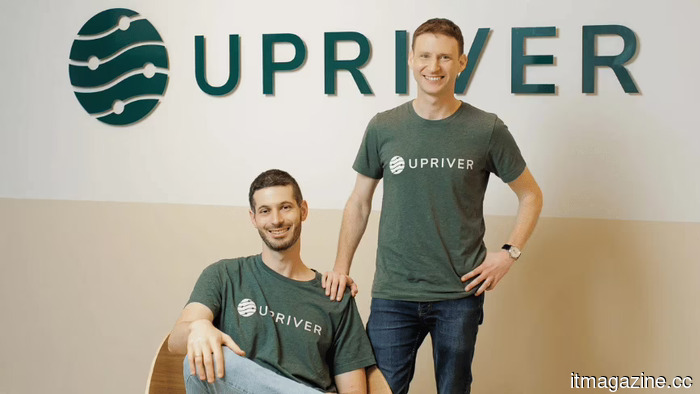 Upriver secures $14 million to address the data challenges faced by AI in enterprises.
Upriver secured $14 million in seed funding to automate the data engineering that AI depends on, believing that the quality of data determines the success or failure of enterprise AI.
Upriver secures $14 million to address the data challenges faced by AI in enterprises.
Upriver secured $14 million in seed funding to automate the data engineering that AI depends on, believing that the quality of data determines the success or failure of enterprise AI.
 Concerns about an AI bubble rise as SpaceX prepares for a record initial public offering (IPO).
Software is declining, China is divesting, and Apollo and KKR are raising alarms. Concerns about an AI bubble are increasing just as SpaceX gets ready for a record IPO.
Concerns about an AI bubble rise as SpaceX prepares for a record initial public offering (IPO).
Software is declining, China is divesting, and Apollo and KKR are raising alarms. Concerns about an AI bubble are increasing just as SpaceX gets ready for a record IPO.
 Deezer's complimentary feature analyzes your playlists to identify AI-generated music.
Deezer introduced a free tool that analyzes your playlists from Spotify, Apple Music, or Tidal for tracks generated by AI, noting that AI accounts for 44% of daily uploads.
Deezer's complimentary feature analyzes your playlists to identify AI-generated music.
Deezer introduced a free tool that analyzes your playlists from Spotify, Apple Music, or Tidal for tracks generated by AI, noting that AI accounts for 44% of daily uploads.
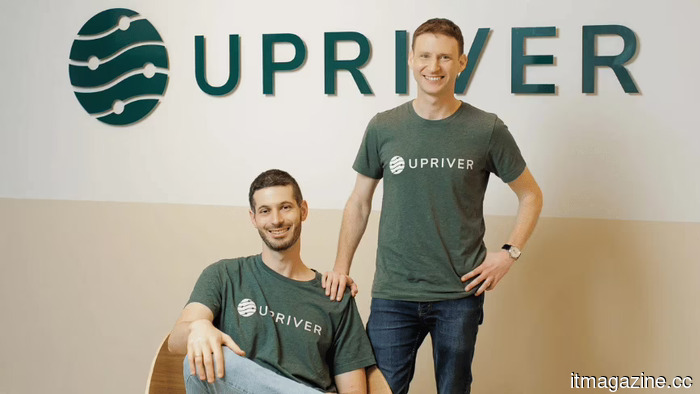 Upriver secures $14 million to address the enterprise data challenges in AI.
Upriver secured $14 million in seed funding to automate the data engineering that AI depends on, believing that the quality of data will determine the success or failure of enterprise AI.
Upriver secures $14 million to address the enterprise data challenges in AI.
Upriver secured $14 million in seed funding to automate the data engineering that AI depends on, believing that the quality of data will determine the success or failure of enterprise AI.
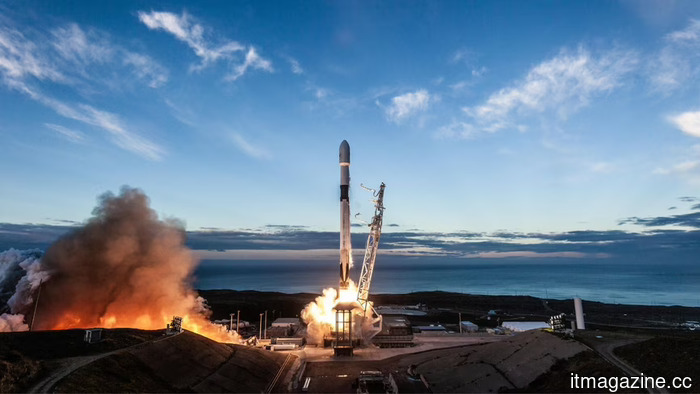 SpaceX's initial public offering: the true challenge lies with OpenAI and Anthropic.
The SpaceX IPO, a historic $75 billion deal, is priced this week. Its trading performance will establish the standard for the upcoming listings of OpenAI and Anthropic that are in the pipeline.
SpaceX's initial public offering: the true challenge lies with OpenAI and Anthropic.
The SpaceX IPO, a historic $75 billion deal, is priced this week. Its trading performance will establish the standard for the upcoming listings of OpenAI and Anthropic that are in the pipeline.
 US AI leaders are increasingly heading to London. Here’s the reason.
Major US AI companies, such as Anthropic and OpenAI, are competing to grow their presence in London by acquiring unprecedented amounts of office space, despite the pressure this expansion is placing on local startups in the UK.
US AI leaders are increasingly heading to London. Here’s the reason.
Major US AI companies, such as Anthropic and OpenAI, are competing to grow their presence in London by acquiring unprecedented amounts of office space, despite the pressure this expansion is placing on local startups in the UK.
US AI leaders are converging on London. Here's the reason.
US AI powerhouses such as Anthropic and OpenAI are competing to grow their presence in London, securing unprecedented amounts of office space, despite the pressure this growth places on local UK startups.