

US AI leaders are increasingly heading to London. Here’s the reason.
US AI corporations are rapidly establishing a presence in London at an unprecedented rate, transforming the British capital into a prominent competitor to San Francisco, while simultaneously complicating matters for local startups that find themselves in close proximity.
Recently, companies like Anthropic have secured office space for 800 employees in London's Knowledge Quarter, which is approximately four times their current workforce in the city; OpenAI has launched its first permanent office in the UK; the coding-tool developer Cursor plans to open a London headquarters this summer; Google is relocating teams into a new 11-story building in King’s Cross; and Databricks, Salesforce, and the Nvidia-backed video startup Runway are all expanding their staff or office space.
The figures highlighting this influx are striking: AI companies leased 565,000 square feet of office space in London within the first four months of 2026, with an additional 288,000 square feet currently under offer, compared to 211,000 square feet for all of 2025 and 130,000 in 2024.
Why is London the focus now?
It's driven by the pursuit of talent and investment. “It’s all about talent,” said Mike Wiseman, head of campuses at British Land, emphasizing that London is “one of the few markets globally” capable of supporting international growth.
Additionally, the city ranks among the world's major financial centers, providing AI companies with what analysts describe as immediate access to venture capital, growth equity, and corporate development networks as they seek to generate commercial income.
This clustering effect is mutually beneficial: Anthropic’s new headquarters is located in the same Knowledge Quarter as OpenAI, Google DeepMind, Meta, Synthesia, and the autonomous-driving company Wayve. Currently, London has more AI firms with 50 or more employees than San Francisco.
This is the advantage the UK government has sought to capture, including through priority-access agreements with OpenAI, DeepMind, and Anthropic. However, there is an aspect to this optimistic narrative that is often overlooked.
The same well-capitalized American companies are driving up the salaries for engineers and researchers that British startups require, and Dan Hyde, who operates the executive-search firm Erevena, cautions that this trend is exerting pressure on local startups and making it more challenging to recruit top talent.
Founders who are trying to compete with Anthropic’s compensation packages are not competing on an even playing field, and the UK has devoted years to keeping talent like the alumni of DeepMind focused on building companies locally instead of contributing to American giants.
None of this momentum appears to be waning.
The leasing records are on track to be surpassed again in the latter half of the year, and the trajectory indicates one clear outcome: London is solidifying its status as the most significant AI hub outside the United States. The lingering question is whether Britain will secure a meaningful share of that industry or merely serve as a host for others. At present, the city is gaining the offices, the employment opportunities, and the acclaim.
The greater challenge lies in whether it can retain the companies, which is the more difficult test that those within the industry are closely monitoring.
Other articles
 Concerns over an AI bubble amplify as SpaceX readies itself for a landmark IPO.
Software is on a downturn, China is divesting assets, and Apollo and KKR are signaling alarms. Concerns about an AI bubble are growing, coinciding with SpaceX's preparations for a record IPO.
Concerns over an AI bubble amplify as SpaceX readies itself for a landmark IPO.
Software is on a downturn, China is divesting assets, and Apollo and KKR are signaling alarms. Concerns about an AI bubble are growing, coinciding with SpaceX's preparations for a record IPO.
 Canada's social media restriction also targets AI chatbots.
Canada's new Digital Safety Act would prohibit individuals under 16 from using social media and impose regulations on AI chatbots, taking a more robust approach than Australia; however, the challenge lies in enforcement.
Canada's social media restriction also targets AI chatbots.
Canada's new Digital Safety Act would prohibit individuals under 16 from using social media and impose regulations on AI chatbots, taking a more robust approach than Australia; however, the challenge lies in enforcement.
 Canada's prohibition on social media also targets AI chatbots.
Canada's new Digital Safety Act aims to prohibit individuals under 16 from using social media and impose regulations on AI chatbots, taking stricter measures than Australia. However, the challenge lies in enforcement.
Canada's prohibition on social media also targets AI chatbots.
Canada's new Digital Safety Act aims to prohibit individuals under 16 from using social media and impose regulations on AI chatbots, taking stricter measures than Australia. However, the challenge lies in enforcement.
 Coram secures $35 million to transform cameras into AI-powered detectives.
Coram secured $35 million in a Series B funding round, co-led by Ansa Capital and Battery, aimed at transforming standard security cameras into independent AI agents capable of conducting their own investigations.
Coram secures $35 million to transform cameras into AI-powered detectives.
Coram secured $35 million in a Series B funding round, co-led by Ansa Capital and Battery, aimed at transforming standard security cameras into independent AI agents capable of conducting their own investigations.
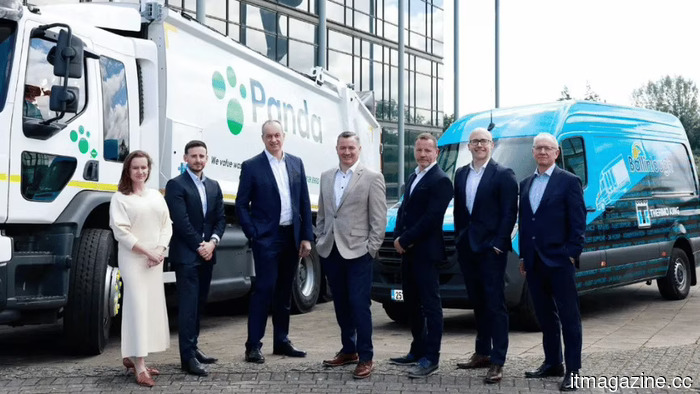 CameraMatics secures nearly €49M to compete with Samsara.
Irish AI fleet safety company CameraMatics has secured up to €49 million in funding, with Blume Equity at the helm and backed by ISIF and AIB, to grow its presence in North America and compete with Samsara and Lytx.
CameraMatics secures nearly €49M to compete with Samsara.
Irish AI fleet safety company CameraMatics has secured up to €49 million in funding, with Blume Equity at the helm and backed by ISIF and AIB, to grow its presence in North America and compete with Samsara and Lytx.
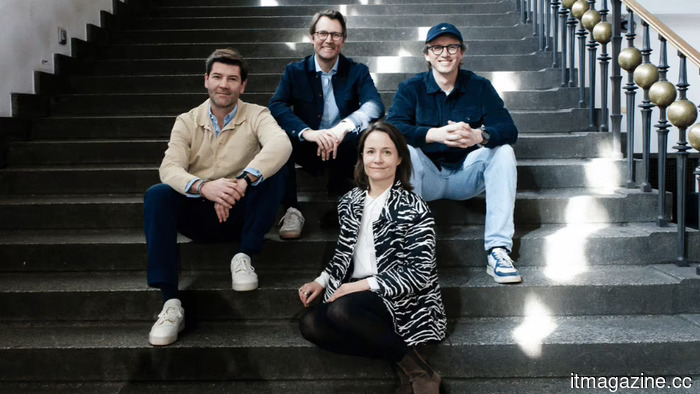 Vsquared is making its deep-tech investment move to London.
Germany's Vsquared Ventures has established a London office to compete with Atomico and Balderton, believing that a specialist in deep tech can succeed in the giants' own territory.
Vsquared is making its deep-tech investment move to London.
Germany's Vsquared Ventures has established a London office to compete with Atomico and Balderton, believing that a specialist in deep tech can succeed in the giants' own territory.
US AI leaders are increasingly heading to London. Here’s the reason.
Major US AI companies, such as Anthropic and OpenAI, are competing to grow their presence in London by acquiring unprecedented amounts of office space, despite the pressure this expansion is placing on local startups in the UK.