
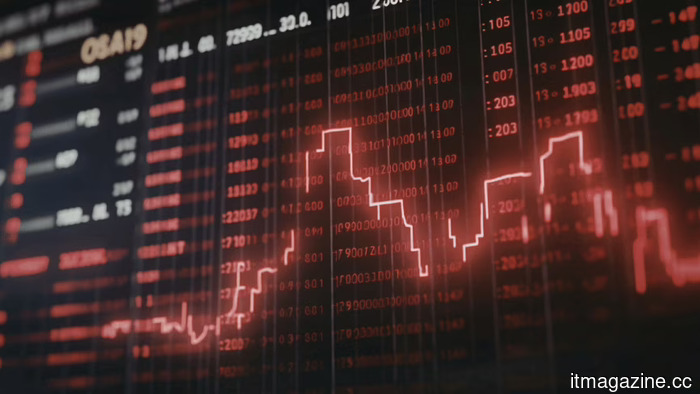
Concerns about an AI bubble rise as SpaceX prepares for a record initial public offering (IPO).
On the day SpaceX sets the record for the largest stock-market debut ever, the underlying market is showing signs of anxiety. The reason isn't rockets; it’s AI.
Multiple warning signals are flashing simultaneously, representing the first significant challenge to a trade that has been driving global markets for the past two years.
The most apparent indicator lies within the software sector. In 2026, Wall Street has endured what traders at Jefferies have termed the ‘SaaSpocalypse’, a continuing selloff that, by some estimates, has wiped out as much as $2 trillion from the S&P software index since its peak at the end of 2025.
The concern is quite specific. If AI agents can perform the tasks of an entire sales team, companies would require far fewer software licenses, jeopardizing the per-seat licensing model that has supported modern software development.
Private-equity firm Apollo has responded to this concern by implementing a policy to screen software investments for the risk of AI displacement, maintaining no exposure to private-equity software, and limiting software to under 2 percent of its assets.
Their reasoning hinges on concentration. Software has grown from roughly 10 percent of global buyout activity to nearly 40 percent at its peak, a level Apollo views as “a fairly significant red flag.”
The anxiety is extending beyond software. On Wednesday, shares in Hong Kong and mainland China dropped, with technology stocks among the hardest hit, as fears of an AI bubble coincided with a decline on Wall Street.
In Washington, Senator Elizabeth Warren proposed the AI Bubble Transparency Act, which would require banks to reveal their debt and equity exposure to chip manufacturers, data centers, and hyperscalers. She frames this concentration as a systemic risk.
KKR’s chief macro strategist, Henry McVey, informed clients that while the boom is genuine, it will render the economy “more extreme than anything we have seen since the beginning of the second industrial revolution” in the 1870s. He noted that some sectors are “starved,” while a few, such as tech, high-end services, and government, are “flush.” The firm predicts that defense and energy are likely to be the major long-term beneficiaries.
Underlying these trends is capital expenditure. Infrastructure spending by hyperscalers is nearing $660 billion this year, marking the most significant corporate investment plan in history outside of wartime, increasingly financed by debt.
Amazon's borrowing has surpassed $225 billion, while Oracle has also exceeded its own capital expenditure guidance, with tens of billions more anticipated.
The bear argument is straightforward: this scale of spending will only yield returns if AI evolves from ‘copilot’ functionalities to fully autonomous agents that necessitate a significant increase in computational resources. If growth in adoption levels off, the return on the $660 billion investment will likely fall short of the cost of capital.
Conversely, the bull argument is equally valid. This situation is not reminiscent of 2000.
As TNW previously highlighted, some measurements indicate that valuations and concentration exceed dot-com era highs, with the CAPE ratio close to 38. However, unlike the dot-com favorites, today’s leading companies are highly profitable, and the capital expenditure cycle has only just begun to yield results.
The candid response to the question, “Is this a bubble?” is that no one can truly know until the spending either pays off or it does not. What has shifted this week is that the market has begun to articulate this question vocally, after two years of hesitance.
SpaceX is not involved in AI. Yet, its stock debut, along with the impending listings of OpenAI and Anthropic, will serve as the nearest approximation of a real-time referendum on whether investor confidence remains intact. Even those who believe the listing won’t undermine the bull market, as CNBC stated, are apprehensive about what follows.
A wobble does not equate to a crash. However, for the first time in a while, those making the financial decisions are visibly grappling with a question that the boom has previously overlooked: what, precisely, will all this yield in returns?
Other articles
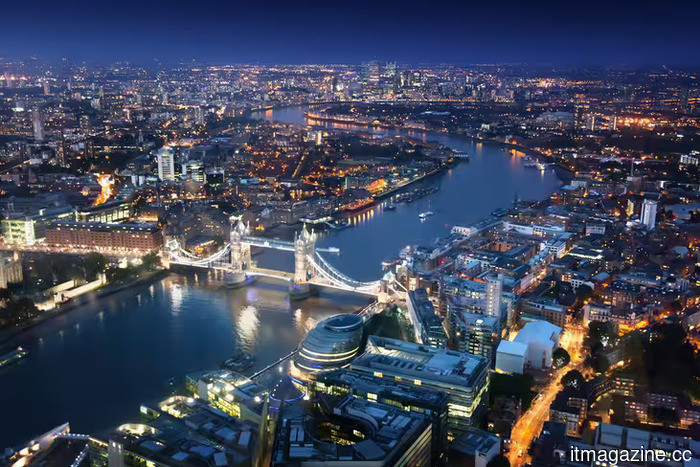 US AI leaders are increasingly heading to London. Here’s the reason.
Major US AI companies, such as Anthropic and OpenAI, are competing to grow their presence in London by acquiring unprecedented amounts of office space, despite the pressure this expansion is placing on local startups in the UK.
US AI leaders are increasingly heading to London. Here’s the reason.
Major US AI companies, such as Anthropic and OpenAI, are competing to grow their presence in London by acquiring unprecedented amounts of office space, despite the pressure this expansion is placing on local startups in the UK.
 Coram secures $35 million to transform cameras into AI investigators.
Coram secured $35 million in a Series B funding round, co-led by Ansa Capital and Battery, aimed at transforming standard security cameras into self-sufficient AI agents capable of conducting their own investigations.
Coram secures $35 million to transform cameras into AI investigators.
Coram secured $35 million in a Series B funding round, co-led by Ansa Capital and Battery, aimed at transforming standard security cameras into self-sufficient AI agents capable of conducting their own investigations.
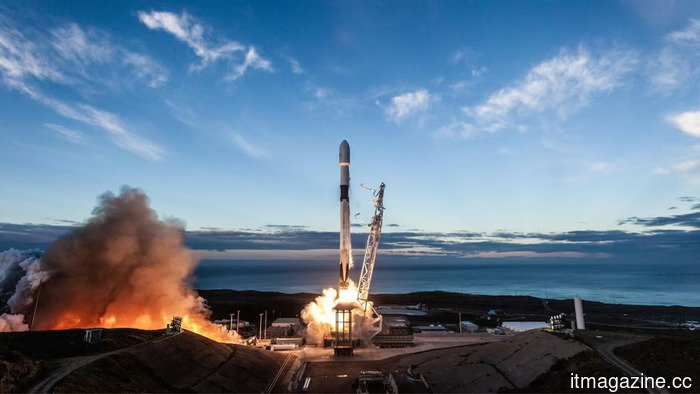 SpaceX's IPO: the true challenge lies with OpenAI and Anthropic.
The SpaceX IPO, a historic $75 billion transaction, is set to price this week. Its trading performance will establish the standard for the upcoming listings of OpenAI and Anthropic that are following it.
SpaceX's IPO: the true challenge lies with OpenAI and Anthropic.
The SpaceX IPO, a historic $75 billion transaction, is set to price this week. Its trading performance will establish the standard for the upcoming listings of OpenAI and Anthropic that are following it.
 Google supports 300,000 skilled tradespeople required for the AI surge.
Google is investing $50 million to train 300,000 skilled trades workers, addressing the shortage of electricians and welders needed for constructing data centers as AI development progresses.
Google supports 300,000 skilled tradespeople required for the AI surge.
Google is investing $50 million to train 300,000 skilled trades workers, addressing the shortage of electricians and welders needed for constructing data centers as AI development progresses.
 Canada's social media restriction also targets AI chatbots.
Canada's new Digital Safety Act would prohibit individuals under 16 from using social media and impose regulations on AI chatbots, taking a more robust approach than Australia; however, the challenge lies in enforcement.
Canada's social media restriction also targets AI chatbots.
Canada's new Digital Safety Act would prohibit individuals under 16 from using social media and impose regulations on AI chatbots, taking a more robust approach than Australia; however, the challenge lies in enforcement.
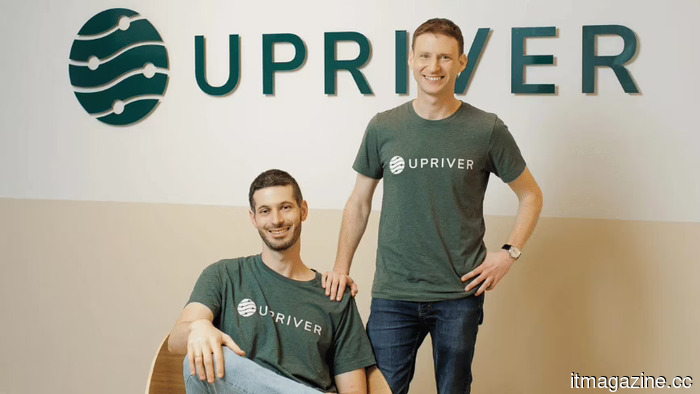 Upriver secures $14 million to address the enterprise data issue in AI.
Upriver secured $14 million in seed funding to automate the data engineering processes that AI depends on, emphasizing that clean data is the crucial factor for success or failure in enterprise AI.
Upriver secures $14 million to address the enterprise data issue in AI.
Upriver secured $14 million in seed funding to automate the data engineering processes that AI depends on, emphasizing that clean data is the crucial factor for success or failure in enterprise AI.
Concerns about an AI bubble rise as SpaceX prepares for a record initial public offering (IPO).
Software is declining, China is divesting, and Apollo and KKR are raising alarms. Concerns about an AI bubble are increasing just as SpaceX gets ready for a record IPO.