
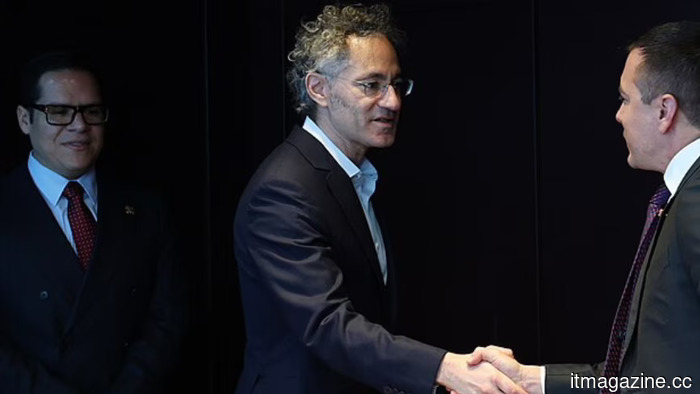
Karp from Palantir suggests that Sanders will come to regret seeking just 50% of AI companies, indicating that full nationalization is on the horizon.
TL;DR: Palantir CEO Alex Karp anticipates complete nationalization of AI companies within two years, suggesting that Senator Bernie Sanders' 50% public ownership proposal will soon appear moderate. Karp stated, “In two years, they’re not going to think Bernie Sanders is progressive. They’re going to say, ‘Bernie Sanders, you only want 50%? What does this 50% mean?’” For the past six months, he has been privately alerting top AI executives to this looming threat, asserting that there is growing momentum for nationalization. Karp identifies as a “card-carrying progressive” and believes the most crucial political issues will hinge on politicians’ understanding of AI.
This prediction comes amidst a heated political climate. Sanders has introduced the American AI Sovereign Wealth Fund Act, which proposes a one-time 50% tax on stock from companies such as OpenAI, Anthropic, and xAI. Trump has expressed intentions to meet with AI company leaders to discuss potential public ownership, framing it as a “partnership with the American public.” The two figures, however, differ on nearly all other matters.
“The real question isn’t if AI will transform the world, it’s who will possess and regulate that future,” Sanders stated in a recent video. Trump commented at the White House, “If we proceed with this, the public will become very wealthy, the citizenry in our nation.”
Not everyone within the Trump administration concurs with this approach. David Sacks, the former White House AI and crypto advisor, cautioned that Republicans embracing Sanders’ stance may come to regret it. He argued that while conservatives are correct to be wary of the direction this is heading, they should consider how the regulations they currently endorse might be wielded against them by a future Democratic administration.
Karp presented the debate from another perspective, asserting that Americans are concerned about the impact of AI on jobs, which raises complex questions with mixed outcomes. He forecasted that the U.S. would need to “retrain and retool” its workforce and claimed it is better positioned to do so than Europe. He did not comment on how nationalization would affect Palantir, which provides AI solutions to governments and militaries.
The emerging bipartisan agreement on public ownership of AI is noteworthy. Just a year ago, the notion of the U.S. government acquiring equity in AI firms would have been seen as radical. Now, a socialist senator, a Republican president, and the CEO of a defense contractor all consider it a plausible outcome, with disputes limited to the extent and speed of implementation.
The realization of these ideas hinges on future legislation, which has yet to be introduced, and on whether AI companies voluntarily offer equity, as OpenAI has suggested with its Public Wealth Fund concept. Karp's forecast stands out as the most radical from a sitting CEO: not 10% or 50%, but total nationalization within two years.
Other articles
 The trailer for Social Reckoning has been released, and Jeremy Strong seems to be an ideal selection for the role of Mark Zuckerberg.
Aaron Sorkin is back with The Social Reckoning, a companion work to The Social Network that focuses on the Facebook whistleblower controversy, featuring Jeremy Strong in the role of Zuckerberg.
The trailer for Social Reckoning has been released, and Jeremy Strong seems to be an ideal selection for the role of Mark Zuckerberg.
Aaron Sorkin is back with The Social Reckoning, a companion work to The Social Network that focuses on the Facebook whistleblower controversy, featuring Jeremy Strong in the role of Zuckerberg.
 iOS 27: What We Know About the Upcoming Features Coming to Your iPhone
The iOS 27 update from Apple introduces enhancements to Siri AI and Apple Intelligence, but the less notable updates to Mail, AirDrop, Photos, Shortcuts, AirPods, and compatibility are equally important. Here’s a summary of everything disclosed about iOS 27.
iOS 27: What We Know About the Upcoming Features Coming to Your iPhone
The iOS 27 update from Apple introduces enhancements to Siri AI and Apple Intelligence, but the less notable updates to Mail, AirDrop, Photos, Shortcuts, AirPods, and compatibility are equally important. Here’s a summary of everything disclosed about iOS 27.
 The researcher that Microsoft threatened has just released a seventh Windows zero-day shortly after Patch Tuesday.
Chaotic Eclipse released RoguePlanet, a Windows Defender zero-day that provides SYSTEM access on fully updated systems, just hours after Microsoft's significant update featuring 200 fixes.
The researcher that Microsoft threatened has just released a seventh Windows zero-day shortly after Patch Tuesday.
Chaotic Eclipse released RoguePlanet, a Windows Defender zero-day that provides SYSTEM access on fully updated systems, just hours after Microsoft's significant update featuring 200 fixes.
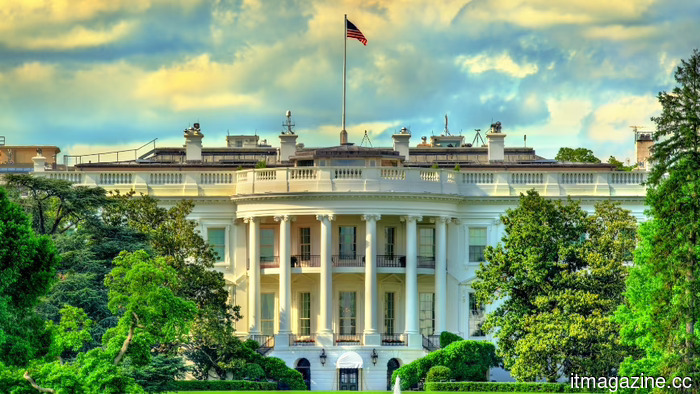 The White House proposes a deal with Congress to exchange state AI preemption for federal online safety legislation.
The Trump administration is in talks to prevent state AI regulations in return for the approval of KOSA, the NO FAKES Act, and federal age verification measures. Free speech organizations are opposed to this.
The White House proposes a deal with Congress to exchange state AI preemption for federal online safety legislation.
The Trump administration is in talks to prevent state AI regulations in return for the approval of KOSA, the NO FAKES Act, and federal age verification measures. Free speech organizations are opposed to this.
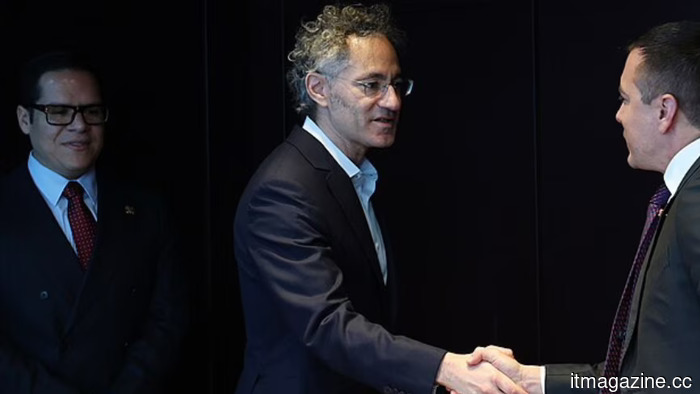 Palantir's Karp indicates that Sanders will come to regret requesting only 50% of AI companies. Complete nationalization is on the horizon.
Palantir's CEO, Alex Karp, informed CNBC that within two years, complete nationalization of AI will emerge as a mainstream view among the left. Both Trump and Sanders currently share a consensus on 50% of this issue.
Palantir's Karp indicates that Sanders will come to regret requesting only 50% of AI companies. Complete nationalization is on the horizon.
Palantir's CEO, Alex Karp, informed CNBC that within two years, complete nationalization of AI will emerge as a mainstream view among the left. Both Trump and Sanders currently share a consensus on 50% of this issue.
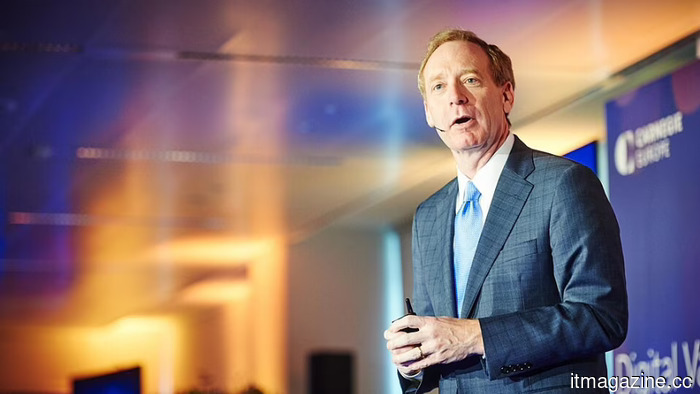 The president of Microsoft addresses the concerns surrounding AI in a lengthy 3,000-word essay, yet no policy alterations are implemented.
The president of Microsoft wrote an essay referring to the graduates' backlash against AI as a "wake-up call." His recommendation: to adapt. His admissions: none.
The president of Microsoft addresses the concerns surrounding AI in a lengthy 3,000-word essay, yet no policy alterations are implemented.
The president of Microsoft wrote an essay referring to the graduates' backlash against AI as a "wake-up call." His recommendation: to adapt. His admissions: none.
Karp from Palantir suggests that Sanders will come to regret seeking just 50% of AI companies, indicating that full nationalization is on the horizon.
Palantir's CEO Alex Karp informed CNBC that within two years, full AI nationalization will become a widely accepted stance among the left. Both Trump and Sanders have already reached a consensus on 50%.