
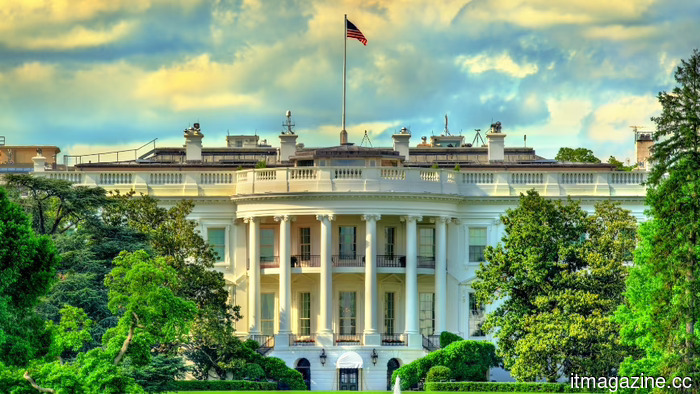
The White House proposes a deal with Congress to exchange state AI preemption for federal online safety legislation.
**TL;DR** The White House is seeking to prevent state AI regulations for three years in exchange for advancing KOSA, the NO FAKES Act, and age verification. Free speech organizations are opposed.
According to Axios, the White House is in discussions with key senators to combine federal preemption of state AI laws with three online safety bills. Senator Marsha Blackburn is spearheading the effort to finalize the legislative text. This proposal would halt state AI regulation for three years in return for the passage of the Kids Online Safety Act (KOSA), the NO FAKES Act, and a federal mandate for age verification.
This initiative marks the administration's latest effort to remove states' power to regulate AI; Congress has previously rejected preemption proposals on two occasions. Earlier this year, the Senate voted overwhelmingly (99-1) to eliminate an AI preemption clause from the One Big Beautiful Bill Act. Conversely, states have been moving ahead with more regulations, introducing 1,208 AI bills in 2025, with 145 of those becoming law.
In this instance, the administration is taking a new approach by linking preemption to bipartisan legislation. KOSA would require social media companies to limit content considered harmful to minors, with the Federal Trade Commission (FTC) given enforcement authority. The NO FAKES Act aims to safeguard individuals from AI-generated deepfakes of their likenesses, while age verification would necessitate identity checks for online services.
Free speech advocates have raised concerns. The Foundation for Individual Rights and Expression (FIRE), a conservative group funded by Koch, cautioned that "together, these bills could fundamentally alter the internet as we know it." FIRE contends that KOSA could empower the FTC to monitor platforms for lawful speech, and that age verification could effectively end anonymous internet browsing.
The Intercept has highlighted that KOSA’s age verification stipulations could severely impede anonymous internet usage, a worry shared across the political spectrum. This legislation would allow the administration overseeing the FTC to exert considerable influence over content moderation for about 71% of US adults who frequently use platforms like Instagram.
The AI preemption aspect of the proposal would establish a formal Center for AI Standards and Innovation and obligate certain developers to evaluate risks prior to launching models. A spokesperson for Blackburn clarified that the package does not entail a "blanket preemption of all laws regulating AI or child safety" but is designed as subject-matter preemption that targets specific areas.
The timing aligns with progressive states aiming to limit the construction of AI data centers and hold tech firms accountable for the harms caused by their AI systems. The administration presents preemption as vital for national competitiveness, while critics argue that it would eliminate the most proactive level of AI oversight when states are actively stepping in to fill federal gaps.
It remains uncertain whether the deal will succeed. The administration's approach to AI regulation has been cautious, focusing on adoption rather than strict regulation. Bundling online safety with preemption is a strategic attempt to push both through Congress in a single vote. The key question is whether senators will accept a three-year pause on state AI laws in exchange for enhanced online protections for children.
**Published June 10, 2026 - 9:27 pm UTC**
Otros artículos
 The trailer for Social Reckoning has been released, and Jeremy Strong seems to be an ideal selection for the role of Mark Zuckerberg.
Aaron Sorkin is back with The Social Reckoning, a companion work to The Social Network that focuses on the Facebook whistleblower controversy, featuring Jeremy Strong in the role of Zuckerberg.
The trailer for Social Reckoning has been released, and Jeremy Strong seems to be an ideal selection for the role of Mark Zuckerberg.
Aaron Sorkin is back with The Social Reckoning, a companion work to The Social Network that focuses on the Facebook whistleblower controversy, featuring Jeremy Strong in the role of Zuckerberg.
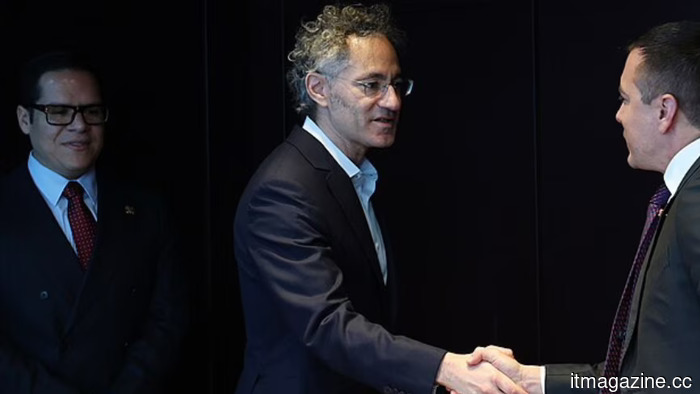 Palantir's Karp indicates that Sanders will come to regret requesting only 50% of AI companies. Complete nationalization is on the horizon.
Palantir's CEO, Alex Karp, informed CNBC that within two years, complete nationalization of AI will emerge as a mainstream view among the left. Both Trump and Sanders currently share a consensus on 50% of this issue.
Palantir's Karp indicates that Sanders will come to regret requesting only 50% of AI companies. Complete nationalization is on the horizon.
Palantir's CEO, Alex Karp, informed CNBC that within two years, complete nationalization of AI will emerge as a mainstream view among the left. Both Trump and Sanders currently share a consensus on 50% of this issue.
 Your Technology, Your Style with JLab: The Case for Affordable Premium Audio
Whether it's for work calls, exercise, commuting, or leisurely breaks, each part of the day requires different performance from our audio equipment. JLab's newest collection is centered around the straightforward concept that personal technology should conform to our daily lives, rather than the reverse, all while making high-quality features accessible.
Your Technology, Your Style with JLab: The Case for Affordable Premium Audio
Whether it's for work calls, exercise, commuting, or leisurely breaks, each part of the day requires different performance from our audio equipment. JLab's newest collection is centered around the straightforward concept that personal technology should conform to our daily lives, rather than the reverse, all while making high-quality features accessible.
 iOS 27 may simplify the process of saving battery life, reducing the need to search through settings.
Apple is experimenting with Dormancy in the code for iOS 27 and watchOS, indicating potential battery notifications that may highlight inactive features and suggest disabling them to conserve power.
iOS 27 may simplify the process of saving battery life, reducing the need to search through settings.
Apple is experimenting with Dormancy in the code for iOS 27 and watchOS, indicating potential battery notifications that may highlight inactive features and suggest disabling them to conserve power.
 Seattle-based drinkware manufacturer MiiR has filed a lawsuit against Tesla, alleging that the company has copied the design of its tumbler lid.
MiiR claims that Tesla's On The Road Tumbler infringes on its patented lid design and the positioning of its vertical logo. The company is pursuing a permanent injunction along with Tesla's profits.
Seattle-based drinkware manufacturer MiiR has filed a lawsuit against Tesla, alleging that the company has copied the design of its tumbler lid.
MiiR claims that Tesla's On The Road Tumbler infringes on its patented lid design and the positioning of its vertical logo. The company is pursuing a permanent injunction along with Tesla's profits.
 Anthropic is advocating for governments to possess the authority to prevent the implementation of hazardous AI systems.
Anthropic released two policy frameworks advocating for government intervention to prohibit hazardous AI models and for economic protections to shield workers from job displacement.
Anthropic is advocating for governments to possess the authority to prevent the implementation of hazardous AI systems.
Anthropic released two policy frameworks advocating for government intervention to prohibit hazardous AI models and for economic protections to shield workers from job displacement.
The White House proposes a deal with Congress to exchange state AI preemption for federal online safety legislation.
The Trump administration is in talks to prevent state AI regulations in return for the approval of KOSA, the NO FAKES Act, and federal age verification measures. Free speech organizations are opposed to this.