
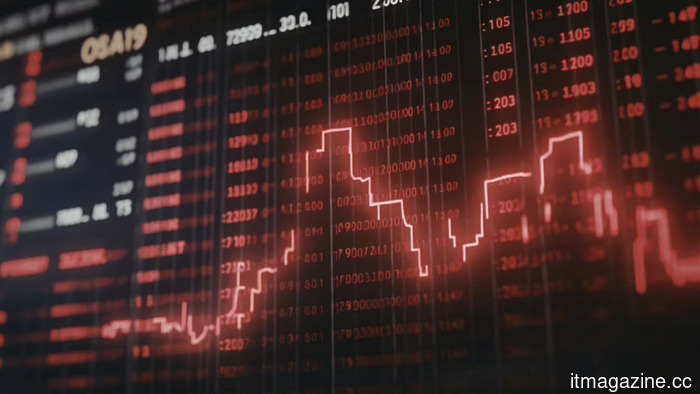
Concerns about an AI bubble grow as SpaceX gets ready for a record-setting IPO.
On the day SpaceX marks the largest stock-market debut in history, the market beneath it is experiencing some anxiety. The concern does not stem from rockets, but rather from AI.
Multiple warning signs are appearing simultaneously, representing the first significant challenge to a trade that has supported global markets for the past two years.
The most evident indication lies in the software sector. Wall Street has spent 2026 enduring what Jefferies traders have termed the ‘SaaSpocalypse,’ a continuous selloff that has reportedly wiped out as much as $2 trillion from the S&P software index since its peak in late 2025.
The underlying worry is specific. If AI agents can perform the tasks traditionally handled by a sales team, companies will require far fewer software licenses, thereby destabilizing the per-license model that has underpinned modern software.
Private-equity titan Apollo has transformed this anxiety into policy. It now evaluates software deals for the risk of AI displacement, has no exposure to private equity software, and restricts software investments to below 2 percent of its assets.
Apollo’s reasoning is rooted in concentration. Software increased from about 10 percent of global buyout volume to approximately 40 percent at its zenith—a level that Apollo considers a significant warning sign.
The anxiety is spreading beyond software alone. On Wednesday, shares in Hong Kong and mainland China declined, with technology stocks suffering the most as fears of an AI bubble mirrored a retreat on Wall Street.
In Washington, Senator Elizabeth Warren proposed the AI Bubble Transparency Act, which would require banks to disclose their debt and equity exposure to chipmakers, data centers, and hyperscalers. She frames the concentration as a systemic risk.
Meanwhile, KKR’s chief macro strategist, Henry McVey, conveyed to clients that, while the boom is genuine, it will render the economy ‘more extreme than anything we have seen since the start of the second industrial revolution’ in the 1870s. He noted that some sectors are ‘starved’ while a few, such as technology, high-end services, and government, are ‘flush.’ KKR believes defense and power sectors are the most likely long-term winners.
Central to all of this is capital expenditure. Hyperscaler infrastructure spending is nearing $660 billion this year, marking the largest corporate investment program in history outside of wartime, and is increasingly financed through debt.
Amazon’s debt has exceeded $225 billion, and Oracle has gone beyond its capital expenditure guidance, with tens of billions more expected to be spent.
The bearish perspective is straightforward. Such high levels of spending only yield returns if AI transitions from ‘copilot’ features to fully autonomous agents that warrant a significantly higher level of computing resources. If adoption levels off, the return on the $660 billion per year may fall short of the cost of capital.
Conversely, the bullish case is equally valid. This is not 2000.
As TNW has previously pointed out, valuations and concentration measures are above the peaks seen during the dot-com era, with the CAPE ratio nearing 38. However, unlike the dot-com stars, the current leaders are highly profitable, and the capital expenditure cycle has only just begun to show results.
The candid answer to the question of whether this constitutes a bubble is that no one can truly know until the spending either yields positive results or fails to do so. What shifted this week is that the market commenced openly questioning this notion after two years of avoidance.
SpaceX is not an AI company, but its initial public offering, along with the forthcoming listings of OpenAI and Anthropic, will serve as a near real-time assessment of investor confidence. Even market observers who believe the listing will not disrupt the ongoing bull market, as CNBC stated, are apprehensive about what will follow.
A slight downturn is not synonymous with a crash. Yet, for the first time in a while, those writing the checks are visibly deliberating the question that the boom has previously sidestepped: what exactly are the returns on all this investment?
Other articles
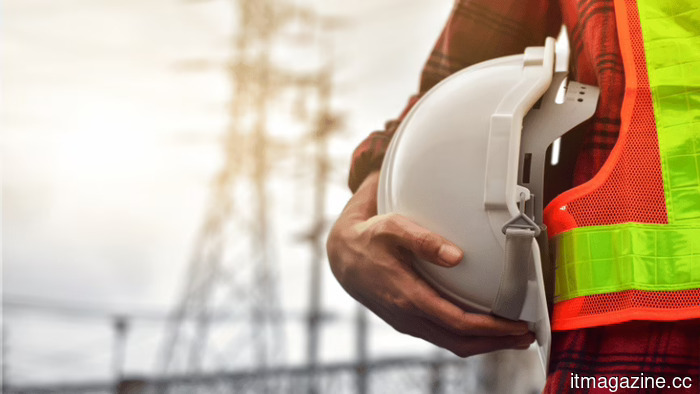 Google supports 300,000 skilled trades workers essential for the AI industry.
Google is investing $50 million to train 300,000 workers in skilled trades, addressing the shortage of electricians and welders needed for constructing data centers amid the expansion of AI.
Google supports 300,000 skilled trades workers essential for the AI industry.
Google is investing $50 million to train 300,000 workers in skilled trades, addressing the shortage of electricians and welders needed for constructing data centers amid the expansion of AI.
 Concerns over an AI bubble amplify as SpaceX readies itself for a landmark IPO.
Software is on a downturn, China is divesting assets, and Apollo and KKR are signaling alarms. Concerns about an AI bubble are growing, coinciding with SpaceX's preparations for a record IPO.
Concerns over an AI bubble amplify as SpaceX readies itself for a landmark IPO.
Software is on a downturn, China is divesting assets, and Apollo and KKR are signaling alarms. Concerns about an AI bubble are growing, coinciding with SpaceX's preparations for a record IPO.
 Are you anticipating your Framework Laptop 13 Pro? You'll need to wait a little longer.
Framework has postponed the release of the Laptop 13 Pro by approximately a month due to problems identified with the haptic touchpad and display. Here's what your customers should be aware of.
Are you anticipating your Framework Laptop 13 Pro? You'll need to wait a little longer.
Framework has postponed the release of the Laptop 13 Pro by approximately a month due to problems identified with the haptic touchpad and display. Here's what your customers should be aware of.
 Google supports 300,000 trades workers essential for the AI surge.
Google is investing $50 million to train 300,000 skilled trades workers, addressing the shortage of electricians and welders needed for the construction of data centers during the AI expansion.
Google supports 300,000 trades workers essential for the AI surge.
Google is investing $50 million to train 300,000 skilled trades workers, addressing the shortage of electricians and welders needed for the construction of data centers during the AI expansion.
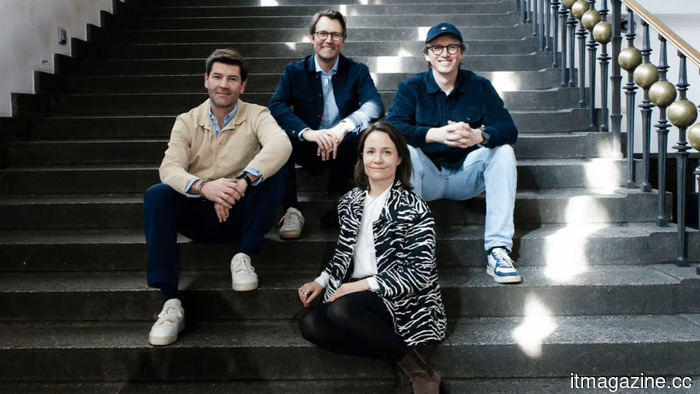 Vsquared expands its deep-tech investments to London.
Germany's Vsquared Ventures has launched an office in London to compete with Atomico and Balderton, wagering that a deep-tech expert can succeed in the giants' territory.
Vsquared expands its deep-tech investments to London.
Germany's Vsquared Ventures has launched an office in London to compete with Atomico and Balderton, wagering that a deep-tech expert can succeed in the giants' territory.
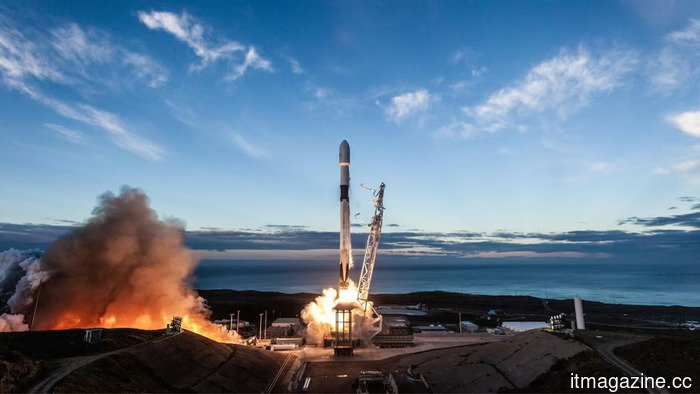 SpaceX's IPO: the true challenge lies with OpenAI and Anthropic.
The SpaceX IPO, a historic $75 billion transaction, is set to price this week. Its trading performance will establish the standard for the upcoming listings of OpenAI and Anthropic that are following it.
SpaceX's IPO: the true challenge lies with OpenAI and Anthropic.
The SpaceX IPO, a historic $75 billion transaction, is set to price this week. Its trading performance will establish the standard for the upcoming listings of OpenAI and Anthropic that are following it.
Concerns about an AI bubble grow as SpaceX gets ready for a record-setting IPO.
Software is declining, China is disposing of assets, and Apollo and KKR are signaling alarms. Concerns over an AI bubble are rising just as SpaceX gets ready for a record-breaking IPO.