

Canada's social media restriction also targets AI chatbots.
Canada has proposed legislation that would prevent those under 16 from accessing social media, while also uniquely addressing AI chatbots within the same framework. The Digital Safety Act, introduced on Wednesday, represents the latest effort by governments worldwide to impose restrictions on platforms due to concerns over child safety, with Canada’s approach being more comprehensive than most.
This is not a total prohibition; platforms may seek exemptions if they can demonstrate adherence to rigorous safety standards, encouraging companies to revamp their services rather than merely exclude children.
"The safety of children cannot be an afterthought," stated Marc Miller, the minister of Canadian identity and culture, who is guiding the bill for Mark Carney’s administration.
Focusing on chatbots
The legislation’s most innovative aspect is its classification of AI chatbots as a distinct child safety issue. It would establish a digital regulatory body to implement safety standards for social media and chatbot services alike. Platforms must identify potential risks, incorporate age-appropriate designs, and provide tools for blocking and reporting, with some companies already beginning to implement features such as Meta's global settings for teen accounts. The bill specifically targets engagement tactics, algorithm-driven feeds, autoplay, and infinite scrolling, which the government argues exacerbate harm.
Canada's emphasis on chatbot regulation is particularly relevant; the bill follows lawsuits from families affected by one of the nation’s most severe mass shootings, which claimed that OpenAI was aware of the attacker’s plans through conversations on ChatGPT and failed to notify law enforcement. OpenAI has not been held liable, and the allegations remain unproven.
Failure to comply could result in significant penalties: up to 3 percent of global revenue or C$10 million, whichever is higher. Platforms would also be required to eliminate non-consensual intimate images within 24 hours of receiving a report.
Following Australia but taking further steps
Australia was the first country to prohibit under-16s from social media in December, leading to the deactivation of around 5 million teen accounts. Canada aims to push the boundaries further by regulating not just access but also the design of platforms and chatbots.
However, the challenge lies in enforcement. An Australian regulator recently noted that, despite mass deactivations, about 70 percent of children still maintained accounts, highlighting that crafting the legislation is the simpler part of the process.
Canada's bill, C-34, faces a lengthy path ahead. Officials anticipate it may take a year to be approved and an additional 18 months to establish the regulatory body. Other countries, including France, Denmark, Poland, and Greece, are considering similar restrictions, making the outcomes of this initiative significant beyond Ottawa.
Other articles
 Concerns over an AI bubble amplify as SpaceX readies itself for a landmark IPO.
Software is on a downturn, China is divesting assets, and Apollo and KKR are signaling alarms. Concerns about an AI bubble are growing, coinciding with SpaceX's preparations for a record IPO.
Concerns over an AI bubble amplify as SpaceX readies itself for a landmark IPO.
Software is on a downturn, China is divesting assets, and Apollo and KKR are signaling alarms. Concerns about an AI bubble are growing, coinciding with SpaceX's preparations for a record IPO.
 Coram secures $35 million to transform cameras into AI investigators.
Coram secured $35 million in a Series B funding round, co-led by Ansa Capital and Battery, aimed at transforming standard security cameras into self-sufficient AI agents capable of conducting their own investigations.
Coram secures $35 million to transform cameras into AI investigators.
Coram secured $35 million in a Series B funding round, co-led by Ansa Capital and Battery, aimed at transforming standard security cameras into self-sufficient AI agents capable of conducting their own investigations.
 Google supports 300,000 skilled trades workers essential for the AI industry.
Google is investing $50 million to train 300,000 workers in skilled trades, addressing the shortage of electricians and welders needed for constructing data centers amid the expansion of AI.
Google supports 300,000 skilled trades workers essential for the AI industry.
Google is investing $50 million to train 300,000 workers in skilled trades, addressing the shortage of electricians and welders needed for constructing data centers amid the expansion of AI.
 Are you anticipating your Framework Laptop 13 Pro? You'll need to wait a little longer.
Framework has postponed the release of the Laptop 13 Pro by approximately a month due to problems identified with the haptic touchpad and display. Here's what your customers should be aware of.
Are you anticipating your Framework Laptop 13 Pro? You'll need to wait a little longer.
Framework has postponed the release of the Laptop 13 Pro by approximately a month due to problems identified with the haptic touchpad and display. Here's what your customers should be aware of.
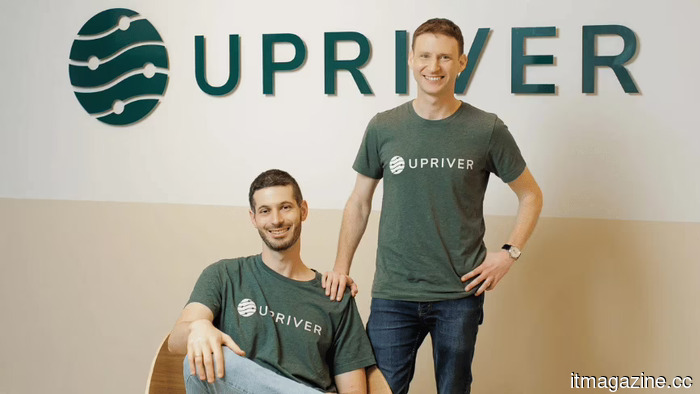 Upriver secures $14 million to address the data challenges faced by AI in enterprises.
Upriver secured $14 million in seed funding to automate the data engineering that AI depends on, believing that the quality of data determines the success or failure of enterprise AI.
Upriver secures $14 million to address the data challenges faced by AI in enterprises.
Upriver secured $14 million in seed funding to automate the data engineering that AI depends on, believing that the quality of data determines the success or failure of enterprise AI.
 Are you awaiting your Framework Laptop 13 Pro? You'll have to wait a little while longer.
Framework has postponed the release of the Laptop 13 Pro by approximately a month due to issues identified with the haptic touchpad and display. Here’s what your customers should be aware of.
Are you awaiting your Framework Laptop 13 Pro? You'll have to wait a little while longer.
Framework has postponed the release of the Laptop 13 Pro by approximately a month due to issues identified with the haptic touchpad and display. Here’s what your customers should be aware of.
Canada's social media restriction also targets AI chatbots.
Canada's new Digital Safety Act would prohibit individuals under 16 from using social media and impose regulations on AI chatbots, taking a more robust approach than Australia; however, the challenge lies in enforcement.