

Within Automat's guide for expanding AI startups on AWS.
The surge in AI has significantly transformed how startups approach infrastructure. What used to be a relatively simple cloud scaling journey has now become considerably more intricate, as companies juggle GPU-intensive tasks, swiftly changing AI models, compliance issues, and escalating operational expenses. For many startups, the challenge has shifted from merely launching a product to ensuring sustainable cloud operations while scaling quickly enough to remain competitive.
Simultaneously, AWS has developed into much more than just a hosting solution. For startups creating AI-native products, it has turned into a comprehensive orchestration platform that encompasses everything from deployment pipelines to governance of generative AI. Ziv Kashtan, CEO of Automat-it, notes that the startups that achieve the most successful scaling are those that view cloud architecture as a strategic advantage rather than an afterthought.
The Hidden Cost of Rapid Scaling
Kashtan highlights that early in their journeys, many rapidly growing startups allow their cloud expenditure to surpass their revenue. This insight has led Automat-it to place a strong focus on ongoing FinOps optimization as part of their AWS managed services strategy.
As an AWS Premier Partner specializing in startups, the company has supported thousands of businesses transitioning from MVP to full production. What began as a DevOps-centric venture has grown into a provider of AI services, assisting startups in operationalizing complex AI workflows on AWS.
Kashtan points out that a common misconception among founders is the belief that simply migrating to AWS ensures efficiency. He describes the prevalent mindset among startups with the phrase, “Lift and shift is good enough.” He emphasizes that while AWS is versatile like Lego, there are many valuable features that can easily be overlooked.
Another misbelief is that managed services are inherently more costly than building everything in-house. According to Kashtan, startups frequently fail to recognize the hidden expenses associated with maintenance, patching, downtime, and inefficient resource management.
These issues often arise when startups transition from early execution to genuine scaling. AI inference costs can suddenly surge, deployments may become increasingly unstable, and engineering teams might find themselves spending more time addressing outages than developing products.
Kashtan explains, “In practice, this manifests as escalating AI and GPU expenses, with startups struggling to maintain feasible unit economics.”
The Importance of DevOps Maturity
A consistent architectural error that Automat-it observes is the tendency for startups to postpone operational discipline until later growth stages. Teams may forego multi-account AWS landing zones, depend on manual provisioning via the AWS console, or implement monolithic systems that are challenging to scale.
Kashtan mentions, “We frequently see teams manually provisioning resources through the AWS Web UI instead of utilizing Infrastructure as Code.”
For startups experiencing rapid growth, DevOps maturity is closely linked to speed and resilience. Advanced CI/CD pipelines, automated testing, and Infrastructure as Code contribute to quicker deployment and reduced operational friction.
He contends that the most effective startups prioritize “outcomes over output,” outsourcing non-differentiated infrastructure management so internal teams can concentrate solely on proprietary innovation.
“When DevOps is mature, engineering teams can devote themselves entirely to their core product,” Kashtan states.
This operational maturity also increasingly pertains to AI workloads. Many startups hastily push impressive AI demos to production, only to encounter the much tougher challenges of achieving production-grade observability, governance, and cost control.
What a Well-Optimized AWS Environment Looks Like
Kashtan asserts that well-optimized startup environments on AWS share several key traits. They prioritize Infrastructure as Code from the outset, using tools like Terraform or AWS CDK. They develop multi-account strategies for security isolation and compliance preparedness. They also adopt elastic computing environments like Amazon EKS Auto Mode or Amazon ECS on Fargate to lessen operational burdens and optimize expenses.
In the context of AI, Automat-it recommends multi-tiered model strategies utilizing Amazon Bedrock, where simpler tasks are routed to lower-cost models, and premium models are used for more complex reasoning tasks.
“Teams often err by deploying a single, premium LLM for all purposes,” Kashtan notes. “A multi-tiered model approach significantly enhances efficiency.”
Automation increasingly contributes to decreasing operational overhead. Kashtan identifies cloud cost management, CI/CD pipelines, compliance evidence gathering, and agent orchestration as areas where AWS-native automation can markedly lessen the engineering burden.
A Twelvefold Reduction in AI Infrastructure Costs
One example Automat-it showcases is its collaboration with mokSa.ai, a video intelligence startup dealing with untenable infrastructure costs. The company’s initial setup utilized one AI model per dedicated GPU instance, leading to a monthly cost of $353 per camera. Automat-it redesigned the platform employing Amazon EKS and introduced NVIDIA GPU time-slicing, allowing multiple AI models to share the same virtual GPU resources.
“The outcome was an astounding twelvefold reduction in costs, bringing it down to just $27 per camera monthly, while maintaining inference times well within the required 500ms threshold,” Kashtan explains.
The AWS Landscape in 2026
Looking forward, Kashtan anticipates
Other articles
 Trump Media abandons Truth Social spinoff but retains TAE merger.
Trump Media has decided to scrap its initiative to convert Truth Social into a SPAC overseen by Trump associates. The $6 billion merger deal with TAE Technologies aims for a completion date in the fourth quarter of 2026.
Trump Media abandons Truth Social spinoff but retains TAE merger.
Trump Media has decided to scrap its initiative to convert Truth Social into a SPAC overseen by Trump associates. The $6 billion merger deal with TAE Technologies aims for a completion date in the fourth quarter of 2026.
 KPMG accessed a whistleblower's computer secretly.
KPMG covertly accessed a whistleblower's work computer multiple times and distributed the files to senior partners and its CEO. Although it was within the law, that is the issue at hand.
KPMG accessed a whistleblower's computer secretly.
KPMG covertly accessed a whistleblower's work computer multiple times and distributed the files to senior partners and its CEO. Although it was within the law, that is the issue at hand.
 OpenAI supports Poetic in the automation of underwriting and compliance processes.
Poetic has emerged from stealth with $50 million in funding at a $500 million valuation, supported by OpenAI, to automate underwriting, compliance, and fraud detection for companies such as AIG and SoFi.
OpenAI supports Poetic in the automation of underwriting and compliance processes.
Poetic has emerged from stealth with $50 million in funding at a $500 million valuation, supported by OpenAI, to automate underwriting, compliance, and fraud detection for companies such as AIG and SoFi.
 The CEO of Anthropic is uncertain whether Claude targeted a school in Iran.
Dario Amodei mentioned that he is unsure about the role Claude had in an attack that resulted in the deaths of 120 children at an Iranian school. The AI is integrated into the Pentagon's targeting system.
The CEO of Anthropic is uncertain whether Claude targeted a school in Iran.
Dario Amodei mentioned that he is unsure about the role Claude had in an attack that resulted in the deaths of 120 children at an Iranian school. The AI is integrated into the Pentagon's targeting system.
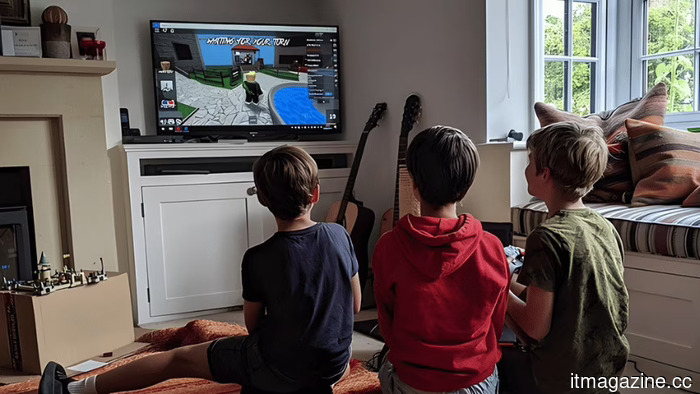 Russia lifts the ban on Roblox following complaints from 63,000 children.
Russia has reinstated access to Roblox following a ban imposed in December. This change came after the receipt of 63,000 complaint letters from children, with half expressing a desire to leave the country.
Russia lifts the ban on Roblox following complaints from 63,000 children.
Russia has reinstated access to Roblox following a ban imposed in December. This change came after the receipt of 63,000 complaint letters from children, with half expressing a desire to leave the country.
 India halted Starlink's approvals due to concerns regarding Iran, just days before SpaceX’s historic IPO.
Indian security authorities halted the launch of Starlink after terminals were spotted in Iran without authorization. This development comes at an inconvenient time for SpaceX's $75 billion IPO.
India halted Starlink's approvals due to concerns regarding Iran, just days before SpaceX’s historic IPO.
Indian security authorities halted the launch of Starlink after terminals were spotted in Iran without authorization. This development comes at an inconvenient time for SpaceX's $75 billion IPO.
Within Automat's guide for expanding AI startups on AWS.
AWS Premier Partner Automat-it discusses how AI startups can prevent escalating GPU expenses, unstable deployments, and operational debt by considering cloud architecture as a strategic benefit from the outset.