

Within Automat's guide for expanding AI startups using AWS.
The AI surge has significantly transformed how startups view their infrastructure. What was once a relatively simple journey of scaling in the cloud has turned into a much more intricate process, as companies now navigate GPU-heavy workloads, quickly changing AI models, compliance demands, and increasing operational expenses. For many startups, the challenge has shifted from merely launching a product to maintaining sustainable cloud operations while scaling rapidly enough to remain competitive.
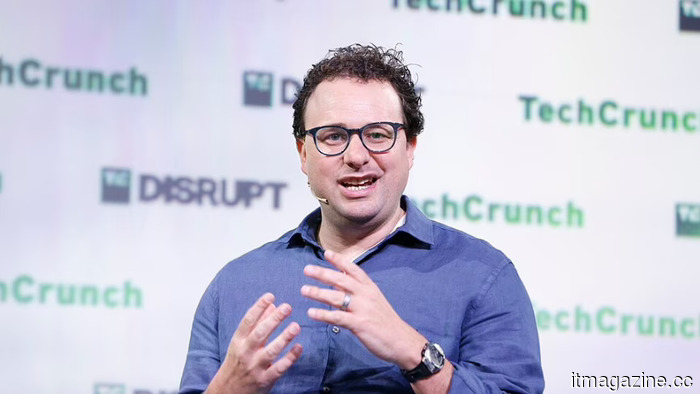
Meanwhile, AWS has grown into much more than a basic hosting service. For startups creating AI-native products, it now serves as an orchestration layer that manages everything from deployment pipelines to generative AI governance. Automat-it's CEO Ziv Kashtan notes that the startups that succeed in scaling are those that view cloud architecture as a strategic asset rather than an afterthought.
The Hidden Cost of Rapid Expansion
“Early on, we noticed that fast-growing startups frequently allowed their cloud spending to surpass their revenue,” Kashtan explains. This insight led Automat-it to place a strong focus on continuous FinOps optimization as part of its AWS managed services strategy.
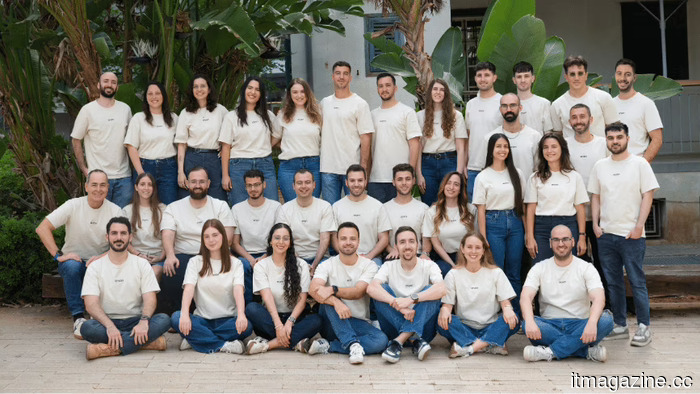
As an AWS Premier Partner with a specialty in startups, the company has assisted thousands of businesses in their transition from MVP to production. What began as a DevOps-centered venture has transformed into an AI services firm that helps startups operationalize increasingly sophisticated AI workflows on AWS.
Kashtan points out that one of the main misconceptions founders have is believing that merely migrating to AWS will ensure efficiency. “Lift and shift is good enough,” he says, reflecting a prevalent attitude among startups. “AWS is like Lego. You can construct anything with it, but it’s easy to overlook many beneficial features.”
Another false belief is that managed services are always more costly than developing everything in-house. Kashtan asserts that startups often fail to factor in the hidden expenses associated with maintenance, patching, downtime, and inefficient resource management.
Issues typically arise when startups transition from initial execution to genuine scaling. Suddenly, costs for AI inference escalate, deployments become more fragile, and engineering teams find themselves spending more time managing outages than developing products. “This can manifest as soaring AI and GPU costs, making it difficult for startups to sustain viable unit economics,” Kashtan elaborates.
The Importance of DevOps Maturity
One of the most frequent architectural errors Automat-it observes is startups postponing the establishment of operational discipline until later growth stages. Teams often neglect multi-account AWS landing zones, depend on manual provisioning via the AWS console, or create monolithic systems that are hard to scale. “We often witness teams provisioning resources manually through the AWS Web UI instead of utilizing Infrastructure as Code,” Kashtan notes.
For fast-growing startups, DevOps maturity is closely linked to speed and resilience. Established CI/CD pipelines, automated testing, and Infrastructure as Code empower startups to deploy more rapidly while minimizing operational hurdles.
Kashtan argues that the most effective startups focus on “outcome over output,” outsourcing non-core infrastructure management so that internal teams can concentrate entirely on proprietary innovations. “When DevOps is mature, engineering teams can devote their full attention to their main product,” he asserts.
This operational maturity increasingly pertains to AI workloads as well. Many startups rush to production with impressive AI demonstrations, only to find that achieving production-grade observability, governance, and cost control poses considerably tougher challenges.
Characteristics of a Well-Optimized AWS Environment
Kashtan explains that well-optimized startup environments on AWS possess several shared traits. They emphasize Infrastructure as Code from the outset, utilizing tools such as Terraform or AWS CDK. They adopt multi-account strategies for security isolation and compliance preparedness. They also leverage elastic compute environments like Amazon EKS Auto Mode or Amazon ECS on Fargate to diminish operational burdens and optimize costs.
In AI environments specifically, Automat-it promotes multi-tiered model approaches using Amazon Bedrock, directing simpler tasks to lower-cost models while reserving premium models for more complex reasoning tasks. “Teams often err by employing a single, premium LLM for everything,” Kashtan states. “A multi-tiered model strategy can dramatically enhance efficiency.”
Automation is also increasingly vital to lowering operational overhead. Kashtan highlights areas such as cloud cost management, CI/CD pipelines, compliance evidence gathering, and agent orchestration where AWS-native automation can considerably lighten the engineering workload.
A Twelvefold Reduction in AI Infrastructure Costs
One notable example highlighted by Automat-it is its collaboration with mokSa.ai, a video intelligence startup grappling with unsustainable infrastructure expenses. The company's initial architecture utilized one AI model per dedicated GPU instance, leading to costs soaring to $353 per camera monthly. Automat-it restructured the platform using Amazon EKS and introduced NVIDIA GPU time-slicing, allowing multiple AI models to concurrently share virtual GPU resources.
“The outcome was an extraordinary twelvefold reduction in costs, dropping to just $27 per camera each month, while maintaining inference times well below their required 500ms threshold,” Kashtan explains.
Other articles
 Aryon Security secures $29 million to safeguard against cloud breaches.
Aryon Security secured $29 million in funding, supported by CrowdStrike's George Kurtz, Datadog, and Shlomo Kramer, with the aim of preventing cloud breaches before they occur.
Aryon Security secures $29 million to safeguard against cloud breaches.
Aryon Security secured $29 million in funding, supported by CrowdStrike's George Kurtz, Datadog, and Shlomo Kramer, with the aim of preventing cloud breaches before they occur.
 OpenAI supports Poetic in the automation of underwriting and compliance processes.
Poetic has emerged from stealth with $50 million in funding at a $500 million valuation, supported by OpenAI, to automate underwriting, compliance, and fraud detection for companies such as AIG and SoFi.
OpenAI supports Poetic in the automation of underwriting and compliance processes.
Poetic has emerged from stealth with $50 million in funding at a $500 million valuation, supported by OpenAI, to automate underwriting, compliance, and fraud detection for companies such as AIG and SoFi.
 The CEO of Anthropic is unsure whether Claude targeted a school in Iran.
Dario Amodei mentioned that he is uncertain about the involvement of Claude in a strike that resulted in the deaths of 120 children at an Iranian school. The AI is integrated into the Pentagon's targeting system.
The CEO of Anthropic is unsure whether Claude targeted a school in Iran.
Dario Amodei mentioned that he is uncertain about the involvement of Claude in a strike that resulted in the deaths of 120 children at an Iranian school. The AI is integrated into the Pentagon's targeting system.
 A German court has ruled that Google is responsible for its AI Overviews.
A court in Munich determined that Google's AI Overviews are considered its own statements, which makes the company responsible for any false information. If this ruling stands, it could have implications for all AI answer engines.
A German court has ruled that Google is responsible for its AI Overviews.
A court in Munich determined that Google's AI Overviews are considered its own statements, which makes the company responsible for any false information. If this ruling stands, it could have implications for all AI answer engines.
 Trump Media abandons Truth Social spinoff but retains TAE merger.
Trump Media has decided to scrap its initiative to convert Truth Social into a SPAC overseen by Trump associates. The $6 billion merger deal with TAE Technologies aims for a completion date in the fourth quarter of 2026.
Trump Media abandons Truth Social spinoff but retains TAE merger.
Trump Media has decided to scrap its initiative to convert Truth Social into a SPAC overseen by Trump associates. The $6 billion merger deal with TAE Technologies aims for a completion date in the fourth quarter of 2026.
 India suspended Starlink approvals due to concerns about Iran, just days prior to SpaceX's record IPO.
Indian security agencies halted the launch of Starlink after terminals were found in Iran without a license. This comes at an inconvenient time for SpaceX's $75 billion IPO.
India suspended Starlink approvals due to concerns about Iran, just days prior to SpaceX's record IPO.
Indian security agencies halted the launch of Starlink after terminals were found in Iran without a license. This comes at an inconvenient time for SpaceX's $75 billion IPO.
Within Automat's guide for expanding AI startups using AWS.
AWS Premier Partner Automat-it outlines how AI startups can prevent escalating GPU expenses, unstable deployments, and operational debt by considering cloud architecture as a strategic asset from the outset.