

This small sensor may enhance the ability of self-driving cars and robots to see in low light conditions.
Researchers at Penn State have created a light-adaptive photomemristor inspired by the human eye that achieves more than 95% visual accuracy in changing light conditions.
Penn State researchers have introduced a light-responsive sensor component that could enhance the reliability of cameras in autonomous vehicles and robots under varying lighting scenarios. This research, published on Monday in Nature Communications, draws directly from the way the human eye adapts to different levels of brightness.
Using biology as a model
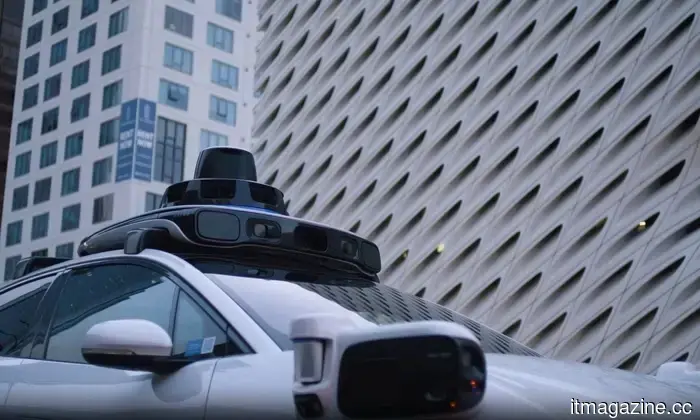
Existing camera systems in self-driving cars are designed for stable lighting, leading to reduced accuracy when lighting conditions change quickly, such as transitioning from a dark road to bright oncoming headlights. The team from Penn State, co-led by engineering professor Larry Cheng, sought inspiration from the rod and cone cells in the eye. In the eye, rod cells contain pigments that are bleached in bright light and gradually regenerate in darkness, allowing for continuous adjustment of sensitivity.
Replication of eye dynamics
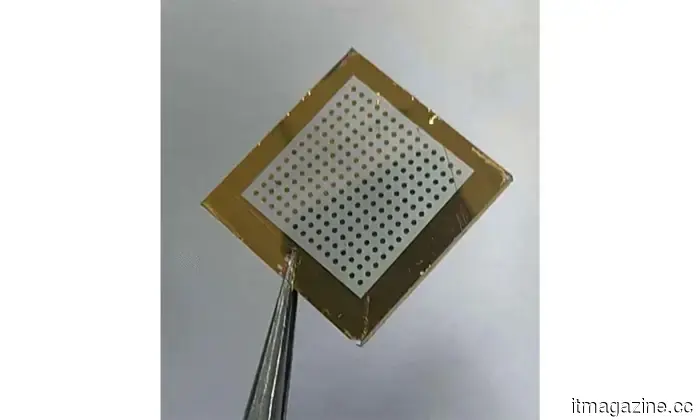
The researchers emulated this capability in a new kind of photomemristor, a compact sensor that captures light and converts it into electrical signals. Their design incorporates two materials: a conductive gel-like polymer and titanium oxide. When light strikes the titanium oxide, it produces a current that leads the polymer to either absorb or release water based on the light intensity, thereby self-regulating sensitivity in real-time.
Achieving 95% accuracy in changing lighting
To evaluate their design, the team constructed a 4×4 array of these sensors and integrated it with a neural network, forming a fundamental machine vision system. They tested it using a variation of the standard eye chart, asking it to identify an LED letter "F" against varying brightness backgrounds. After seven training cycles, the system achieved over 95% accuracy in mixed lighting conditions.
Each sensor is only half a millimeter in width, and Cheng mentions that individual units can be connected into larger arrays to detect broader visual patterns without altering the size of each component.
The team sees potential uses for this technology beyond autonomous vehicles, including in factory robotics and eventually assistive devices for individuals with visual impairments. A provisional patent has been filed, and next steps involve developing the sensors into a multimodal system capable of processing both visual and tactile data simultaneously.
This photomemristor adds to an expanding array of sensor innovations aimed at enhancing the reliability of autonomous vehicles, including a compact radar system developed at Rice University earlier this year.
Other articles
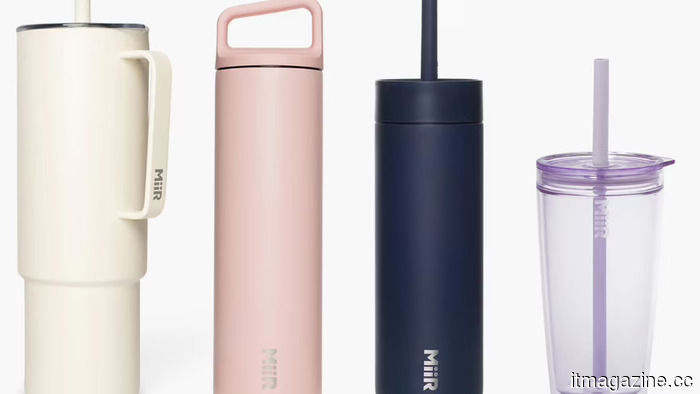 Seattle-based drinkware manufacturer MiiR has filed a lawsuit against Tesla, alleging that the company has copied the design of its tumbler lid.
MiiR claims that Tesla's On The Road Tumbler infringes on its patented lid design and the positioning of its vertical logo. The company is pursuing a permanent injunction along with Tesla's profits.
Seattle-based drinkware manufacturer MiiR has filed a lawsuit against Tesla, alleging that the company has copied the design of its tumbler lid.
MiiR claims that Tesla's On The Road Tumbler infringes on its patented lid design and the positioning of its vertical logo. The company is pursuing a permanent injunction along with Tesla's profits.
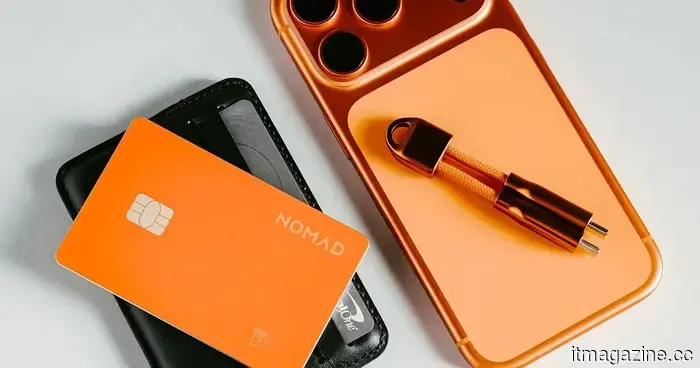 Nomad's orange wallet tracker gives the AirTag a bulky and unimpressive appearance.
Nomad's Stellar Orange accessories incorporate Apple Find My tracking and Qi2 charging features into a small, limited-edition release that primarily focuses on aesthetics.
Nomad's orange wallet tracker gives the AirTag a bulky and unimpressive appearance.
Nomad's Stellar Orange accessories incorporate Apple Find My tracking and Qi2 charging features into a small, limited-edition release that primarily focuses on aesthetics.
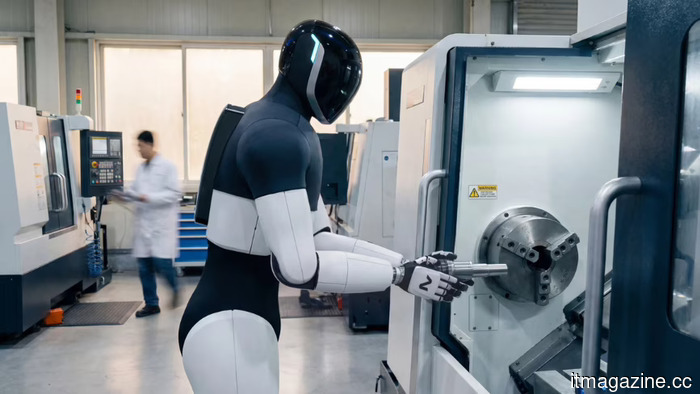 NEURA Robotics secures up to $1.4 billion in a record-setting robotics funding round supported by Nvidia, Amazon, and Tether.
The German robotics company NEURA secured up to $1.4 billion at a valuation of $7 billion from investors including Nvidia, Amazon, Tether, Qualcomm, and Bosch to expand cognitive robots to millions by 2030.
NEURA Robotics secures up to $1.4 billion in a record-setting robotics funding round supported by Nvidia, Amazon, and Tether.
The German robotics company NEURA secured up to $1.4 billion at a valuation of $7 billion from investors including Nvidia, Amazon, Tether, Qualcomm, and Bosch to expand cognitive robots to millions by 2030.
 Burner phones might become unintended victims in the FCC's campaign against robocalls.
The FCC's efforts to combat robocalls might require carriers to gather additional identification data prior to activating phone services, which raises privacy issues for prepaid customers, abuse survivors, journalists, and individuals who depend on burner phones.
Burner phones might become unintended victims in the FCC's campaign against robocalls.
The FCC's efforts to combat robocalls might require carriers to gather additional identification data prior to activating phone services, which raises privacy issues for prepaid customers, abuse survivors, journalists, and individuals who depend on burner phones.
 The companies most focused on AI allocate $7,500 for each employee every month, while the median expenditure is $11.
Ramp data indicates that the leading 1% of companies allocate $7,500 per month for each employee on AI, while the median expenditure is just $11.38. There is a significant disparity between high-level users and the rest.
The companies most focused on AI allocate $7,500 for each employee every month, while the median expenditure is $11.
Ramp data indicates that the leading 1% of companies allocate $7,500 per month for each employee on AI, while the median expenditure is just $11.38. There is a significant disparity between high-level users and the rest.
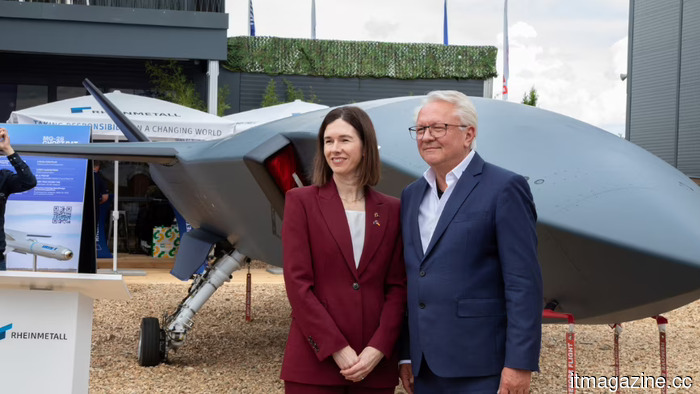 Boeing enhances the Ghost Bat to compete with Helsing in Germany.
Boeing's MQ-28 Ghost Bat can now internally transport bombs and missiles with an increase of 25% in wing area. It is in competition with Helsing's CA-1 Europa for drone orders from Germany.
Boeing enhances the Ghost Bat to compete with Helsing in Germany.
Boeing's MQ-28 Ghost Bat can now internally transport bombs and missiles with an increase of 25% in wing area. It is in competition with Helsing's CA-1 Europa for drone orders from Germany.
This small sensor may enhance the ability of self-driving cars and robots to see in low light conditions.
Researchers at Penn State have created a light-adaptive sensor, inspired by the human eye, which could assist self-driving vehicles and robots in preserving visual accuracy in varying lighting situations.