

The companies most focused on AI allocate $7,500 for each employee every month, while the median expenditure is $11.
**Summary:** The top 1% of firms allocate $7,500 per employee each month for AI, while the top 10% spend $611. The median expenditure is merely $11.38, highlighting a significant disparity in AI spending across American businesses.
According to the Ramp AI Index, the leading 1% of U.S. companies in AI usage invest $7,500 monthly per employee for AI tools and computing resources. In contrast, the median company spends just $11.38, showcasing a 680-fold difference in AI spending. Ramp labels these top 1% firms as "AI-pilled," noting that they still spend less on AI than on employee salaries—averaging around $16,000 monthly for a software engineer, which is more than double the $7,500 investment. However, there is a notable increase, with AI spending per employee among these top firms rising by 14.1% in the past month.
Top 10% firms invest roughly $611 monthly per employee, which typically covers a few enterprise AI subscriptions along with some API usage. For most businesses, the median $11.38 indicates that AI expenditures remain a minor portion of their software budgets.
This data complements increasing reports from the high end of the market. An Nvidia executive mentioned that computing costs now surpass employee salaries, while Mercor’s CEO highlighted that the startup spends more on tokens for internal agents than on personnel. Despite a 98% reduction in per-token costs, enterprise AI expenses have tripled due to a significant increase in consumption driven by agentic tools.
The inconsistency is notable: while tokens are inexpensive, overall usage is costly. A straightforward linear workflow in 2023 costs about $0.04 per interaction, while a complex agentic system in 2026 is projected to cost around $1.20, approximately 30 times more. Microsoft discovered that individual engineers could spend between $500 and $2,000 monthly on Claude Code tokens, and Uber depleted its entire AI coding budget for 2026 by April.
Firms leading in AI tend to utilize various frontier models and platforms, taking advantage of more affordable open-source alternatives. This behavior indicates a lack of loyalty to any single provider, as they aim to optimize both cost and functionality.
The critical inquiry remains whether the $7,500 figure serves as a limit or a base. If agentic AI continues to broaden automation opportunities and token expenditures become a significant cost next to personnel and software, it is possible that the top 1% might resemble the median in the near future. However, for now, the majority of American businesses still spend less on AI than they would on a decent lunch.
Other articles
 Researchers deceived an OpenClaw AI agent into revealing AWS keys and customer information through a phishing email.
Varonis created an OpenClaw email agent and used it for a phishing attack. This resulted in the agent surrendering AWS credentials, database keys, and a CRM export containing information for 247 customers without confirming the identity of the requester.
Researchers deceived an OpenClaw AI agent into revealing AWS keys and customer information through a phishing email.
Varonis created an OpenClaw email agent and used it for a phishing attack. This resulted in the agent surrendering AWS credentials, database keys, and a CRM export containing information for 247 customers without confirming the identity of the requester.
 OpenAI reports that accounts associated with China utilized ChatGPT to support opposition against US data centers.
OpenAI discovered accounts connected to China producing AI-generated content concerning electricity expenses at data centers. The campaign achieved minimal reach. Nonetheless, the discussion remains genuine.
OpenAI reports that accounts associated with China utilized ChatGPT to support opposition against US data centers.
OpenAI discovered accounts connected to China producing AI-generated content concerning electricity expenses at data centers. The campaign achieved minimal reach. Nonetheless, the discussion remains genuine.
 The companies most focused on AI invest $7,500 per employee each month, while the median expenditure is $11.
Ramp data indicates that the top 1% of companies allocate $7,500 per month for each employee on AI, while the median expenditure is just $11.38. There is a significant disparity between the power users and the rest.
The companies most focused on AI invest $7,500 per employee each month, while the median expenditure is $11.
Ramp data indicates that the top 1% of companies allocate $7,500 per month for each employee on AI, while the median expenditure is just $11.38. There is a significant disparity between the power users and the rest.
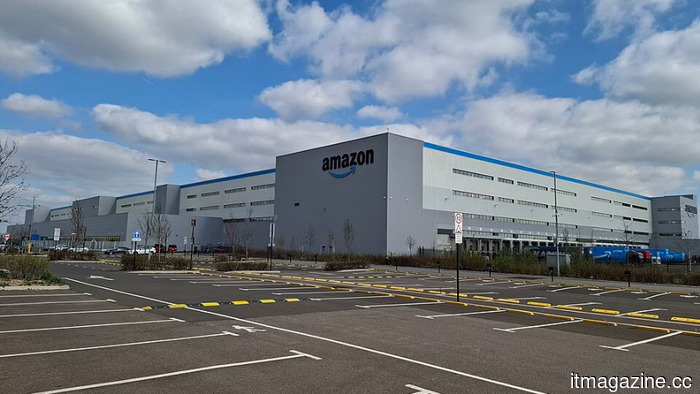 Amazon acquires $17.5 billion in new debt, bringing its total borrowing to over $225 billion due to increased investment in AI.
Amazon consented to a $17.5 billion term loan arranged by Citigroup, just days following a record-setting C$14 billion bond sale in Canada. The company's total debt has surged by 50% in a year, exceeding $225 billion.
Amazon acquires $17.5 billion in new debt, bringing its total borrowing to over $225 billion due to increased investment in AI.
Amazon consented to a $17.5 billion term loan arranged by Citigroup, just days following a record-setting C$14 billion bond sale in Canada. The company's total debt has surged by 50% in a year, exceeding $225 billion.
 BNP states that the $3.6 trillion wave of US IPOs will enhance technology transactions in Europe.
According to BNP Paribas, the $3.6 trillion IPO pipeline from SpaceX, OpenAI, and Anthropic will stimulate interest in European tech listings. Investors in the US are already taking notice.
BNP states that the $3.6 trillion wave of US IPOs will enhance technology transactions in Europe.
According to BNP Paribas, the $3.6 trillion IPO pipeline from SpaceX, OpenAI, and Anthropic will stimulate interest in European tech listings. Investors in the US are already taking notice.
 iOS 27 may simplify the process of saving battery life, reducing the need to search through settings.
Apple is experimenting with Dormancy in the code for iOS 27 and watchOS, indicating potential battery notifications that may highlight inactive features and suggest disabling them to conserve power.
iOS 27 may simplify the process of saving battery life, reducing the need to search through settings.
Apple is experimenting with Dormancy in the code for iOS 27 and watchOS, indicating potential battery notifications that may highlight inactive features and suggest disabling them to conserve power.
The companies most focused on AI allocate $7,500 for each employee every month, while the median expenditure is $11.
Ramp data indicates that the leading 1% of companies allocate $7,500 per month for each employee on AI, while the median expenditure is just $11.38. There is a significant disparity between high-level users and the rest.