
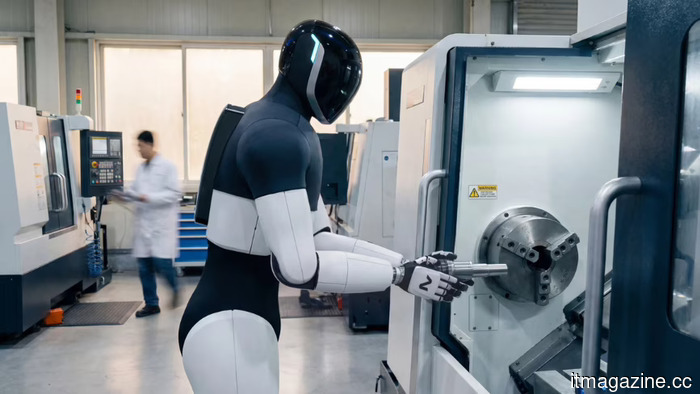
NEURA Robotics secures up to $1.4 billion in a record-setting robotics funding round supported by Nvidia, Amazon, and Tether.
**Summary:** NEURA Robotics has secured up to $1.4 billion in Series C funding, reaching a valuation of around $7 billion. Supported by Nvidia, Amazon, Tether, Bosch, and Qualcomm, the company aims to produce millions of robots by 2030.
The German robotics firm NEURA Robotics announced it has raised up to $1.4 billion in Series C funding to enhance its cognitive robotics platform. This funding round values the company at approximately $7 billion, as reported by Bloomberg. NEURA claims this is the largest funding round ever achieved by a full-stack robotics company.
The investors encompass various sectors, including cryptocurrency, semiconductors, cloud computing, and industrial manufacturing. Tether led the funding round, joined by Qualcomm Technologies, Amazon, Nvidia, Bosch, Schaeffler, the European Investment Bank, imec.xpand, Lingotto Horizon, and InterAlpen Partners. This diverse involvement showcases the wide-ranging interest in cognitive robotics as a viable commercial venture.
NEURA plans to allocate this capital to mass-produce millions of robots by 2030 and to expedite the global launch of NEURA Gyms, described as the world's first real-world training environments for cognitive robots and physical AI. The current order backlog and strategic deployment pipeline already surpass $1 billion.
The company promotes its comprehensive platform, named Neuraverse, which integrates robotics, AI, sensors, edge computing, and extensive learning infrastructure into a cohesive system. Unlike traditional industrial automation reliant on standalone machines programmed for specific tasks, NEURA’s robots are designed to learn, collaborate, and function across various environments on a shared intelligent platform.
"The future of AI will not merely exist on screens," stated David Reger, founder and CEO. "It will move, interact, learn, and work alongside us in the real world." He described physical AI and cognitive robotics as “one of the biggest technological advancements of the upcoming decades.”
This funding round comes as Europe positions itself as a serious competitor in the humanoid robotics sector. Siemens and Nvidia have deployed humanoid robots in factories in Germany, and BMW has incorporated humanoid robots into its manufacturing processes. Additionally, startups like Encord are constructing the data infrastructure necessary for physical AI.
NEURA’s strategic partners, including Bosch, Schaeffler, Kawasaki, Qualcomm, Amazon, and Nvidia, put it at the convergence of industrial automation and AI. The involvement of Bosch and Schaeffler is particularly significant, as both are leading suppliers in the automotive and industrial sectors, indicating that NEURA's robots are being assessed for integration into existing manufacturing environments rather than just in experimental settings.
The investment from Tether brings a unique element, as the stablecoin issuer aggressively diversifies into AI and infrastructure. NEURA highlighted its aims to advance “decentralized AI architectures” and “machine-native economic systems,” suggesting a future where robots can autonomously conduct transactions. Whether this becomes reality or remains mere marketing speak, the $1.4 billion funding is tangible, as is the competition to create the foundational platform for physical AI.
Other articles
 OpenAI has reported that accounts connected to China used ChatGPT to support opposition against US data centers.
OpenAI discovered accounts connected to China generating AI-produced posts regarding the electricity expenses of data centers. The campaign had minimal impact. Nevertheless, the discussion is genuine.
OpenAI has reported that accounts connected to China used ChatGPT to support opposition against US data centers.
OpenAI discovered accounts connected to China generating AI-produced posts regarding the electricity expenses of data centers. The campaign had minimal impact. Nevertheless, the discussion is genuine.
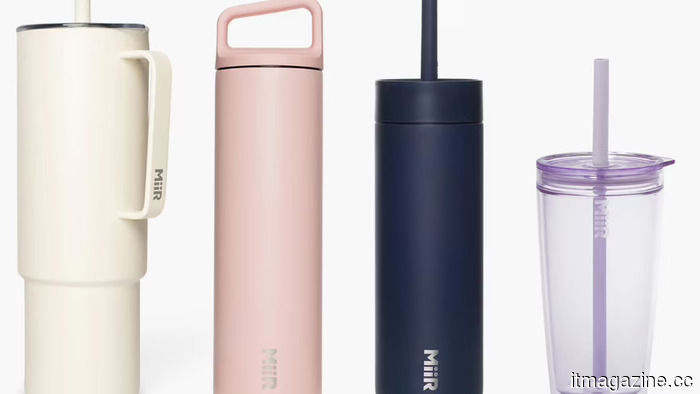 Seattle-based drinkware manufacturer MiiR has filed a lawsuit against Tesla, alleging that the company has copied the design of its tumbler lid.
MiiR claims that Tesla's On The Road Tumbler infringes on its patented lid design and the positioning of its vertical logo. The company is pursuing a permanent injunction along with Tesla's profits.
Seattle-based drinkware manufacturer MiiR has filed a lawsuit against Tesla, alleging that the company has copied the design of its tumbler lid.
MiiR claims that Tesla's On The Road Tumbler infringes on its patented lid design and the positioning of its vertical logo. The company is pursuing a permanent injunction along with Tesla's profits.
 BNP states that the $3.6 trillion surge in US IPOs will enhance technology transactions in Europe.
BNP Paribas reports that the $3.6 trillion IPO pipeline from SpaceX, OpenAI, and Anthropic will stimulate interest in European tech listings. Investors in the US are already showing interest.
BNP states that the $3.6 trillion surge in US IPOs will enhance technology transactions in Europe.
BNP Paribas reports that the $3.6 trillion IPO pipeline from SpaceX, OpenAI, and Anthropic will stimulate interest in European tech listings. Investors in the US are already showing interest.
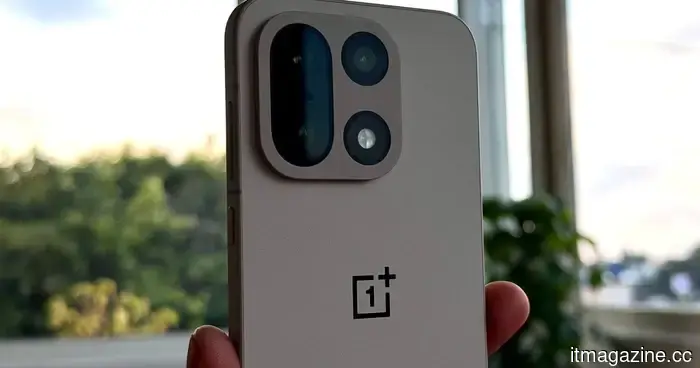 OnePlus 15 becomes part of the limited Android group that can AirDrop to iPhones.
Users of the OnePlus 15 can now transfer files to nearby iPhones, iPads, and Macs using Quick Share, eliminating the need for previous methods such as cloud links and third-party applications.
OnePlus 15 becomes part of the limited Android group that can AirDrop to iPhones.
Users of the OnePlus 15 can now transfer files to nearby iPhones, iPads, and Macs using Quick Share, eliminating the need for previous methods such as cloud links and third-party applications.
 The companies most focused on AI invest $7,500 per employee each month, while the median expenditure is $11.
Ramp data indicates that the top 1% of companies allocate $7,500 per month for each employee on AI, while the median expenditure is just $11.38. There is a significant disparity between the power users and the rest.
The companies most focused on AI invest $7,500 per employee each month, while the median expenditure is $11.
Ramp data indicates that the top 1% of companies allocate $7,500 per month for each employee on AI, while the median expenditure is just $11.38. There is a significant disparity between the power users and the rest.
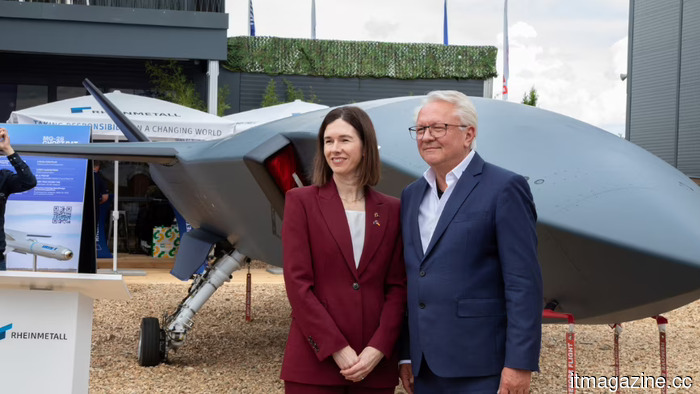 Boeing enhances the Ghost Bat to compete with Helsing in Germany.
Boeing's MQ-28 Ghost Bat can now internally transport bombs and missiles with an increase of 25% in wing area. It is in competition with Helsing's CA-1 Europa for drone orders from Germany.
Boeing enhances the Ghost Bat to compete with Helsing in Germany.
Boeing's MQ-28 Ghost Bat can now internally transport bombs and missiles with an increase of 25% in wing area. It is in competition with Helsing's CA-1 Europa for drone orders from Germany.
NEURA Robotics secures up to $1.4 billion in a record-setting robotics funding round supported by Nvidia, Amazon, and Tether.
The German robotics company NEURA secured up to $1.4 billion at a valuation of $7 billion from investors including Nvidia, Amazon, Tether, Qualcomm, and Bosch to expand cognitive robots to millions by 2030.