
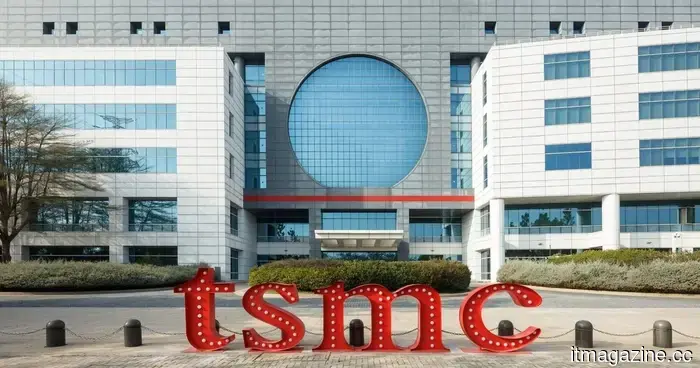
The leading chip manufacturer has issued a warning about price increases that will impact your smartphone and laptop.
TSMC, the firm responsible for the chips found in nearly every consumer device, indicates that inflation is increasing costs and has not excluded the possibility of passing these expenses onto customers.
The leading chip manufacturer has suggested that rising expenses may compel it to raise prices for the chips that power consumer gadgets and AI infrastructure.
In a conversation with the BBC, TSMC CFO Wendell Huang confirmed that inflation is elevating the company's costs and did not dismiss the idea of transferring those increases to clients. However, he refrained from promising sudden significant hikes, stating the company would not enforce “fourfold, fivefold” price increases. On the same day, TSMC chairman and CEO CC Wei expressed to shareholders that he would “like” to increase prices, noting that competitors have already done so.
Why this is relevant for you
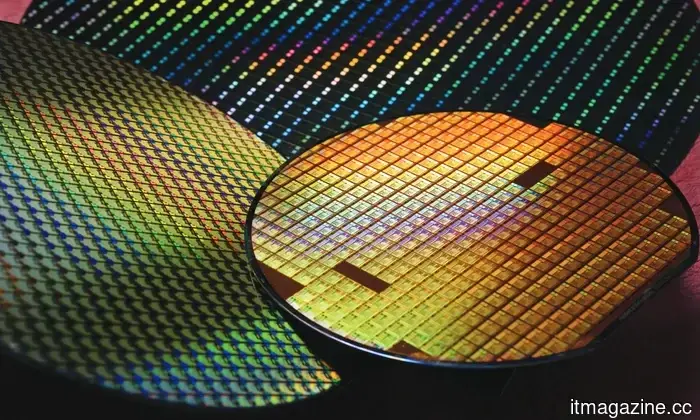
TSMC produces the chips found in almost every major consumer product. Companies like Apple, Nvidia, and AMD depend on TSMC's factories to manufacture their most cutting-edge silicon, meaning that any rise in chip production costs can affect the prices of the phones, laptops, and AI services that you purchase.
TSMC
As a key player in the global chip market, TSMC has a significant position. Taiwan is responsible for the majority of the world’s advanced chips, and TSMC is at the heart of escalating trade tensions between the US and China, with the US urging chip manufacturers to boost domestic production to secure supply chains.
Factors behind the rising costs
Huang mentioned to the BBC that inflation is the main factor driving up operational costs across the company. TSMC is also heavily investing in expanding manufacturing outside of Taiwan, dedicating $165 billion specifically to its operations in Arizona, in addition to building new plants in Germany and Japan.
Huang acknowledged that relocating the entire manufacturing ecosystem to the US would require “five to ten years, or even longer,” implying that the cost pressures from this expansion are unlikely to diminish anytime soon.
---
Pranob is an experienced tech journalist with more than eight years of experience in the field of consumer technology.
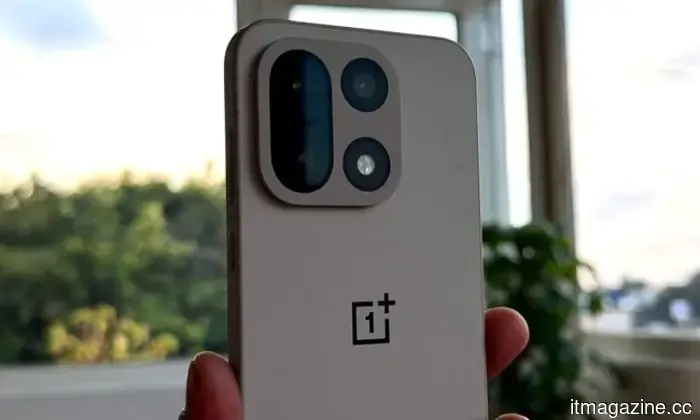
The OnePlus 15 is now part of the select group of Android devices capable of sharing files directly with Apple devices via AirDrop. According to Android Authority, the AirDrop feature through Quick Share is now active on the OnePlus 15. This functionality was also mentioned in a OnePlus Community post, where a user noted that the phone was capable of sending files to iPhones, iPads, and Macs using Apple’s sharing system. Consequently, OnePlus 15 users should be able to transfer files to nearby iPhones and receive files without relying on workarounds such as Google Drive links, Bluetooth, or third-party file-sharing applications.
iOS 27 might potentially simplify battery-saving settings. Apple seems to be testing a feature called Dormancy, which identifies unused settings and suggests turning them off to conserve battery life. Developer Steve Moser discovered mentions of Dormancy in iOS 27 Beta 1 and watchOS, suggesting that the feature is intended to recommend disabling options or features that have not been utilized.
The FCC is considering phone ID regulations that could complicate the acquisition of burner phones in the US. This initiative, aimed at combating robocalls and scam texts, would mandate telecom providers to gather identifying information before offering service to users starting or continuing a plan. For prepaid users, a number that previously remained isolated from a comprehensive identity record could become associated with carrier-held data prior to service activation, diminishing the lure of burner phones without necessitating any suspicious actions.



Other articles
 World Cup biometrics, Google Gemini, and your face at the entrance.
World Cup biometrics scan your face at the entrance, while Google's Gemini occupies your phone. This is the AI that 10 million fans will truly interact with in 2026.
Nvidia partner Bizlink has acquired Interplex ICT for $850 million.
Nvidia partner Bizlink has consented to purchase Blackstone's Interplex ICT division for $850 million, which is lower than the over $1 billion that was initially requested. The acquisition strengthens Bizlink's role in the data center supply chain as investments in AI infrastructure rise.
World Cup biometrics, Google Gemini, and your face at the entrance.
World Cup biometrics scan your face at the entrance, while Google's Gemini occupies your phone. This is the AI that 10 million fans will truly interact with in 2026.
Nvidia partner Bizlink has acquired Interplex ICT for $850 million.
Nvidia partner Bizlink has consented to purchase Blackstone's Interplex ICT division for $850 million, which is lower than the over $1 billion that was initially requested. The acquisition strengthens Bizlink's role in the data center supply chain as investments in AI infrastructure rise.
 Meta signs its inaugural data center agreement in India with Reliance.
Meta has finalized its first data center agreement in India, renting a 168MW AI facility from Reliance in Jamnagar, as hyperscale companies seek more affordable power and land.
Meta signs its inaugural data center agreement in India with Reliance.
Meta has finalized its first data center agreement in India, renting a 168MW AI facility from Reliance in Jamnagar, as hyperscale companies seek more affordable power and land.
 Logitech Mobi Fold: an AI-enabled foldable travel mouse
Logitech's Mobi Fold foldable mouse can be folded to half its original size, has a battery life of 30 days, and charges for 22 hours in just one minute. It is priced at $79.99 and is now available for global shipping.
TensorWave secures $350 million as AMD invests in its competitor to Nvidia.
TensorWave, a cloud startup powered by AMD, has secured $350 million in funding, with AMD and Magnetar leading the investment, reaching a valuation of $1.55 billion—almost four times its value from a year prior—aiming to compete with Nvidia.
Logitech Mobi Fold: an AI-enabled foldable travel mouse
Logitech's Mobi Fold foldable mouse can be folded to half its original size, has a battery life of 30 days, and charges for 22 hours in just one minute. It is priced at $79.99 and is now available for global shipping.
TensorWave secures $350 million as AMD invests in its competitor to Nvidia.
TensorWave, a cloud startup powered by AMD, has secured $350 million in funding, with AMD and Magnetar leading the investment, reaching a valuation of $1.55 billion—almost four times its value from a year prior—aiming to compete with Nvidia.
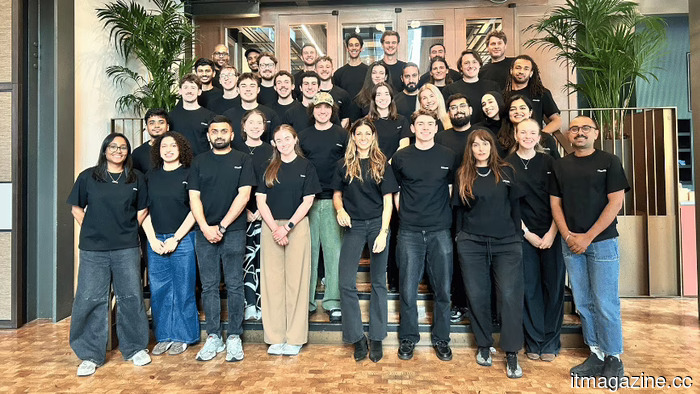 01Health secures £11.2 million for its specialized care platform.
01Health has secured £11.2 million ($15 million) in Series A funding, with Gresham House Ventures at the helm, to expand its specialist-care platform beyond its dental brands.
01Health secures £11.2 million for its specialized care platform.
01Health has secured £11.2 million ($15 million) in Series A funding, with Gresham House Ventures at the helm, to expand its specialist-care platform beyond its dental brands.
The leading chip manufacturer has issued a warning about price increases that will impact your smartphone and laptop.
TSMC's CFO Wendell Huang informed the BBC that rising inflation is increasing costs and did not dismiss the possibility of price hikes, a caution that could significantly affect the phones, laptops, and AI services that utilize the company's chips.