
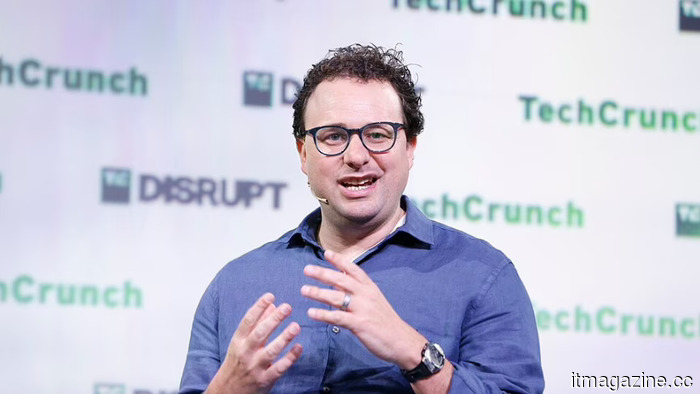
The CEO of Anthropic is unsure whether Claude targeted a school in Iran.
Anthropic's CEO Dario Amodei stated that he is unaware of the role his company’s AI model, Claude, played in a missile attack that claimed the lives of around 120 children at an elementary school in Minab, Iran, on February 28. In an interview on Bloomberg’s The Circuit with Emily Chang, he called the incident “a really terrible thing to happen,” but maintained that the use case did not breach Anthropic’s policies. “We don’t have access to, we don’t know precisely how these models were utilized,” Amodei said. “The guiding principle we have established, and which I believe was adhered to here, is that a human makes the final decision.”
How Claude integrates into the kill chain
The US Central Command is using an AI-enhanced targeting system called Maven Smart System, developed by Palantir under a $1.3 billion Pentagon contract. This platform employs Claude and other AI technologies to identify targets, prioritize them based on strategic importance, and assist in pairing weapons to those targets. CENTCOM reportedly struck 1,000 targets within the first 24 hours of its operations against Iran, and approximately 13,000 by April 6, shortly after the campaign commenced. The emphasis is on the scale and speed of this targeting; Maven is designed to reduce the time between target identification and engagement.
The Minab school attack
According to Amnesty International, the Shajareh Tayyebeh Elementary School in Minab was struck on the initial day of US operations in Iran, resulting in the deaths of at least 120 children and over 150 individuals in total. Investigations conducted by Amnesty, Human Rights Watch, and other news organizations indicated that a US-manufactured Tomahawk missile was likely involved.
The Pentagon has not officially claimed responsibility for the attack but is looking into the incident. In March, Defense Secretary Pete Hegseth promised a “thorough probe,” which the Washington Post interpreted as a subtle acknowledgment of US accountability.
The knowledge gap
Amodei’s acknowledgment that he is unaware of how Claude was utilized during the strike highlights a larger issue. AI companies are providing increasingly sophisticated tools to the military but have limited insight into how these tools are actually deployed in combat situations. Hamza Chaudhry from the Future of Life Institute cautioned that the processes for AI targeting could accelerate to a point where human decision-making becomes little more than a “rubber stamp.” He expressed concern that the expanded scale of combat could lead to a significantly greater loss of life.
The creator of Maven concurs
Jack Shanahan, the retired Air Force lieutenant general who launched Project Maven, shared similar worries at a workshop at Stanford University last week. He cautioned that incorporating Claude into the Maven Smart System could lead to “unexpected impacts” and lessen the influence of human judgment. “If you’re making more decisions instead of making the right decisions, you could have a very flawed decision-making process,” Shanahan remarked. “You may have a thousand targets, but are they the correct targets?”
Anthropic’s Pentagon confrontation
Earlier this year, Amodei sparked a conflict with the Trump administration by declining to permit Claude's use in fully autonomous weapon systems or mass domestic surveillance. The Pentagon responded by labeling Anthropic as a supply-chain risk, leading the company to file a lawsuit that is still ongoing. A federal judge in California blocked the Pentagon’s attempt to sever ties with Anthropic, ruling that it infringed upon the company’s constitutional rights. However, a separate appeals court in Washington denied Anthropic’s request for a temporary halt on the blacklisting during the ongoing legal proceedings.
The contradictions
While Amodei asserted that the "principle" of human decision-making was "obeyed" in the Minab strike, he also admitted his lack of knowledge regarding Claude’s involvement. These two statements are challenging to reconcile; without understanding how the model was utilized, one cannot ascertain whether the principle was indeed followed. The argument that a human makes the final decision does not alleviate concerns that AI-accelerated targeting may generate so many targets in a short time that human review becomes superficial rather than substantive. CENTCOM’s own data, citing 13,000 targets in just five weeks, reinforces this concern.
Anthropic’s stance also appears structurally contradictory. The company set a boundary against autonomous weapons and mass surveillance and pursued legal action against the government for its blacklisting, yet its AI is integrated into the targeting system responsible for striking 13,000 targets during a campaign that resulted in the deaths of children at a school. While it’s unclear whether Claude was involved in that specific strike, it is part of the system that enabled it.
Other articles
 Trump Media abandons Truth Social spinoff but retains TAE merger.
Trump Media has decided to scrap its initiative to convert Truth Social into a SPAC overseen by Trump associates. The $6 billion merger deal with TAE Technologies aims for a completion date in the fourth quarter of 2026.
Trump Media abandons Truth Social spinoff but retains TAE merger.
Trump Media has decided to scrap its initiative to convert Truth Social into a SPAC overseen by Trump associates. The $6 billion merger deal with TAE Technologies aims for a completion date in the fourth quarter of 2026.
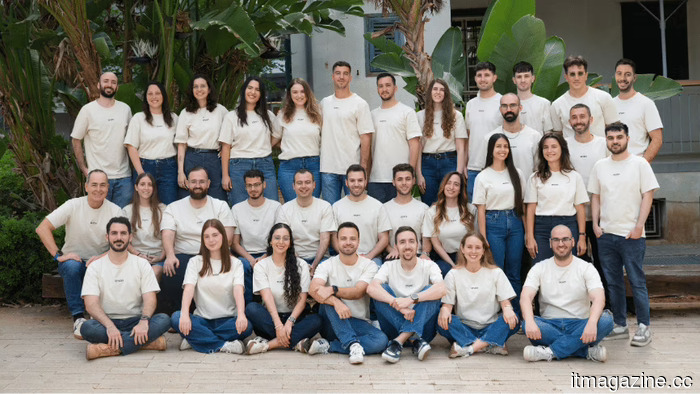 Aryon Security secures $29 million to avert cloud breaches.
Aryon Security secured $29 million in funding, supported by CrowdStrike's George Kurtz, Datadog, and Shlomo Kramer, to prevent cloud breaches before they occur.
Aryon Security secures $29 million to avert cloud breaches.
Aryon Security secured $29 million in funding, supported by CrowdStrike's George Kurtz, Datadog, and Shlomo Kramer, to prevent cloud breaches before they occur.
 India halted Starlink's approvals due to concerns regarding Iran, just days before SpaceX’s historic IPO.
Indian security authorities halted the launch of Starlink after terminals were spotted in Iran without authorization. This development comes at an inconvenient time for SpaceX's $75 billion IPO.
India halted Starlink's approvals due to concerns regarding Iran, just days before SpaceX’s historic IPO.
Indian security authorities halted the launch of Starlink after terminals were spotted in Iran without authorization. This development comes at an inconvenient time for SpaceX's $75 billion IPO.
 India suspended Starlink approvals due to concerns about Iran, just days prior to SpaceX's record IPO.
Indian security agencies halted the launch of Starlink after terminals were found in Iran without a license. This comes at an inconvenient time for SpaceX's $75 billion IPO.
India suspended Starlink approvals due to concerns about Iran, just days prior to SpaceX's record IPO.
Indian security agencies halted the launch of Starlink after terminals were found in Iran without a license. This comes at an inconvenient time for SpaceX's $75 billion IPO.
 Russia lifts the ban on Roblox following complaints from 63,000 children.
Russia has reinstated access to Roblox following a ban imposed in December. This change came after the receipt of 63,000 complaint letters from children, with half expressing a desire to leave the country.
Russia lifts the ban on Roblox following complaints from 63,000 children.
Russia has reinstated access to Roblox following a ban imposed in December. This change came after the receipt of 63,000 complaint letters from children, with half expressing a desire to leave the country.
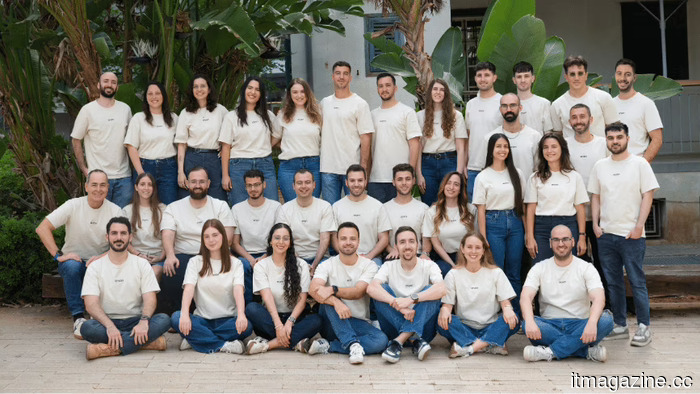 Aryon Security secures $29 million to safeguard against cloud breaches.
Aryon Security secured $29 million in funding, supported by CrowdStrike's George Kurtz, Datadog, and Shlomo Kramer, with the aim of preventing cloud breaches before they occur.
Aryon Security secures $29 million to safeguard against cloud breaches.
Aryon Security secured $29 million in funding, supported by CrowdStrike's George Kurtz, Datadog, and Shlomo Kramer, with the aim of preventing cloud breaches before they occur.
The CEO of Anthropic is unsure whether Claude targeted a school in Iran.
Dario Amodei mentioned that he is uncertain about the involvement of Claude in a strike that resulted in the deaths of 120 children at an Iranian school. The AI is integrated into the Pentagon's targeting system.