

Meta refuted the existence of face scanning technology in their AI smartglasses and subsequently discreetly erased the proof.
Meta's history with face recognition continues to complicate its ambitions for AI smart glasses.
Meta’s smart glasses app faced renewed scrutiny regarding privacy issues after WIRED discovered inactive references to face identification within the Meta AI app, which have now reportedly been removed in a subsequent update.
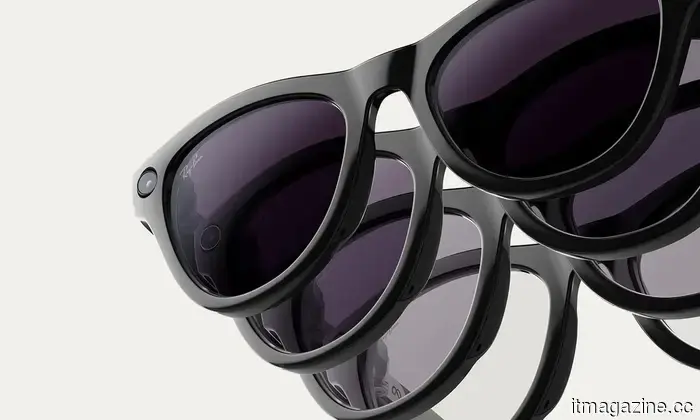
The smart glasses app included traces of face-recognition technology.
The code was linked to an internal project called "NameTag," and although WIRED indicated that the system was inactive for users, its existence hinted that Meta was exploring the possibilities of face identification within its smart glasses framework.
WIRED reported that this dormant system seemed capable of processing facial data into on-device identifiers that could be aligned with pre-existing information. While this does not equate to the public implementation of facial recognition in Ray-Ban Meta smart glasses, it highlights why the findings have garnered attention.
The situation is particularly sensitive as this wasn't contained within a research demonstration or a developer-specific version; it emerged in the app used by everyday smart glasses users. For a camera-equipped device designed for public use, even inactive references to face recognition raise significant questions about consent and the extent of user awareness regarding behind-the-scenes testing.
Civil rights organizations had already raised concerns.
This isn't the first warning signal about Meta's smart glasses goals; civil rights groups had previously expressed discontent over the company's rumored plans to incorporate facial recognition into its AI glasses. Advocates pointed out that a function capable of identifying individuals through wearable cameras could pose privacy threats to bystanders who never consented to being scanned, while also extending the reach of surveillance in common public situations.
Those concerns intensified following the removal of the code. Meta's communications chief, Andy Stone, mentioned to WIRED that the feature was part of a pilot, and the company had not finalized plans on whether to implement it. This may clarify why the feature was inactive, though it does not address why face-recognition code was found in an app designed for standard smart glasses users.
Meta's past with this technology also complicates the situation. In 2021, Facebook announced the shutdown of its face-recognition system and the deletion of facial recognition templates for over a billion users due to privacy and regulatory worries. While the latest report does not confirm that facial recognition will be introduced to Meta glasses shortly, the appearance and subsequent disappearance of dormant face-ID code in a consumer application make it challenging to dismiss Meta’s interest as entirely theoretical.






Other articles
 This heated bionic-kneading neck massager is the perfect Father’s Day gift that will be appreciated and used.
This post is presented in collaboration with SKG. If you've ever purchased a gift that ended up collecting dust by July, this is the one that will change that trend. The SKG PS700 neck massager is priced at $199.99, and unlike many novelty items found in the gift section, it’s designed for everyday use. [...]
This heated bionic-kneading neck massager is the perfect Father’s Day gift that will be appreciated and used.
This post is presented in collaboration with SKG. If you've ever purchased a gift that ended up collecting dust by July, this is the one that will change that trend. The SKG PS700 neck massager is priced at $199.99, and unlike many novelty items found in the gift section, it’s designed for everyday use. [...]
 Meta rejected the use of face scanning technology in its AI smartglasses and subsequently discreetly removed any evidence of it.
Code for face recognition that was inactive reportedly surfaced in Meta's smart glasses application, only to vanish following examination. This has once again brought Meta's AI eyewear initiatives under the scrutiny of privacy concerns.
Meta rejected the use of face scanning technology in its AI smartglasses and subsequently discreetly removed any evidence of it.
Code for face recognition that was inactive reportedly surfaced in Meta's smart glasses application, only to vanish following examination. This has once again brought Meta's AI eyewear initiatives under the scrutiny of privacy concerns.
 BenQ's ZOWIE is approaching gaming equipment with the mindset of sports science, and as an esports enthusiast, I find it fantastic.
Within BenQ's ZOWIE lab, I witnessed how sports science, player statistics, and the narrow margins that determine the outcomes of competitive matches influence the design of gaming mice and monitors.
BenQ's ZOWIE is approaching gaming equipment with the mindset of sports science, and as an esports enthusiast, I find it fantastic.
Within BenQ's ZOWIE lab, I witnessed how sports science, player statistics, and the narrow margins that determine the outcomes of competitive matches influence the design of gaming mice and monitors.
 RingConn Gen 3 Smart Ring Unveils the Subtle Patterns of Daily Wellbeing
What if the key indicators of wellbeing are those we often overlook? The most significant insights might stem from ongoing patterns rather than just a single day. Centered around vascular trend monitoring, the RingConn Gen 3 Smart Ring aims to highlight these patterns, all while featuring no subscription costs and a limited-time 10% discount.
RingConn Gen 3 Smart Ring Unveils the Subtle Patterns of Daily Wellbeing
What if the key indicators of wellbeing are those we often overlook? The most significant insights might stem from ongoing patterns rather than just a single day. Centered around vascular trend monitoring, the RingConn Gen 3 Smart Ring aims to highlight these patterns, all while featuring no subscription costs and a limited-time 10% discount.
 Marshall’s latest Stockwell III addresses an issue that many Bluetooth speakers overlook.
The latest Stockwell III offers extended battery life and enhanced durability, yet its most intriguing aspect isn't related to music at all.
Marshall’s latest Stockwell III addresses an issue that many Bluetooth speakers overlook.
The latest Stockwell III offers extended battery life and enhanced durability, yet its most intriguing aspect isn't related to music at all.
 Meta rejected the use of facial recognition technology in its AI smart glasses and subsequently discreetly removed any related evidence.
A dormant face-recognition code was said to have surfaced in Meta’s smart glasses application, only to vanish following examination. This has placed Meta's AI eyewear initiatives once again in the spotlight regarding privacy concerns.
Meta rejected the use of facial recognition technology in its AI smart glasses and subsequently discreetly removed any related evidence.
A dormant face-recognition code was said to have surfaced in Meta’s smart glasses application, only to vanish following examination. This has placed Meta's AI eyewear initiatives once again in the spotlight regarding privacy concerns.
Meta refuted the existence of face scanning technology in their AI smartglasses and subsequently discreetly erased the proof.
Inactive face-recognition software reportedly surfaced in the app for Meta's smart glasses but vanished following examination. This has brought Meta's AI eyewear initiatives back into focus regarding privacy concerns.