
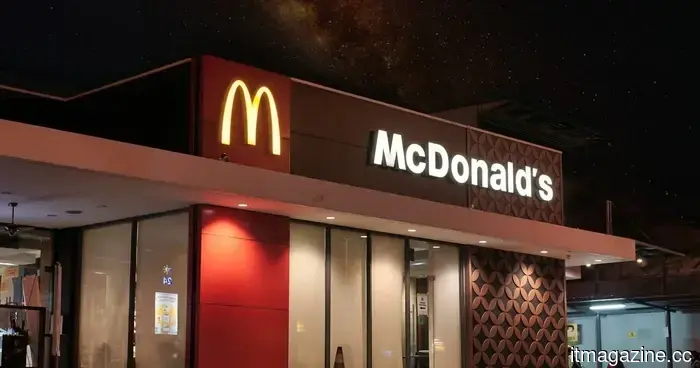
McDonald’s new AI drive-thru needs to demonstrate its ability to manage customers who are eager to eat.
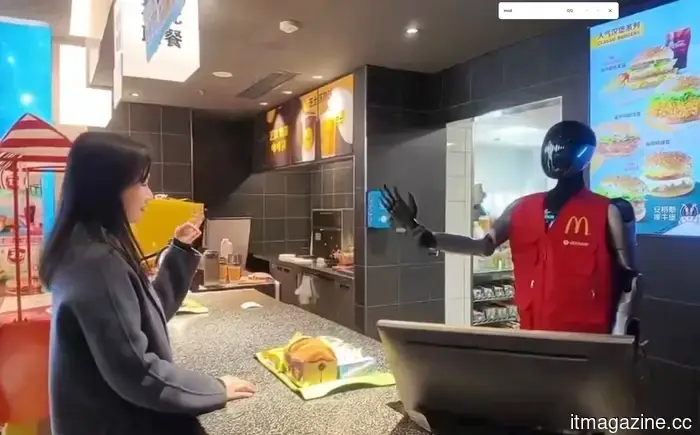
McDonald’s is reintroducing AI to the drive-thru with a new system supported by Google, known as ArchIQ or Archy. This initiative is launching in five locations as part of the company's broader technology effort termed “> NEXT,” with one franchisee reporting that the system has already processed over 1 million orders.
The more significant figure is the one McDonald’s needs consumers to believe. Approximately 90% of those orders reportedly required no human assistance. While this sounds optimistic, it is not a fresh start. The previous AI drive-thru trial, backed by IBM, concluded after viral mistakes turned the automated ordering into a source of ridicule.
McDonald’s is also not exploring this technology in isolation. Competitors like Wendy’s, Taco Bell, Dairy Queen, Bojangles, Carl’s Jr., and Hardee’s have attempted AI ordering with varying success. The primary selling point is speed, but the drive-thru presents challenges for voice AI.
Reasons why the drive-thru attracts AI
From a distance, fast-food ordering appears simple to automate. The menu is set, interactions are brief, and most orders tend to follow a predictable pattern. In theory, a tireless voice bot seems beneficial.
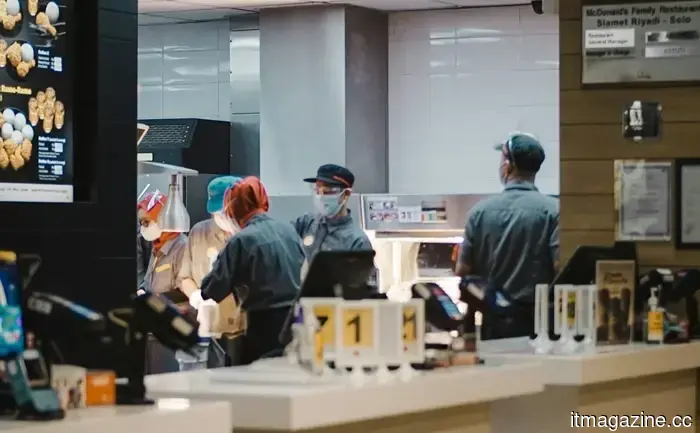
However, the real challenge arises when customers deviate from the scripted interactions. People frequently change their orders, mumble, request substitutions, and place orders amidst noise from their cars. A system that performs well in ideal conditions may still falter when someone asks for no onions, extra sauce, and a specific item from the app.
Why the previous failure is memorable
McDonald’s has experienced this before, and the public mainly remembers the blunders. The earlier trial, which was supported by IBM, aimed to demonstrate that automated ordering could function effectively at scale, but the failures were disseminated more widely than the original pitch.
A typical mistake becomes a source of amusement once it appears on TikTok. Customers might tolerate an odd response from a chatbot online, but they are less forgiving when they are hungry and waiting in line.
Visual Karsa
McDonald’s can highlight order volumes and automation rates, but customers will evaluate Archy based on the errors it prevents.
When the bot attracts attention
The ideal AI drive-thru experience blends seamlessly into the routine. It captures the order accurately, gets the modifications right, and forwards the request without anyone reflecting on the machine behind the speaker.
The worst-case scenario turns the customer into an unpaid quality checker. It creates a loop of corrections, slows down the line, and still necessitates human intervention.
McDonald’s doesn’t need Archy to feel innovative; it requires the system to make ordering less frustrating, not more. Until that happens, the drive-thru screen remains a test for the AI, and customers ought to evaluate its performance before proceeding.
Other articles
 The ECB curbed Revolut's 'self-guided missiles.'
The Financial Times reports that the ECB discreetly prevented Revolut from introducing new EU products last year due to rapid approval processes, as a share sale values the fintech at $115 billion.
TensorWave secures $350 million as AMD invests in its competitor to Nvidia.
TensorWave, a cloud startup powered by AMD, has secured $350 million in funding, led by AMD and Magnetar, at a valuation of $1.55 billion—almost four times its value from a year prior—in a bid to compete with Nvidia.
Nvidia partner Bizlink has acquired Interplex ICT for $850 million.
Nvidia collaborator Bizlink has agreed to purchase Blackstone's Interplex ICT division for $850 million, which is lower than the over $1 billion originally targeted. This acquisition strengthens Bizlink's role in the data center supply chain amidst the rising expenditures on AI infrastructure.
SK Hynix aims for a $14 billion listing in the US, capitalizing on the surge in AI memory demand.
SK Hynix is aiming for a US listing that might generate up to $14 billion as early as August, driven by the AI-memory surge that has increased its stock by 250% and pushed its valuation beyond $1 trillion.
Nvidia partner Bizlink has acquired Interplex ICT for $850 million.
Nvidia partner Bizlink has consented to purchase Blackstone's Interplex ICT division for $850 million, which is lower than the over $1 billion that was initially requested. The acquisition strengthens Bizlink's role in the data center supply chain as investments in AI infrastructure rise.
The ECB curbed Revolut's 'self-guided missiles.'
The Financial Times reports that the ECB discreetly prevented Revolut from introducing new EU products last year due to rapid approval processes, as a share sale values the fintech at $115 billion.
TensorWave secures $350 million as AMD invests in its competitor to Nvidia.
TensorWave, a cloud startup powered by AMD, has secured $350 million in funding, led by AMD and Magnetar, at a valuation of $1.55 billion—almost four times its value from a year prior—in a bid to compete with Nvidia.
Nvidia partner Bizlink has acquired Interplex ICT for $850 million.
Nvidia collaborator Bizlink has agreed to purchase Blackstone's Interplex ICT division for $850 million, which is lower than the over $1 billion originally targeted. This acquisition strengthens Bizlink's role in the data center supply chain amidst the rising expenditures on AI infrastructure.
SK Hynix aims for a $14 billion listing in the US, capitalizing on the surge in AI memory demand.
SK Hynix is aiming for a US listing that might generate up to $14 billion as early as August, driven by the AI-memory surge that has increased its stock by 250% and pushed its valuation beyond $1 trillion.
Nvidia partner Bizlink has acquired Interplex ICT for $850 million.
Nvidia partner Bizlink has consented to purchase Blackstone's Interplex ICT division for $850 million, which is lower than the over $1 billion that was initially requested. The acquisition strengthens Bizlink's role in the data center supply chain as investments in AI infrastructure rise.
 Meta signs its inaugural data center agreement in India with Reliance.
Meta has finalized its first data center agreement in India, renting a 168MW AI facility from Reliance in Jamnagar, as hyperscale companies seek more affordable power and land.
Meta signs its inaugural data center agreement in India with Reliance.
Meta has finalized its first data center agreement in India, renting a 168MW AI facility from Reliance in Jamnagar, as hyperscale companies seek more affordable power and land.
McDonald’s new AI drive-thru needs to demonstrate its ability to manage customers who are eager to eat.
McDonald’s is experimenting with a new AI drive-thru system supported by Google after its previous ordering bot caused a viral stir. The key challenge is whether Archy can make the fast-food ordering experience feel mundane once more.