

A humanoid robot ascended a volcano, aided by some very human assistance.
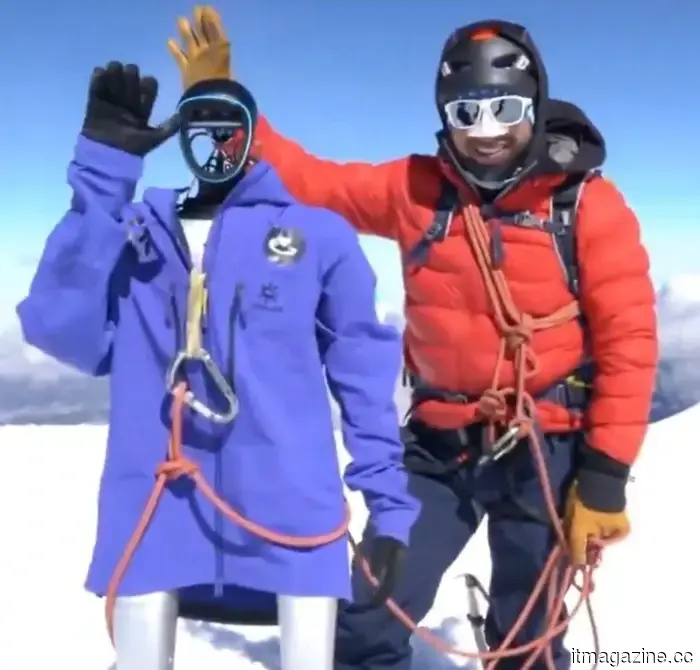
A humanoid robot named Pemba has successfully reached the peak of Ecuador’s Chimborazo volcano, which stands at 20,341 feet, providing a rather chilly setting for the narrative of advancing robotics.
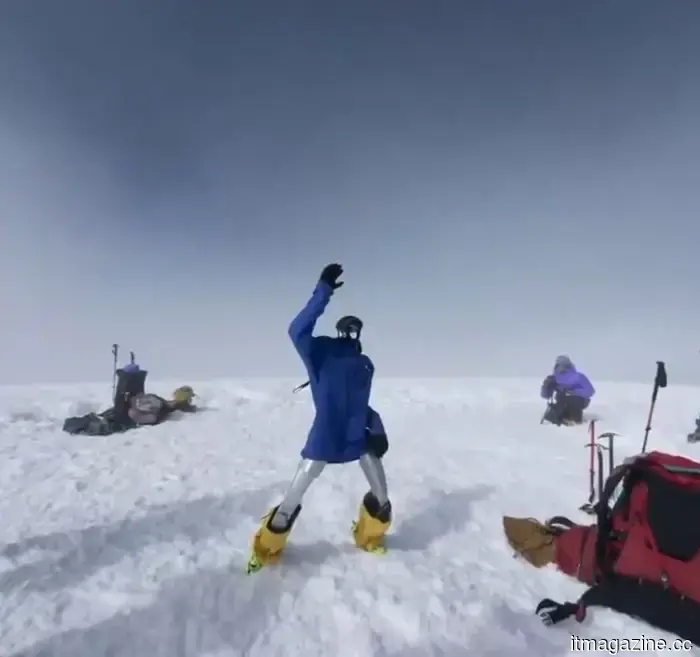
While the ascent is notable, the specifics behind the feat are noteworthy as well. Pemba, adapted from the Unitree G1, completed the 16-hour journey to the summit with assistance from its supporting team. The robot autonomously walked during less difficult sections, whereas team members carried it through steeper and more challenging areas.
As a result, the accomplishment resembles a collaborative human-robot endeavor rather than a solely robotic triumph over the Andes. Pemba still relied on human support, but it encountered conditions that are rarely experienced during typical lab demonstrations.
How much of the ascent was done by Pemba?
The robot maneuvered independently on parts of the route where the slope was under 30 degrees, which remains a significant assessment for a humanoid at high altitudes.
During the more challenging and steep portions, team members transported the robot, turning the summit attempt into a combined human and machine expedition rather than a completely autonomous one.
This qualification doesn’t diminish the achievement. Chimborazo presented additional factors such as snow, cold, uneven terrain, thin air, and battery strain that go beyond the usual challenges faced by robotics. These conditions are more difficult to disregard than those found on a showroom floor.
Why deploy a robot in this context?
Pemba is being utilized to evaluate whether humanoid robots can operate in environments where humans encounter significant risks and traditional machines may struggle.
A humanoid carrying cameras, environmental sensors, satellite communication, and onboard AI could oversee protected areas, gather data, or assess landscapes without the need for numerous fixed cameras spread across isolated regions.
Although this application may not seem as thrilling as reaching a volcano summit, it is more practical. If a robot can withstand high altitudes, frigid temperatures, rough terrain, weak communication signals, and power constraints, it becomes better suited for operations in disaster zones, conservation sites, and other locations where sending a human is costly, slow, and hazardous.
What's next before Everest?
Pemba's forthcoming major objective is Everest, but already the endeavor is encountering bureaucratic hurdles. Geologic Dome and Nepal's Fourteen Peaks Expedition have suggested testing a humanoid robot between Everest Base Camp and Camp IV to collect data on battery efficiency, joint stress, movement, and environmental adaptability.
Interestingly, the challenge aligns with the situation at hand. Nepal reportedly lacks a legal framework governing robotic expeditions on Everest, and officials seek to establish rules for non-human climbers before advancing the project.
While this may seem strange, it is likely an appropriate cautious approach. Delicate, perilous, and closely monitored environments require regulations before integrating robots into the mix. A malfunctioning machine on a mountain could pose an obstacle, create a rescue dilemma, or simply become costly debris with legs.
Other articles
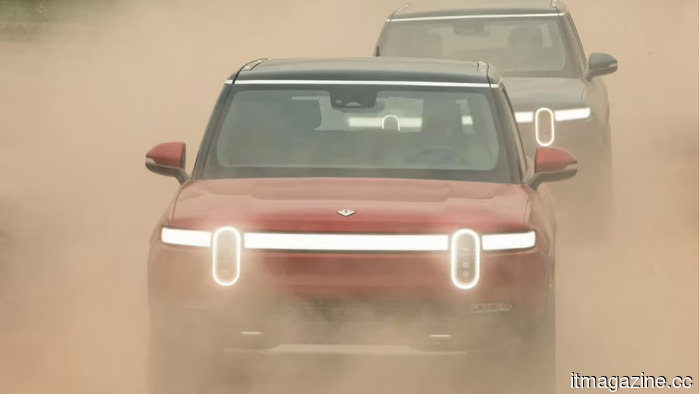 Rivian launches R2 deliveries, viewing the declining US EV market as a chance for growth.
On Tuesday, Rivian began delivering R2 SUVs to customers, aiming for 20,000 to 25,000 deliveries by the end of the year, as there are fewer new electric vehicles competing in a challenging US market.
Rivian launches R2 deliveries, viewing the declining US EV market as a chance for growth.
On Tuesday, Rivian began delivering R2 SUVs to customers, aiming for 20,000 to 25,000 deliveries by the end of the year, as there are fewer new electric vehicles competing in a challenging US market.
 Anthropic has launched Claude Fable 5, marking its first Mythos-class model available to the public.
On Tuesday, Anthropic introduced Claude Fable 5, a model of the Mythos class that includes safeguards preventing inquiries related to cybersecurity and biology, with a cost of $10 for every million input tokens.
Anthropic has launched Claude Fable 5, marking its first Mythos-class model available to the public.
On Tuesday, Anthropic introduced Claude Fable 5, a model of the Mythos class that includes safeguards preventing inquiries related to cybersecurity and biology, with a cost of $10 for every million input tokens.
 Atomicwork introduces a regulated AI workforce for enterprise IT.
Atomicwork has introduced AI agents for enterprise IT, featuring specific roles, spending limits, and audit trails. The company was established by former employees of Freshworks. Customer data remains confidential. They have raised $40.3 million.
Atomicwork introduces a regulated AI workforce for enterprise IT.
Atomicwork has introduced AI agents for enterprise IT, featuring specific roles, spending limits, and audit trails. The company was established by former employees of Freshworks. Customer data remains confidential. They have raised $40.3 million.
 Anthropic has launched Claude Fable 5, its inaugural Mythos-class model available to the public.
On Tuesday, Anthropic introduced Claude Fable 5, a Mythos-class model equipped with safety measures that restrict cybersecurity and biology inquiries, available at a cost of $10 for every million input tokens.
Anthropic has launched Claude Fable 5, its inaugural Mythos-class model available to the public.
On Tuesday, Anthropic introduced Claude Fable 5, a Mythos-class model equipped with safety measures that restrict cybersecurity and biology inquiries, available at a cost of $10 for every million input tokens.
 UK allocates £1.3 billion for AI hardware, skills development, and reform of the justice system.
The UK revealed a £1.1 billion AI Hardware Plan, along with a £200 million adoption package, AI legal assistants, and a Homelessness Data Lab during London Tech Week. The supercomputer is set to arrive in 2030.
UK allocates £1.3 billion for AI hardware, skills development, and reform of the justice system.
The UK revealed a £1.1 billion AI Hardware Plan, along with a £200 million adoption package, AI legal assistants, and a Homelessness Data Lab during London Tech Week. The supercomputer is set to arrive in 2030.
 SoftBank surpasses Toyota for the first time since the peak of the dot-com era.
SoftBank temporarily surpassed Toyota to become Japan's most valuable company for the first time since February 2000. Kioxia jumped from 154th place to the top three within a year. Could the AI boom of 2000 be repeating itself?
SoftBank surpasses Toyota for the first time since the peak of the dot-com era.
SoftBank temporarily surpassed Toyota to become Japan's most valuable company for the first time since February 2000. Kioxia jumped from 154th place to the top three within a year. Could the AI boom of 2000 be repeating itself?
A humanoid robot ascended a volcano, aided by some very human assistance.
A humanoid robot called Pemba made it to the summit of Ecuador's Chimborazo, but the ascent also highlighted the limitations of robot autonomy, particularly when humans needed to transport it over more challenging terrain.