
SoftBank surpasses Toyota for the first time since the peak of the dot-com era.
TL;DR: SoftBank briefly surpassed Toyota as Japan's most valuable firm last week, marking the first time since February 2000, just before the dot-com bubble burst. Kioxia jumped from 154th to the top three within a year, demonstrating the rapid changes in Japan's corporate landscape due to the AI-driven surge.
Last week, SoftBank momentarily knocked Toyota from the top position as Japan's most valuable company after a stock rally boosted its market cap by over $120 billion in just six months. However, three days later, Toyota regained the lead.
The last occasion SoftBank held the top position was in February 2000, right before the dot-com bubble began to implode. Within a year after that, SoftBank's stock had plummeted by roughly 90%.
In terms of rankings, Kioxia, a NAND flash memory producer, moved up from being the 154th largest company in Japan a year ago to now being in the top three, surpassing notable companies such as Nintendo, Sony, Panasonic, and Canon due to a surge in AI-driven memory demand. Additionally, Murata Manufacturing, which manufactures small multilayer ceramic capacitors, and chip tester Advantest have also entered Japan's new AI-influenced top 20. Meanwhile, despite launching the fastest-selling console ever, Nintendo dropped over 20 places and is struggling to maintain a spot in the top 30.
Reflecting on the past, in early 2000, Japan's top 20 was primarily filled with internet success stories, including NTT and its subsidiaries, Hikari Tsushin, SoftBank, Fujitsu, and NEC, many of which were not even in the top 50 just a year prior. By the end of 2001, Hikari Tsushin had fallen to 615th place.
Chris Smith, co-manager of the Japan Value Fund at London’s Polar Capital, noted, "The dot-com bubble is certainly relevant now. The market returns are highly concentrated, and it's uncertain how long this situation can persist."
The current market concentration is significant in Japan. Chip manufacturers and component companies have thrived due to rising demand from data centers, while gaming and consumer electronics firms have had difficulties due to rising material costs. The automotive sector, vital to Japanese manufacturing, has been pressured by tariffs and geopolitical issues.
On Monday, as SoftBank and Kioxia saw declines of over 6% in an AI-driven selloff, other companies like Nintendo, Capcom, and Recruit rallied. The broader Topix index outperformed the technology-heavy Nikkei 225 by more than a percentage point.
Reasons why the current scenario might differ from 2000 include Japan's many AI laggards, which may help prevent a collapse akin to the dot-com crash. Smith pointed out that companies missing out on the AI boom could provide “very strong relative returns” once the inevitable shift occurs.
SoftBank's top position lasted only three days this time, compared to over two weeks in 2000. Kazuhiro Sasaki, head of research at Phillip Securities Japan, observed that Toyota's ability to maintain the top position despite a 10% drop in its shares this year indicates that Japanese manufacturers still possess value beyond the AI excitement.
The future will be tested by several significant tech IPOs scheduled in the coming months. SpaceX is set to list this week, and OpenAI and Anthropic have filed for public offerings. If the market can absorb these without a correction, the AI trend may prove to be more sustainable than in the dot-com era.
However, if it cannot, the parallels will become sharper. The dot-com bubble comparison is not a prediction but a pattern reflecting what occurs when a limited number of companies attract most of the market's capital, raising the question of whether current valuations are supported by underlying revenue. In Japan, where Kioxia rose from 154th to third place in just a year, this question is particularly pressing.
Other articles
 SoftBank surpasses Toyota for the first time since the dot-com boom.
SoftBank momentarily surpassed Toyota to become Japan's most valuable company for the first time since February 2000. Meanwhile, Kioxia climbed from the 154th position to the top three within a year. Is the AI surge reminiscent of the year 2000?
SoftBank surpasses Toyota for the first time since the dot-com boom.
SoftBank momentarily surpassed Toyota to become Japan's most valuable company for the first time since February 2000. Meanwhile, Kioxia climbed from the 154th position to the top three within a year. Is the AI surge reminiscent of the year 2000?
 The EU has instructed Meta to reinstate access to its WhatsApp AI competitor within five days.
The EU instructed Meta to reinstate WhatsApp access for competing AI assistants within five days. Meta plans to appeal this decision. Potential fines could amount to 10% of its global revenue, and no deadline for the investigation has been established.
The EU has instructed Meta to reinstate access to its WhatsApp AI competitor within five days.
The EU instructed Meta to reinstate WhatsApp access for competing AI assistants within five days. Meta plans to appeal this decision. Potential fines could amount to 10% of its global revenue, and no deadline for the investigation has been established.
 A humanoid robot ascended a volcano, aided by some very human assistance.
A humanoid robot called Pemba made it to the summit of Ecuador's Chimborazo, but the ascent also highlighted the limitations of robot autonomy, particularly when humans needed to transport it over more challenging terrain.
A humanoid robot ascended a volcano, aided by some very human assistance.
A humanoid robot called Pemba made it to the summit of Ecuador's Chimborazo, but the ascent also highlighted the limitations of robot autonomy, particularly when humans needed to transport it over more challenging terrain.
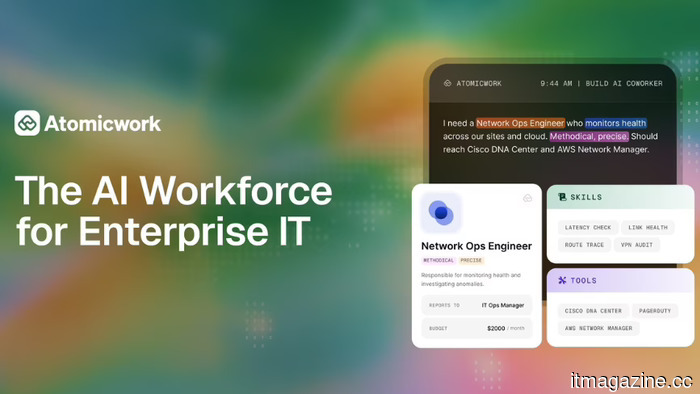 Atomicwork introduces a regulated AI workforce for enterprise IT.
Atomicwork has introduced AI agents for enterprise IT, featuring specific roles, spending limits, and audit trails. The company was established by former employees of Freshworks. Customer data remains confidential. They have raised $40.3 million.
Atomicwork introduces a regulated AI workforce for enterprise IT.
Atomicwork has introduced AI agents for enterprise IT, featuring specific roles, spending limits, and audit trails. The company was established by former employees of Freshworks. Customer data remains confidential. They have raised $40.3 million.
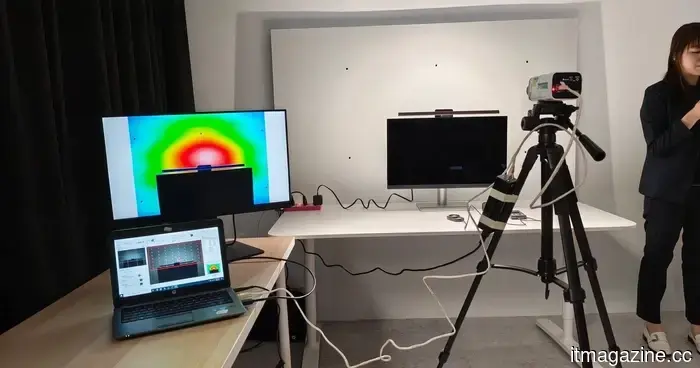 I visited BenQ's lighting lab, and now my desk arrangement seems off.
After observing BenQ's approach to monitor lighting, glare, and desk comfort, my typical desk arrangement suddenly felt like the complacent option I had settled for over the years.
I visited BenQ's lighting lab, and now my desk arrangement seems off.
After observing BenQ's approach to monitor lighting, glare, and desk comfort, my typical desk arrangement suddenly felt like the complacent option I had settled for over the years.
 UK allocates £1.3 billion for AI hardware, skills development, and reform of the justice system.
The UK revealed a £1.1 billion AI Hardware Plan, along with a £200 million adoption package, AI legal assistants, and a Homelessness Data Lab during London Tech Week. The supercomputer is set to arrive in 2030.
UK allocates £1.3 billion for AI hardware, skills development, and reform of the justice system.
The UK revealed a £1.1 billion AI Hardware Plan, along with a £200 million adoption package, AI legal assistants, and a Homelessness Data Lab during London Tech Week. The supercomputer is set to arrive in 2030.
SoftBank surpasses Toyota for the first time since the peak of the dot-com era.
SoftBank temporarily surpassed Toyota to become Japan's most valuable company for the first time since February 2000. Kioxia jumped from 154th place to the top three within a year. Could the AI boom of 2000 be repeating itself?