
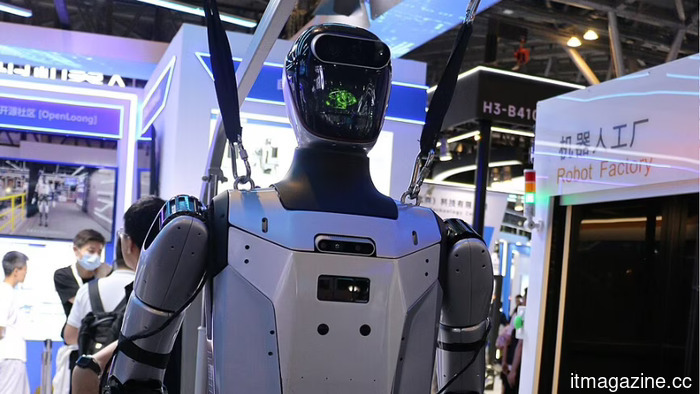
The Pentagon has included Alibaba, Baidu, BYD, and Unitree in its list of Chinese military enterprises.
TL;DR: The Pentagon has added Alibaba, Baidu, BYD, and Unitree to its 1260H list, increasing the total to 188 Chinese companies it claims support the military.
On Monday, the Department of Defense announced the inclusion of Alibaba, Baidu, BYD, and robotics firm Unitree on a list of organizations that it asserts are aiding the Chinese military. The updated 1260H list now identifies 188 companies that the Pentagon says operate in the U.S. and contribute to China's military-civil fusion initiative. This designation heightens the probability that the DoD will restrict U.S. entities from engaging in business with these companies.
The list derives its name from Section 1260H of the 2021 National Defense Authorization Act, which mandates the Pentagon to identify Chinese firms with connections to the People’s Liberation Army. Although this designation does not immediately enforce sanctions, it bears practical implications. Under the FY 2024 NDAA, the DoD is prohibited from initiating or renewing contracts with the listed entities starting June 30, 2026, with indirect contracting bans imposed a year later.
This recent update was briefly noted in the Federal Register in February before being withdrawn without explanation, as reported by Bloomberg. Both the South China Morning Post and Kharon verified that the February disclosure included many of the same companies. The document released on Monday seems to be the finalized version of the previously withdrawn update, now augmented to include additional firms.
Most of China's leading artificial intelligence companies are on this list. In January 2025, Tencent was added along with battery producer CATL, chipmaker CXMT, and drone manufacturer Autel Robotics. The latest update now includes Baidu, a key player in AI and autonomous vehicles, and Alibaba, whose cloud computing division underpins a significant part of China's AI infrastructure. Notably, both Alibaba and Tencent have invested in Unitree, the robotics company that has outperformed Tesla in humanoid robot shipments in 2025 and is pursuing a $7 billion initial public offering on the Shanghai Stock Exchange.
The automotive industry is heavily represented in this update. BYD, which surpassed Tesla as the leading global EV seller in 2025, is now joined by Nio, CALB Group, and battery maker EVE Energy. Additionally, Robosense, a top lidar sensor manufacturer in China, has been added alongside previously listed competitor Hesai.
BYD is currently facing 100% tariffs on its vehicles in the U.S., and its American branches filed a legal challenge in January with the U.S. Court of International Trade, claiming these duties are unlawful. The 1260H designation introduces an additional layer of scrutiny for any U.S. entity contemplating a business relationship with BYD, even as American consumer interest in Chinese EVs continues to rise on social media, despite those trade barriers.
The semiconductor sector is also well represented, with CXMT, China's largest memory chipmaker, included in the January 2025 update and remaining on the list alongside YMTC, the country's leading NAND flash producer. Both are currently engaged in what the industry describes as an aggressive capacity expansion, approximately doubling their wafer production. WuXi AppTec, a biotech contract research organization, has also been included in the latest update.
The timing of this announcement is significant. It coincides with discussions around whether the U.S. should acquire equity stakes in its top domestic AI companies, a proposal reported by TechCrunch on Friday. This update arrives amidst a selective engagement phase between Washington and Beijing, with both governments maintaining a delicate trade truce after a May summit while simultaneously ramping up technology restrictions. The 1260H list is one of several overlapping tools utilized by the U.S. to exert pressure on Chinese technology, alongside export controls on semiconductor equipment and tariffs, as well as the Entity List managed by the Commerce Department’s Bureau of Industry and Security.
The companies listed have consistently contested their designations. Tencent labeled its inclusion "a mistake" when it was added last year, and CATL denied any military connections. As of the time of writing, Alibaba, Baidu, BYD, or Unitree had not publicly responded to the updated list.
Inclusion on the list does not obligate the Pentagon to provide public evidence. The criteria for being listed, which revolve around military-civil fusion, are broad enough to encompass firms whose main focus is consumer technology.
The actual impact of the 1260H list will depend on the government's enforcement of the contracting restrictions and whether Congress or the executive branch leverages the designations for further action. For Alibaba and Baidu, which have U.S. operations in cloud services, advertising, and research partnerships, this designation poses compliance risks for every American company that partners with them. For BYD and Unitree, whose physical products rely on U.S. components and customers, the implications could be more immediate.
The list does not prohibit trade; rather, it requires American firms to assess
Other articles
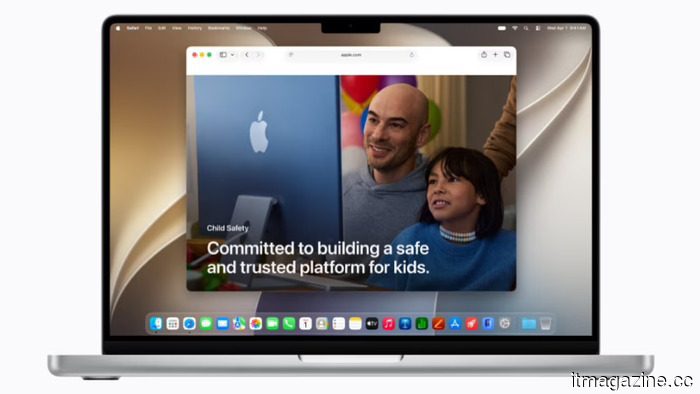 Apple showcases its most significant parental controls update in several years, just weeks ahead of regulatory deadlines in the UK and US.
At WWDC 2026, Apple showcased new child safety features such as Ask to Browse, Time Allowances, and gore-blocking, as regulators in the UK and US impose stricter deadlines.
Apple showcases its most significant parental controls update in several years, just weeks ahead of regulatory deadlines in the UK and US.
At WWDC 2026, Apple showcased new child safety features such as Ask to Browse, Time Allowances, and gore-blocking, as regulators in the UK and US impose stricter deadlines.
 Resident Evil Veronica brings Code Veronica back to life for a fresh nightmare in 2027.
Capcom has officially revealed Resident Evil Veronica, a contemporary remake of Code: Veronica, reviving Claire Redfield’s harrowing experience on Rockfort Island in 2027.
Resident Evil Veronica brings Code Veronica back to life for a fresh nightmare in 2027.
Capcom has officially revealed Resident Evil Veronica, a contemporary remake of Code: Veronica, reviving Claire Redfield’s harrowing experience on Rockfort Island in 2027.
 Estonia provided thousands of students with free access to ChatGPT rather than implementing a ban on AI in schools.
Estonia has provided free access to ChatGPT for almost 20,000 students as part of a nationwide initiative to investigate how AI might transform contemporary education.
Estonia provided thousands of students with free access to ChatGPT rather than implementing a ban on AI in schools.
Estonia has provided free access to ChatGPT for almost 20,000 students as part of a nationwide initiative to investigate how AI might transform contemporary education.
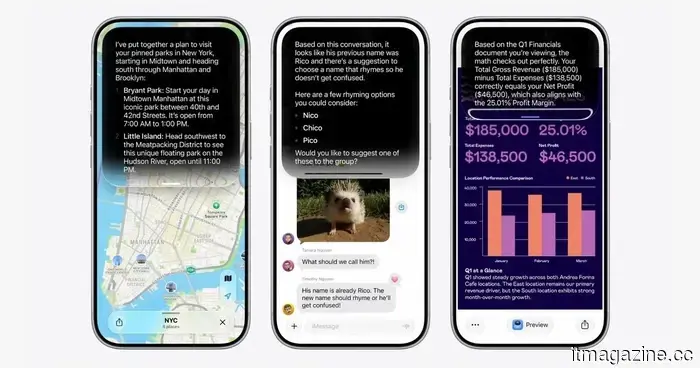 Siri receives its most significant update to date, and it's more personalized than ever before.
Apple has completely revamped Siri with Apple Intelligence, transforming it into a more conversational and context-aware AI capable of comprehending your messages, apps, and even the content displayed on your screen.
Siri receives its most significant update to date, and it's more personalized than ever before.
Apple has completely revamped Siri with Apple Intelligence, transforming it into a more conversational and context-aware AI capable of comprehending your messages, apps, and even the content displayed on your screen.
 Apple's WWDC 2026 introduces changes to the App Store that allow independent developers to bundle subscriptions.
At WWDC 2026, Apple revealed cross-developer App Store bundles, group subscriptions, volume purchasing options, and AI-powered Personalized Collections.
Apple's WWDC 2026 introduces changes to the App Store that allow independent developers to bundle subscriptions.
At WWDC 2026, Apple revealed cross-developer App Store bundles, group subscriptions, volume purchasing options, and AI-powered Personalized Collections.
 Your old iPhone is capable of running iOS 27, though don't anticipate having the latest features.
iOS 27 is compatible with phones dating back to the iPhone 11, but many of the intriguing Apple Intelligence features are exclusive to Apple's latest and most expensive devices.
Your old iPhone is capable of running iOS 27, though don't anticipate having the latest features.
iOS 27 is compatible with phones dating back to the iPhone 11, but many of the intriguing Apple Intelligence features are exclusive to Apple's latest and most expensive devices.
The Pentagon has included Alibaba, Baidu, BYD, and Unitree in its list of Chinese military enterprises.
The Pentagon's revised 1260H list identifies 188 Chinese firms that it claims assist the military, including Alibaba, Baidu, BYD, Unitree, Nio, and CXMT.