
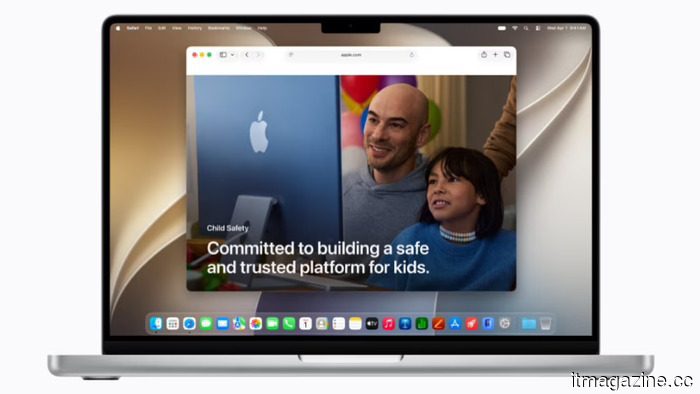
Apple showcases its most significant parental controls update in several years, just weeks ahead of regulatory deadlines in the UK and US.
Apple announced significant child safety enhancements for iOS 27, including features like Ask to Browse, Time Allowances, and gore content blocking, as regulatory deadlines from the UK and US loom.
During WWDC 2026 on Monday, Apple unveiled a new suite of parental controls that provide parents with greater oversight regarding their children’s online activities, including what they can view, who they can communicate with, and how long they can use apps. These updates, set to launch this autumn with iOS 27, iPadOS 27, and macOS 27, coincide with UK Prime Minister Keir Starmer's three-month ultimatum for Apple and Google to implement device-level controls to prevent children from accessing or sharing explicit content. In the US, the Kids Online Safety Act is progressing, having passed the House Energy and Commerce Committee in March, alongside various lawsuits from school districts regarding social media addiction.
A key feature is Ask to Browse, which requires children to seek parental approval before visiting new websites in Safari. This feature is compatible with iPhone, iPad, and Mac and complements the existing Ask to Buy system that regulates App Store downloads. Together, these controls allow parents to manage app and web content access from a singular child account.
Additionally, Apple will introduce Time Allowances, permitting parents to set daily limits for entire categories of apps, such as Entertainment, Games, and Social Media, rather than managing each app individually. The system provides age-appropriate recommendations based on expert research. Parents can also create daily schedules to restrict app access during specific times, like school hours or mealtimes.
Communication Safety, which currently blurs nudity in Messages and FaceTime for users under 18, will now also block gore and violent images in shared content. This enhancement addresses shortcomings previously noted by critics in Apple’s protective measures. The feature uses on-device machine learning to identify harmful content before it is shown, aligning with Apple’s commitment to privacy by keeping sensitive processing local.
The redesigned Screen Time feature allows parents to easily view their children’s average device usage and most frequently used apps, with the option to modify access with a single click. This streamlined interface replaces the complex settings menu that had been difficult for many parents to navigate since Screen Time was first introduced in iOS 12.
Apple mentioned its collaboration with the American Academy of Pediatrics to adapt the AAP’s Family Media Plan into a resource for parents. The company also introduced developer tools like a Declared Age Range API that allows apps to inquire about a child's age group without disclosing their birthdate, and PermissionKit, enabling parents to approve new contact requests. A SensitiveContentAnalysis framework aids developers in detecting inappropriate content within their apps.
The timing of these updates is significant given regulatory pressures. Starmer's demand, made at London Tech Week on June 8, requires Apple and Google to implement measures to stop children from taking, sending, receiving, or viewing explicit images at the device level. Currently, Apple's Communication Safety system offers warnings rather than outright blocks in certain instances and does not cover all sharing pathways in the operating system. It remains to be seen if the new features will meet Starmer’s conditions, especially with indications that the UK government will legislate if the companies fail to act voluntarily.
In the US, KOSA passed the House Energy and Commerce Committee in a 28-24 party-line vote on March 5, while the Senate unanimously approved COPPA 2.0. This legislation mandates platforms perform risk assessments, implement the strongest privacy settings for minors by default, and provide parents with effective oversight tools. Apple has publicly supported KOSA, amidst a backdrop of litigation concerning child safety that has led to billions of dollars in settlements against social media firms in 2026 alone.
The child safety updates are part of a larger software rollout at WWDC 2026 that includes a rebuild of Siri AI, enhancements to Apple Intelligence, and performance upgrades across iOS 27. A child account, necessary for users under 13 and available for those up to 18, provides system-wide, age-appropriate protections from the moment the device is configured. Parents receive guidance during account setup, allowing them to select either a few essential apps, a curated collection, or a custom list for their child.
Apple's vice president of Health and Fitness, Sumbul Desai, expressed that the company’s approach is rooted in the understanding that every child is different. The tools are crafted to enable parents to customize protections rather than enforcing a one-size-fits-all standard. Whether this philosophy of parental discretion will satisfy regulators demanding mandatory device-level enforcement remains to be seen as the September deadline approaches.
Other articles
 The comeback of Xbox exclusives begins with Gears of War and Clockwork Revolution.
Microsoft has announced that Gears of War: E-Day and Clockwork Revolution will be exclusive to Xbox consoles, with both titles also available on PC and through Game Pass.
The comeback of Xbox exclusives begins with Gears of War and Clockwork Revolution.
Microsoft has announced that Gears of War: E-Day and Clockwork Revolution will be exclusive to Xbox consoles, with both titles also available on PC and through Game Pass.
 Apple's latest child safety features launch amid increasing pressure on major technology companies.
Apple's newest child safety update allows parents greater authority over their children's downloading, browsing, viewing, and contact options, as governments urge Big Tech to enhance online protections for kids.
Apple's latest child safety features launch amid increasing pressure on major technology companies.
Apple's newest child safety update allows parents greater authority over their children's downloading, browsing, viewing, and contact options, as governments urge Big Tech to enhance online protections for kids.
 Siri receives its most significant update to date, and it's more personalized than ever before.
Apple has completely revamped Siri with Apple Intelligence, transforming it into a more conversational and context-aware AI capable of comprehending your messages, apps, and even the content displayed on your screen.
Siri receives its most significant update to date, and it's more personalized than ever before.
Apple has completely revamped Siri with Apple Intelligence, transforming it into a more conversational and context-aware AI capable of comprehending your messages, apps, and even the content displayed on your screen.
 Xteink X4 review: I was skeptical about this compact e-reader, but it helped improve my bad screen habits.
The Xteink X4 is simple to share, even simpler to integrate into your daily carry, and is a delightfully appealing gadget that could capture the book lover in you without straining your budget.
Xteink X4 review: I was skeptical about this compact e-reader, but it helped improve my bad screen habits.
The Xteink X4 is simple to share, even simpler to integrate into your daily carry, and is a delightfully appealing gadget that could capture the book lover in you without straining your budget.
 iOS 27 has simplified Shortcuts to the point where you have no reason not to utilize them.
iOS 27 employs Apple Intelligence to allow you to create Shortcuts simply by describing them in everyday language. You can say goodbye to the hassle of managing countless actions to streamline your daily activities.
iOS 27 has simplified Shortcuts to the point where you have no reason not to utilize them.
iOS 27 employs Apple Intelligence to allow you to create Shortcuts simply by describing them in everyday language. You can say goodbye to the hassle of managing countless actions to streamline your daily activities.
 The new AI capabilities of the Apple Home app are set to simplify your life.
Apple Intelligence is being integrated into the Home app, allowing it to analyze your camera footage, provide summaries of events, and enable you to search for clips based on their content.
The new AI capabilities of the Apple Home app are set to simplify your life.
Apple Intelligence is being integrated into the Home app, allowing it to analyze your camera footage, provide summaries of events, and enable you to search for clips based on their content.
Apple showcases its most significant parental controls update in several years, just weeks ahead of regulatory deadlines in the UK and US.
At WWDC 2026, Apple showcased new child safety features such as Ask to Browse, Time Allowances, and gore-blocking, as regulators in the UK and US impose stricter deadlines.