
Siri receives its most significant update to date, and it's more personalized than ever before.
Apple has finally accomplished what it has hinted at, worked on, and cautiously approached for years: it has completely revamped Siri and provided it with a significant intelligence enhancement. The new Siri AI, driven by Apple Intelligence, transcends the role of a conventional voice assistant. It is being marketed as a more conversational, context-aware companion that comprehends your intentions, your location, and even your recent activities.
Indeed, it resembles the assistant Apple has long promised. However, this time it feels more like something people might genuinely use on a daily basis. At its heart, this updated Siri relies heavily on Apple Intelligence to move beyond mere commands. It can retrieve information from the web, applications, and your personal data — including messages, emails, photos, and more — to respond in a way that feels as if it remembers your life experiences.
A Siri that truly grasps context
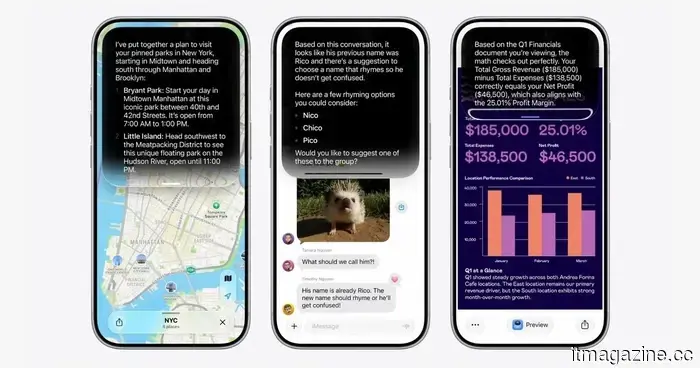
The most significant change isn't in Siri's voice or its response speed but rather in its understanding. Siri AI can now utilize personal context to bring up information that you would typically have to search for yourself. That restaurant your friend recommended in Messages last week? It can present it. That hotel reservation buried in an old email thread? It can locate it. It acts like a memory layer across your applications.
Apple is also strongly emphasizing what it terms onscreen awareness. If you're viewing a message regarding a potluck dinner, Siri can suggest items to bring and even assist in drafting a recipe in Notes. This kind of seamless, app-to-app support that often feels cumbersome with other assistants is designed to feel intuitive here.
Beyond your personal information, Siri AI also accesses broader knowledge about the world. It can respond to more timely, real-world inquiries, such as the timing of a solar eclipse near you or an artist's tour schedule, without directing you to a browser. As Craig Federighi stated, the aim is "natural, in-the-moment assistance," and this time, that description feels like a genuine statement rather than marketing jargon.
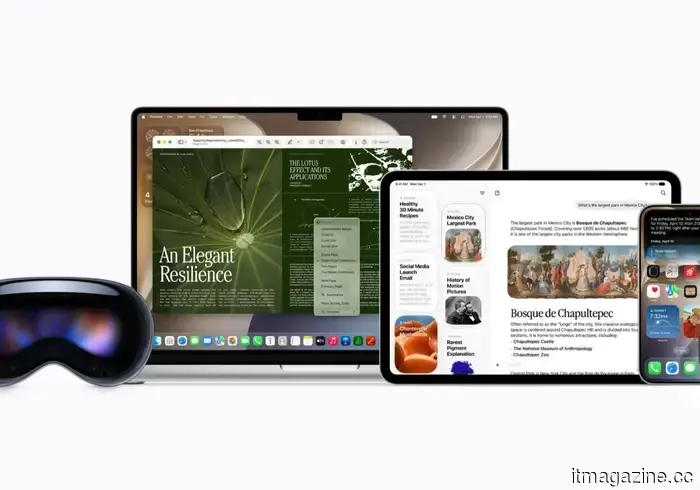
Siri's capability has also broadened throughout the system. It’s no longer hidden behind “Hey Siri.” It’s integrated into Spotlight, system menus, camera functions, and even spatial interactions on Vision Pro. You can activate it via the Dynamic Island, a keyboard shortcut, or by selecting content directly on your screen. Thus, Siri is now omnipresent where you already are.
Privacy-first AI, with a reality check
Apple is, as expected, emphasizing privacy as its key strength. Siri AI operates on a hybrid model: processing on-device for local tasks and server-based processing through Private Cloud Compute when necessary. Apple asserts that personal data is not stored or exposed, even when utilizing cloud models.
This aligns with the fundamental promise on which Apple has built its reputation — robust AI capabilities without compromising your data privacy. The crucial question is how this performs in everyday scenarios, particularly when compared to more cloud-centric assistants that may seem quicker or more adaptable.
What stands out is Apple's effort to maintain consistency for Siri across devices. There is now a dedicated Siri app that synchronizes conversations through iCloud, allowing you to start a discussion on a Mac, continue on an iPhone, and finish on an iPad. This transforms Siri from a temporary tool into a more continuous thread of interaction.
Additionally, there’s Visual Intelligence, which is arguably one of the more useful enhancements. Siri can now recognize what is displayed on your screen or even what is in front of your camera. Point your phone at food, and it can provide nutritional estimates. Look at a shared bill among friends, and it can assist with cost splitting. On iPad and Mac, you can select anything on your screen and directly inquire about it with Siri.
Writing is another significant focus area. Siri AI now functions as a built-in writing assistant throughout the system. It can create emails, rephrase messages in your tone, and even modify its style based on who you’re communicating with. If you are succinct with your manager or more formal with clients, it adjusts accordingly. It can also proofread and improve text in real-time across the system.
While this is powerful, it also raises questions: when an assistant starts writing like you, recalling like you, and predicting how you would respond, the distinction between tool and extension becomes ambiguous.
Apple is first rolling out Siri AI to developers, with a public beta expected later across iOS, iPadOS, macOS, and VisionOS 27. Although it is still in its early stages, the direction is evident: Siri is not simply receiving an update — it is being fundamentally transformed. The pressing question now is not whether Siri has become more intelligent, but whether it is useful enough for people to finally embrace it.


Other articles
 The new AI capabilities of the Apple Home app are set to simplify your life.
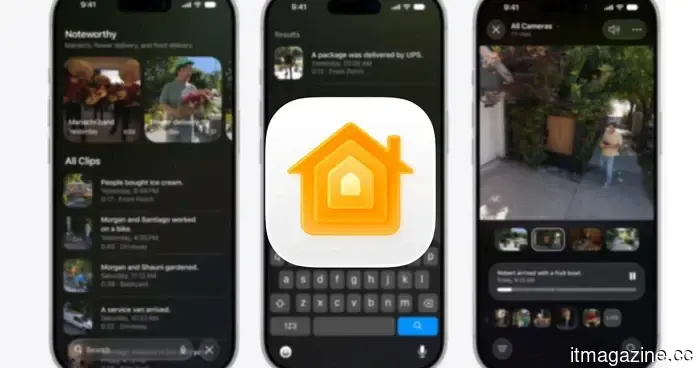
Apple Intelligence is being integrated into the Home app, allowing it to analyze your camera footage, provide summaries of events, and enable you to search clips based on their content.
The new AI capabilities of the Apple Home app are set to simplify your life.
Apple Intelligence is being integrated into the Home app, allowing it to analyze your camera footage, provide summaries of events, and enable you to search clips based on their content.
 Nashville Zoo states that a suggested AI data center might prevent its endangered leopards from reproducing.
Nashville Zoo is opposing a proposed 69,000 sq ft DC BLOX data center located just 50 yards away from its animals. A petition against the project has garnered nearly 300,000 signatures.
Nashville Zoo states that a suggested AI data center might prevent its endangered leopards from reproducing.
Nashville Zoo is opposing a proposed 69,000 sq ft DC BLOX data center located just 50 yards away from its animals. A petition against the project has garnered nearly 300,000 signatures.
 The comeback of Xbox exclusives begins with Gears of War and Clockwork Revolution.
Microsoft has announced that Gears of War: E-Day and Clockwork Revolution will be exclusive to Xbox consoles, with both titles also available on PC and through Game Pass.
The comeback of Xbox exclusives begins with Gears of War and Clockwork Revolution.
Microsoft has announced that Gears of War: E-Day and Clockwork Revolution will be exclusive to Xbox consoles, with both titles also available on PC and through Game Pass.
 Apple Intelligence is arriving on Safari, featuring more intelligent tabs, personalized extensions, and improvements to password management.
Apple has introduced new Apple Intelligence features for Safari, which encompass AI-driven tab organization, the ability to create custom extensions, webpage monitoring, and automatic password updates.
Apple Intelligence is arriving on Safari, featuring more intelligent tabs, personalized extensions, and improvements to password management.
Apple has introduced new Apple Intelligence features for Safari, which encompass AI-driven tab organization, the ability to create custom extensions, webpage monitoring, and automatic password updates.
 The new AI capabilities of the Apple Home app are set to simplify your life.
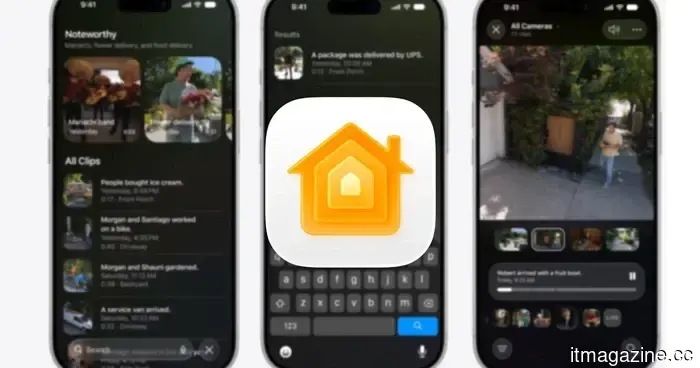
Apple Intelligence is being integrated into the Home app, allowing it to analyze your camera footage, provide summaries of events, and enable you to search for clips based on their content.
The new AI capabilities of the Apple Home app are set to simplify your life.
Apple Intelligence is being integrated into the Home app, allowing it to analyze your camera footage, provide summaries of events, and enable you to search for clips based on their content.
 Resident Evil Veronica brings Code Veronica back to life for a fresh nightmare in 2027.
Capcom has officially revealed Resident Evil Veronica, a contemporary remake of Code: Veronica, reviving Claire Redfield’s harrowing experience on Rockfort Island in 2027.
Resident Evil Veronica brings Code Veronica back to life for a fresh nightmare in 2027.
Capcom has officially revealed Resident Evil Veronica, a contemporary remake of Code: Veronica, reviving Claire Redfield’s harrowing experience on Rockfort Island in 2027.
Siri receives its most significant update to date, and it's more personalized than ever before.
Apple has completely revamped Siri with Apple Intelligence, transforming it into a more conversational and context-aware AI capable of comprehending your messages, apps, and even the content displayed on your screen.