
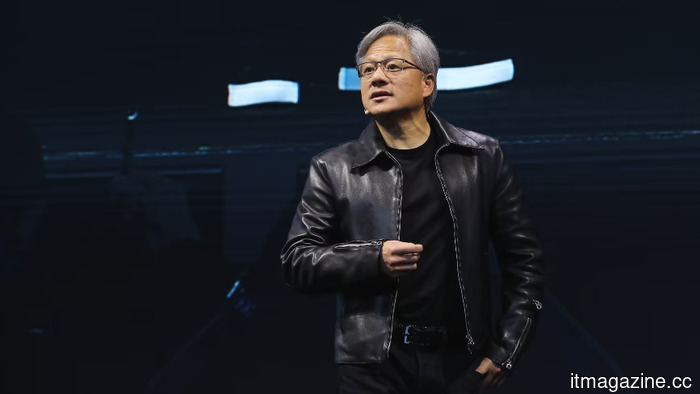
Nvidia and SK Hynix finalize a multi-year agreement for HBM4 AI memory.
TL;DR: Nvidia and SK Hynix have entered into a multi-year collaboration to co-develop next-generation AI memory, which includes HBM4 and Vera Rubin. SK Hynix is estimated to supply 60-70% of HBM4 for the Vera Rubin platform, reinforcing its competitive edge over Samsung and Micron.
Nvidia and SK Hynix have formalized a long-term agreement focusing on the design and production of advanced memory chips for AI. The announcement was made during Nvidia CEO Jensen Huang's visit to South Korea, granting SK Hynix a joint development role in the high-bandwidth memory that will power Nvidia’s top-tier accelerators, starting with the Vera Rubin platform, which is currently ramping up production.
This deal comes at a time when memory capacity, rather than GPUs, is limiting the growth of AI infrastructure. Arm CEO Rene Haas recently noted that memory poses significant challenges for the industry. In response, Nvidia is strategically securing its supply chain well in advance.
Details of the agreement:
The partnership includes more than just a basic supply contract. Nvidia and SK Hynix will collaboratively develop next-generation memory for what Nvidia refers to as "AI factories," which are large data center clusters used for training and inference. The arrangement encompasses infrastructure, physical AI, and memory specifically tailored for Vera Rubin, Nvidia's most powerful platform.
Vera Rubin utilizes clusters of Vera CPUs and Rubin GPUs, supplemented by terabytes of HBM4 in each server, boasting performance improvements of 3.5 times in training and five times in inference compared to its predecessor, Blackwell. Shipments are projected to begin in Q3 2026, involving over 350 supply chain partners from 30 countries.
Huang remarked, "Together, we will co-develop the next generation of memory for AI factories and support the accelerating global expansion of AI infrastructure."
The HBM4 competition:
For the first time, Huang revealed at Computex in Taipei that all three leading memory manufacturers—Samsung, SK Hynix, and Micron—have been authorized to produce HBM4 for Vera Rubin. However, the multi-year co-development agreement with SK Hynix reflects a stronger collaboration than a typical vendor approval.
Industry analysts believe that SK Hynix controls about 60% to 70% of the HBM4 allocated for Vera Rubin, while Samsung accounts for roughly 25% to 30%, and Micron provides the rest. This new agreement solidifies SK Hynix's competitive position, with long-term supply commitments facilitating expansion of their capacity and market share growth.
Competition among the three companies is intense. Memory chip stocks have surged over the past year due to rising prices, and all three firms are in a rush to deliver 16-layer HBM stacks that Nvidia is expected to request starting in late 2026.
Huang's visit to Seoul included several announcements, notably that SK Telecom will establish a new AI cloud powered by Nvidia technology, with the first data center set to launch early next year. Naver, South Korea's leading internet company, intends to utilize Nvidia’s AI models to scale up its data center space and develop additional AI factories. Doosan Group plans to implement Nvidia’s physical AI technology for its industrial robotics.
During his trip, Huang also threw the first pitch at a Korean Baseball Organisation game and visited gaming companies Krafton and NC Corp to encourage the adoption of Nvidia's new RTX Spark chip in the PC market.
This pattern aligns with Nvidia's strategy across Asia, where Huang has announced partnerships and initiatives in various countries, emphasizing the creation of an ecosystem rather than merely selling chips.
Significance of memory over GPUs currently:
The demand for computational power in the AI sector is well recognized; however, the memory shortage is often overlooked. Each Vera Rubin NVL72 setup connects 36 CPUs and 72 GPUs, requiring vast amounts of HBM4. Advanced packaging technology, particularly TSMC’s CoWoS integration of GPU dies with HBM, presents a major limitation. Presently, memory availability, not silicon manufacturing, is the determining factor for how quickly Nvidia can deliver its top systems.
Haas's statement highlights a structural shortfall described by TrendForce as a "memory supercycle." HBM capacity is expected to remain constrained until at least 2028, with predictions extending shortages to 2030. For Nvidia, securing SK Hynix under a multi-year co-development contract is crucial not only for supply assurances but also for ensuring that supply will be sufficient.
Other articles
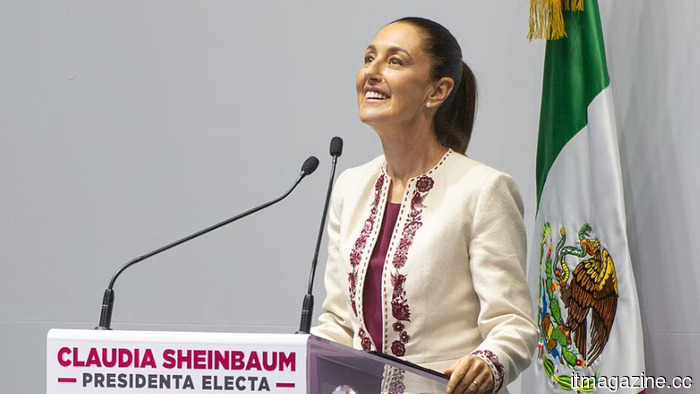 Mexico introduces Olinia Uno, an $8,600 electric vehicle supported by the government.
President Sheinbaum showcased the six-seat Olinia Uno prototype by driving it onto a stage in Mexico City. This government-supported electric vehicle is priced at 150,000 pesos, roughly equivalent to $8,600.
Mexico introduces Olinia Uno, an $8,600 electric vehicle supported by the government.
President Sheinbaum showcased the six-seat Olinia Uno prototype by driving it onto a stage in Mexico City. This government-supported electric vehicle is priced at 150,000 pesos, roughly equivalent to $8,600.
 5 iPhone applications I can't do without in 2026
From swift searches to classic gaming, these five apps have secured a lasting place on my iPhone. Some may be familiar to you, while others might be new, but each is definitely worth downloading today.
5 iPhone applications I can't do without in 2026
From swift searches to classic gaming, these five apps have secured a lasting place on my iPhone. Some may be familiar to you, while others might be new, but each is definitely worth downloading today.
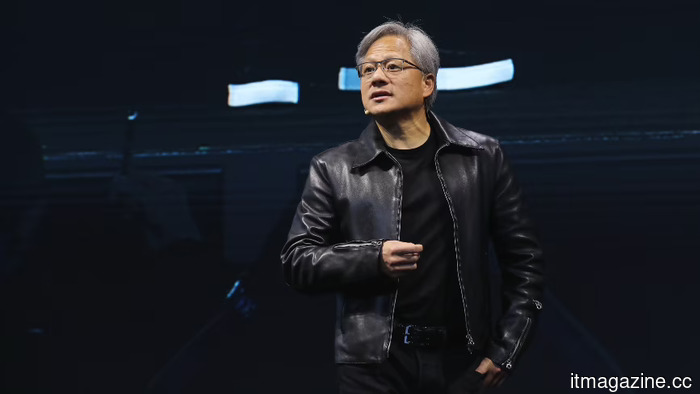 Nvidia and SK Hynix finalize a multi-year agreement for HBM4 AI memory.
Nvidia and SK Hynix have entered into a multi-year agreement to collaboratively develop AI memory for Vera Rubin and future projects, as memory challenges emerge as the most significant obstacle in the AI sector.
Nvidia and SK Hynix finalize a multi-year agreement for HBM4 AI memory.
Nvidia and SK Hynix have entered into a multi-year agreement to collaboratively develop AI memory for Vera Rubin and future projects, as memory challenges emerge as the most significant obstacle in the AI sector.
 Spotify is securing licenses for live concert videos and setting aside tickets for dedicated fans.
Spotify is negotiating with concert promoters to broadcast live festival recordings and has established a multi-year agreement with Live Nation to set aside tickets for its biggest fans.
Spotify is securing licenses for live concert videos and setting aside tickets for dedicated fans.
Spotify is negotiating with concert promoters to broadcast live festival recordings and has established a multi-year agreement with Live Nation to set aside tickets for its biggest fans.
 Spotify is obtaining licenses for live concert videos and setting aside tickets for passionate fans.
Spotify is negotiating with concert promoters to broadcast live festival footage and has formed a multi-year agreement with Live Nation to secure tickets for its most dedicated fans.
Spotify is obtaining licenses for live concert videos and setting aside tickets for passionate fans.
Spotify is negotiating with concert promoters to broadcast live festival footage and has formed a multi-year agreement with Live Nation to secure tickets for its most dedicated fans.
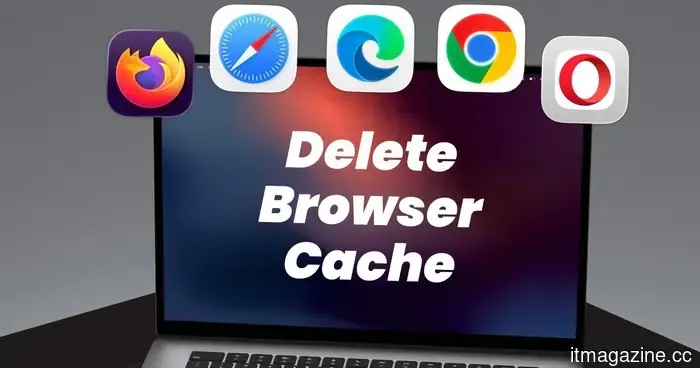 How to clear your browser cache in Chrome, Edge, Firefox, Safari, or Opera.
Is your browser running slow or is a website failing to load properly? Clearing your cache can be a quick solution. Here’s how to clear the browser cache in Chrome, Edge, Firefox, Safari, and Opera in just a few seconds.
How to clear your browser cache in Chrome, Edge, Firefox, Safari, or Opera.
Is your browser running slow or is a website failing to load properly? Clearing your cache can be a quick solution. Here’s how to clear the browser cache in Chrome, Edge, Firefox, Safari, and Opera in just a few seconds.
Nvidia and SK Hynix finalize a multi-year agreement for HBM4 AI memory.
Nvidia and SK Hynix have entered into a multi-year agreement to collaboratively develop AI memory for Vera Rubin and future projects, as memory stands as the most significant bottleneck in the AI sector.