
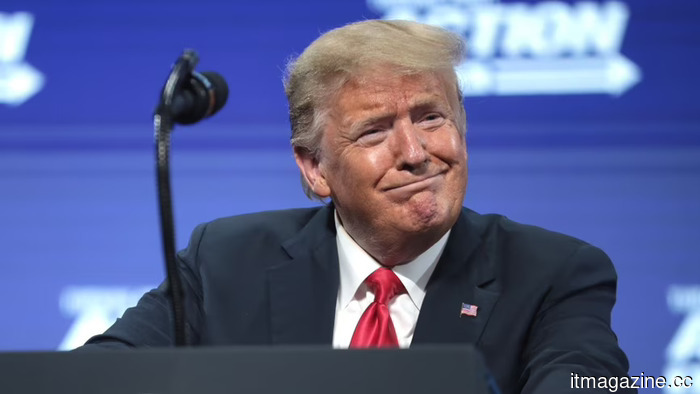
A judge has ruled that Trump's $100,000 H-1B fee is an illegal tax.
A federal judge has deemed Trump’s $100,000 H-1B visa fee to be an illegal tax, stating that the president lacks the authority to impose taxes without approval from Congress. This ruling provides relief for tech companies, though the government is likely to appeal.
On Monday, US District Judge Leo T. Sorokin in Massachusetts declared that the $100,000 fee introduced by President Donald Trump for H-1B visa applications is unlawful and should be annulled. The ruling determined that the proclamation contravened both the federal Administrative Procedure Act and the Constitution because Congress had not authorized the executive branch to impose such a tax.
Trump enacted the proclamation last September, adding this fee to an already substantial application cost that runs into several thousand dollars. Administration officials described it as a way to encourage companies to hire American workers instead of bringing in foreign labor.
The implications of the fee
The $100,000 fee was applicable to new H-1B applications and was typically paid by the employer sponsoring the visa. Immigration attorneys raised concerns at the time, noting that this charge would effectively transform the H-1B into a premium work permit available only to the wealthiest corporations and highest-paid individuals.
For mid-sized tech companies and startups, this fee posed a significant barrier. The H-1B visa is the primary means by which skilled foreign-born engineers, researchers, and scientists are hired, and its annual limit of 85,000 was already exceeded prior to the increase in fees.
Who brought the challenge
The lawsuit was initiated by a coalition of employers and trade organizations. The US Chamber of Commerce also filed a separate challenge in October, claiming that the fee would adversely affect American competitiveness at a time when there is unprecedented demand for AI and engineering talent.
Judge Sorokin concurred with the plaintiffs' argument that the fee functioned as a tax in both essence and application, irrespective of the administration's terminology. This distinction is crucial, as the president cannot impose a tax without legislative approval.
The context of AI talent
The ruling comes amid a global competition for AI talent. China has limited travel for researchers at leading AI labs, while compensation packages reaching nine figures have become commonplace at top organizations like OpenAI, Anthropic, and Meta.
The H-1B program serves as a key pathway for importing much of this talent into the United States. Approximately 70% of H-1B approvals are granted to workers in computer-related fields, with major tech companies being some of the largest sponsors.
Simultaneously, the domestic tech sector is undergoing significant changes driven by AI-related restructuring. Firms are eliminating mid-level positions while offering substantial salaries to AI specialists. This creates a tension between restricting foreign workers and vying for the limited pool of researchers capable of developing advanced models, highlighting the policy contradictions at the center of the H-1B discussion.
Next steps
An appeal from the government is anticipated. The ruling has nationwide implications, but a higher court might either reinstate the fee or limit the decision's scope.
For now, H-1B applications will return to the fee structure in place before the proclamation. Companies that paid the $100,000 fee while it was enforced may pursue refunds, although the specifics of this process remain uncertain.
The broader question is whether the administration will seek an alternative legal avenue to achieve the same result. A fee established through formal rulemaking, as opposed to a presidential proclamation, could withstand judicial scrutiny, although this process would require months and face its own political challenges. For the time being, the pathway remains open.
Other articles
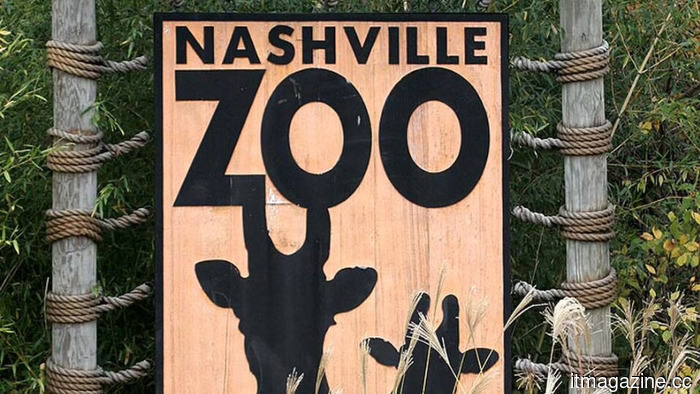 Nashville Zoo states that a suggested AI data center might prevent its endangered leopards from reproducing.
Nashville Zoo is opposing a proposed 69,000 sq ft DC BLOX data center located just 50 yards away from its animals. A petition against the project has garnered nearly 300,000 signatures.
Nashville Zoo states that a suggested AI data center might prevent its endangered leopards from reproducing.
Nashville Zoo is opposing a proposed 69,000 sq ft DC BLOX data center located just 50 yards away from its animals. A petition against the project has garnered nearly 300,000 signatures.
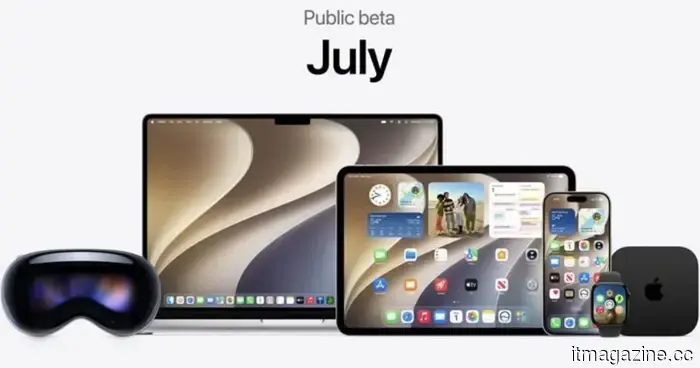 Apple unveils iOS 27, featuring quick app launches, enhanced Siri AI, and improvements in Liquid Glass for your iPhone.
iOS 27 has been officially released, and if your iPhone seemed to be slower following the iOS 26 update, Apple claims this new update addresses that issue.
Apple unveils iOS 27, featuring quick app launches, enhanced Siri AI, and improvements in Liquid Glass for your iPhone.
iOS 27 has been officially released, and if your iPhone seemed to be slower following the iOS 26 update, Apple claims this new update addresses that issue.
 Resident Evil Veronica brings Code Veronica back to life for a fresh nightmare in 2027.
Capcom has officially revealed Resident Evil Veronica, a contemporary remake of Code: Veronica, reviving Claire Redfield’s harrowing experience on Rockfort Island in 2027.
Resident Evil Veronica brings Code Veronica back to life for a fresh nightmare in 2027.
Capcom has officially revealed Resident Evil Veronica, a contemporary remake of Code: Veronica, reviving Claire Redfield’s harrowing experience on Rockfort Island in 2027.
 Reevaluating growth frameworks: Rush Digital Marketing’s strategy regarding ownership and independence.
Amanda Rush, Nexus Install, LinkedIn lead generation, B2B engagement, client onboarding, coaching enterprise, consulting development, marketing automation, online marketing, outreach frameworks, lead-generation management.
Judge prohibits Trump's $100,000 H-1B fee, deeming it an illegal tax.
A federal judge annulled Trump's $100,000 H-1B visa fee, declaring it an unconstitutional tax. This ruling provides relief to tech companies that depend on foreign AI expertise. An appeal is anticipated.
Reevaluating growth frameworks: Rush Digital Marketing’s strategy regarding ownership and independence.
Amanda Rush, Nexus Install, LinkedIn lead generation, B2B engagement, client onboarding, coaching enterprise, consulting development, marketing automation, online marketing, outreach frameworks, lead-generation management.
Judge prohibits Trump's $100,000 H-1B fee, deeming it an illegal tax.
A federal judge annulled Trump's $100,000 H-1B visa fee, declaring it an unconstitutional tax. This ruling provides relief to tech companies that depend on foreign AI expertise. An appeal is anticipated.
 Apple's WWDC 2026 introduces changes to the App Store that allow independent developers to bundle subscriptions.
At WWDC 2026, Apple revealed cross-developer App Store bundles, group subscriptions, volume purchasing options, and AI-powered Personalized Collections.
Apple's WWDC 2026 introduces changes to the App Store that allow independent developers to bundle subscriptions.
At WWDC 2026, Apple revealed cross-developer App Store bundles, group subscriptions, volume purchasing options, and AI-powered Personalized Collections.
A judge has ruled that Trump's $100,000 H-1B fee is an illegal tax.
A federal judge overturned Trump's $100,000 H-1B visa fee, determining it to be an unconstitutional tax. This ruling provides relief for tech companies that depend on foreign AI talent. An appeal is anticipated.