
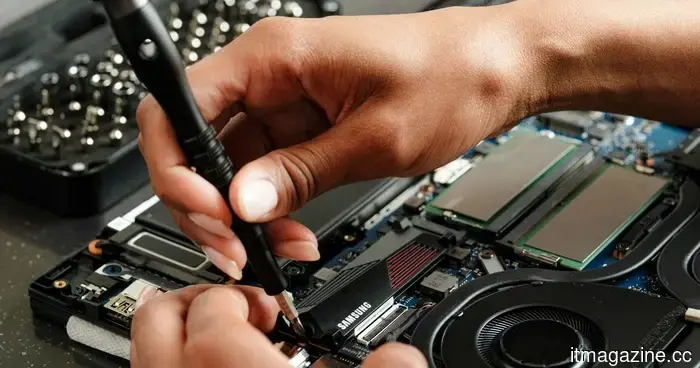
The right to repair is not just a passion for hobbyists. It’s a struggle concerning ownership rights.
The least appealing aspect of contemporary gadget design may also be the most telling: the battery that you're discouraged from replacing.
I comprehend the official narrative. Sealed devices appear sleeker, feel more streamlined, and can withstand spills that could ruin your day. Adhesives are a crucial factor in achieving this, which is the respectable viewpoint. No one desires a flagship phone with the structural finesse of a TV remote from 2006.
However, it is remarkably convenient that the component most prone to wear is also the one people are advised against tampering with. The EU is already progressing toward regulations that will simplify the removal and replacement of portable batteries, with significant requirements set to be enforced starting February 2027. Surely our inability to swap a failing battery also benefits the company selling the next device. Even cartoon villains attempt to be less conspicuous.
This is where the repair argument transitions from sounding like recycling to sounding like a matter of dignity.
Why should a dead battery require permission?
The right to repair is commonly framed as an environmental issue, which is valid. Extending the life of a phone or laptop by swapping out a battery should not be viewed as negative. The green argument holds merit, but it also feels overly courteous.
A dead battery shouldn't need legislative approval, specialized tools, or corporate permission. Numerous states have enacted repair laws mandating that manufacturers provide the basic materials necessary for repairing their products, including New York, Minnesota, California, Oregon, and Colorado. As new laws came into effect on January 1, 2026, these protections reached 25.75% of Americans. Washington also introduced safeguards for devices spanning from personal electronics to wheelchairs after Governor Bob Ferguson signed two repair bills in 2025.
While this marks progress, it is also somewhat embarrassing. A product should not require state government backing before its owner can access a manual or attempt a repair.
What happens when the device extends beyond phones?
The situation becomes more dire outside of phones and laptops. A sealed phone can be frustrating. A locked-down tractor or wheelchair can become a liability when it involves financing.
In 2026, John Deere agreed to contribute $99 million to a settlement fund and provide digital repair tools to farmers for a decade as part of a right-to-repair settlement concerning large agricultural machinery. Deere hasn’t suddenly become an advocate for DIY repairs, but this case illustrates how this reasoning extends. When software and diagnostics are controlled by the company, the buyer of the machine remains on the outside, holding a receipt.
Wheelchairs complicate the ownership issue further. Oregon's wheelchair repair law went into effect on January 1, 2026, mandating that manufacturers supply the necessary materials to wheelchair users and independent repair shops. No one is casually pretending to be a wheelchair technician for fun. In some cases, the ability to repair is the difference between maintaining independence and having to wait for approval.
Some companies already recognize the difference between accessible repair and customer entrapment. Framework offers laptops designed to be easily opened, repaired, upgraded, and kept longer, rather than treating repair as a niche demand from those equipped with precision screwdrivers. Debates can be had about whether this model is viable for everyone, but the fundamental idea remains: consumers should be able to continue using the products they purchased.
The goal isn't that every device must transform into a bulky beige box with a removable battery. The goal is that convenience should not serve as a perpetual reason for dependency.
More often than not, the damaged device remains tangible, sitting there with a malfunctioning component and a locked barrier between you and the solution. What has changed is that the company retains that one small piece of authority that turns ownership into waiting.
Preventing gadgets from ending up in landfills is commendable. Being allowed to repair your own items is the dignity that lies beneath that effort.
Other articles
 The concealed work associated with contemporary tech support is transforming everyone into unpaid workers.
Contemporary tech support promotes self-service as a convenience; however, each interaction with a chatbot and every repetitive explanation contributes to unpaid work.
The concealed work associated with contemporary tech support is transforming everyone into unpaid workers.
Contemporary tech support promotes self-service as a convenience; however, each interaction with a chatbot and every repetitive explanation contributes to unpaid work.
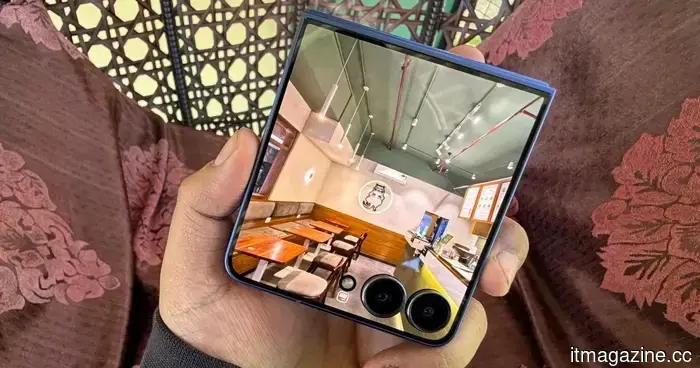 Samsung may once again forgo a charging upgrade for the forthcoming Galaxy Z Flip 8.
The forthcoming Galaxy Z Flip 8 from Samsung may reportedly maintain a 25W charging capability along with a 4,300mAh battery, even as rivals are adopting significantly quicker charging technologies.
Samsung may once again forgo a charging upgrade for the forthcoming Galaxy Z Flip 8.
The forthcoming Galaxy Z Flip 8 from Samsung may reportedly maintain a 25W charging capability along with a 4,300mAh battery, even as rivals are adopting significantly quicker charging technologies.
 The high-budget Avatar: The Last Airbender RPG is said to have been cancelled.
An allegedly ambitious AAA RPG based on Avatar: The Last Airbender has been canceled, putting an end to the prospects of a significant open-world experience within the cherished animated universe.
The high-budget Avatar: The Last Airbender RPG is said to have been cancelled.
An allegedly ambitious AAA RPG based on Avatar: The Last Airbender has been canceled, putting an end to the prospects of a significant open-world experience within the cherished animated universe.
 The post-warranty graveyard is becoming crowded with functioning devices.
Software updates are intended to prolong the life of devices, but the issues with the Pixel 4a battery demonstrate how quickly they can push older hardware toward obsolescence.
The post-warranty graveyard is becoming crowded with functioning devices.
Software updates are intended to prolong the life of devices, but the issues with the Pixel 4a battery demonstrate how quickly they can push older hardware toward obsolescence.
 The post-warranty graveyard is becoming populated with functioning devices.
Software updates are intended to prolong the lifespan of devices, but the battery issues with the Pixel 4a illustrate how quickly they can contribute to rendering older hardware obsolete.
The post-warranty graveyard is becoming populated with functioning devices.
Software updates are intended to prolong the lifespan of devices, but the battery issues with the Pixel 4a illustrate how quickly they can contribute to rendering older hardware obsolete.
 Audi's Nuvolari, with 1,001 PS, is its quickest car to date, and it isn't electric.
The Audi Nuvolari features a V8 engine that revs up to 10,000 rpm and is equipped with three electric motors, all housed in a carbon fiber supercar that is restricted to 499 units. Its starting price is €600,000.
Audi's Nuvolari, with 1,001 PS, is its quickest car to date, and it isn't electric.
The Audi Nuvolari features a V8 engine that revs up to 10,000 rpm and is equipped with three electric motors, all housed in a carbon fiber supercar that is restricted to 499 units. Its starting price is €600,000.
The right to repair is not just a passion for hobbyists. It’s a struggle concerning ownership rights.
The right to repair is often viewed as a concern related to e-waste, but the more pressing issue is ownership. A failing battery shouldn't revert a device that you purchased back into the property of the company.