

The most excellent new feature of ChatGPT is likely one that many users will never take advantage of.
For years, the predominant discussion around AI has revolved around the capabilities of these tools. They can browse the internet, analyze documents, connect to your applications, conduct research, and increasingly take actions on your behalf. However, as AI systems grow more advanced, another question is becoming increasingly significant: what occurs when an AI assistant is misled into disclosing information it shouldn’t?
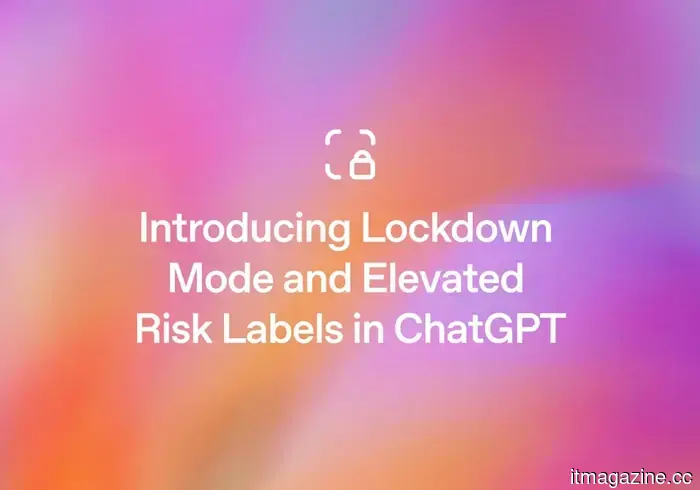
OpenAI’s new Lockdown Mode is its latest response to this issue. Available to all ChatGPT account users, Lockdown Mode is an optional security feature aimed at individuals and organizations that handle sensitive data. The trade-off is that while it provides enhanced protection against specific types of data theft, users may lose access to some of ChatGPT's more powerful functionalities.
This new security feature essentially makes ChatGPT more reclusive.
Lockdown Mode is primarily designed to lower the chances of data breaches stemming from prompt injection attacks. Prompt injection has emerged as a significant security challenge in the era of AI. Instead of directly attacking software, harmful instructions may be concealed within documents, websites, emails, or any other content an AI system might engage with. If the model acts on those hidden instructions, an attacker could potentially manipulate its actions.
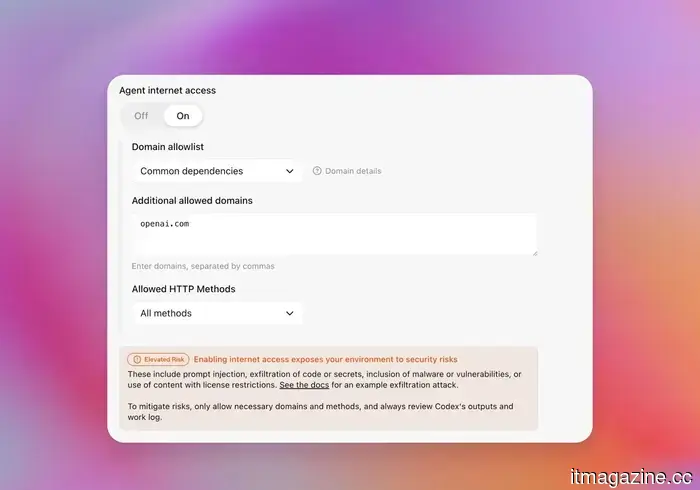
OpenAI takes care to clarify that Lockdown Mode doesn’t prevent prompt injections from being embedded in content. Malicious instructions could still be present in an uploaded document or a cached webpage. What Lockdown Mode seeks to avert is the final, and possibly most damaging, step: the extraction of sensitive information. To achieve this, OpenAI imposes strict limits on what ChatGPT can communicate with outside its own environment.
Once activated, live web browsing is effectively disabled. ChatGPT can only access cached information, meaning that search results might be limited, outdated, or completely unavailable — Deep Research is removed, Agent Mode is turned off, and network access via Canvas-generated code is blocked. ChatGPT also loses the ability to download files for examination.
While users can still upload images and create AI-generated visuals where applicable, ChatGPT won’t be able to retrieve images from the internet or present them in standard responses. Thus, Lockdown Mode transforms ChatGPT from a well-connected AI assistant into a much more isolated entity.
A feature that many users may never require
This isn't a critique. In fact, one of the most compelling aspects of Lockdown Mode is OpenAI’s candid acknowledgment that it isn't meant for everyone. However, security professionals have long recognized that enhanced protection typically compromises convenience. The closest analogy might be Apple’s “Lockdown Mode,” which was introduced several years ago. Apple designed it for individuals at risk of advanced cyberattacks, rather than the average iPhone user. OpenAI appears to be adopting a similar philosophy.
For users managing highly sensitive information, restricting network interactions may justify the trade-offs. If an AI system cannot freely engage with external services, there are simply fewer chances for confidential information to escape its environment. This shift also reflects a larger trend occurring within the AI realm. Earlier discussions focused on whether AI could tap into more data and services. Now, companies are increasingly questioning just how much access these systems should possess in the first place.
This question becomes particularly crucial as AI assistants acquire the ability to browse websites, connect to business software, read internal documents, and execute tasks across various services. OpenAI’s solution isn’t to remove those capabilities but to provide users with a choice.
The increase in AI security measures
Lockdown Mode is particularly significant for what it indicates about the future of AI products. For years, software security has mainly aimed at protecting individuals from harmful programs. AI brings a different challenge: safeguarding AI systems from malicious information.
This presents a more complex problem. A prompt injection can be embedded in a webpage, included in a document, or disguised as normal text. Detecting every potential attack is challenging, which is why OpenAI refers to prompt injection as an ongoing research issue rather than a resolved one.
Lockdown Mode acknowledges this reality. Instead of claiming absolute protection, it mitigates possible damage if something does infiltrate the existing defenses. For enterprise clients, the feature becomes even more detailed. Workspace administrators can set up custom Lockdown Mode roles, restrict applications and connectors, and carefully determine which actions employees can take. OpenAI also advises limiting write-enabled integrations because they offer opportunities for information to escape trusted environments.
In many respects, Lockdown Mode signals the direction in which AI security is evolving. As AI assistants become increasingly powerful, users will require tools to temper their capabilities when necessary. This may not be as thrilling as the introduction of a new reasoning model or an AI agent capable of booking flights. However, for organizations managing sensitive information, it could prove to be far more crucial. Sometimes, the most intelligent AI is not the one that can do everything, but rather the one that understands when to hold back.
Other articles
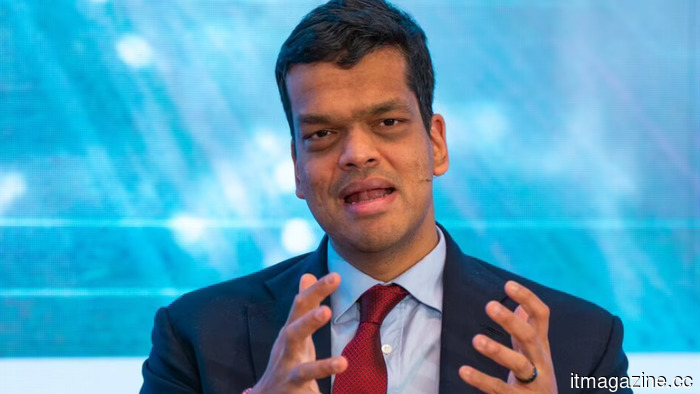 Sriram Krishnan, Trump’s leading AI adviser, is resigning from his position at the White House.
Sriram Krishnan, who played a key role in developing Trump's AI action plan, will be departing at the end of June to establish an external organization centered on AI policy.
Sriram Krishnan, Trump’s leading AI adviser, is resigning from his position at the White House.
Sriram Krishnan, who played a key role in developing Trump's AI action plan, will be departing at the end of June to establish an external organization centered on AI policy.
 Netflix states that there is no future for theatrical releases within its streaming ecosystem.
Mr. Lin stressed that "Narnia" was an anomaly and maintained that the company's view on movie theaters remains unchanged. “There are filmmakers who still prefer theatrical releases. Those are the filmmakers we have acknowledged we simply won’t collaborate with,” he stated, exhibiting his characteristic straightforwardness.
Netflix states that there is no future for theatrical releases within its streaming ecosystem.
Mr. Lin stressed that "Narnia" was an anomaly and maintained that the company's view on movie theaters remains unchanged. “There are filmmakers who still prefer theatrical releases. Those are the filmmakers we have acknowledged we simply won’t collaborate with,” he stated, exhibiting his characteristic straightforwardness.
 Samsung may once again forgo a charging upgrade for the forthcoming Galaxy Z Flip 8.
The forthcoming Galaxy Z Flip 8 from Samsung may reportedly maintain a 25W charging capability along with a 4,300mAh battery, even as rivals are adopting significantly quicker charging technologies.
Samsung may once again forgo a charging upgrade for the forthcoming Galaxy Z Flip 8.
The forthcoming Galaxy Z Flip 8 from Samsung may reportedly maintain a 25W charging capability along with a 4,300mAh battery, even as rivals are adopting significantly quicker charging technologies.
 An application that enables anyone to operate a robot via their phone, without the need for any coding.
Researchers at Georgia Tech have created COBALT, a smartphone platform that enables users to control robots remotely from any location utilizing straightforward motion controls and Wi-Fi connectivity.
An application that enables anyone to operate a robot via their phone, without the need for any coding.
Researchers at Georgia Tech have created COBALT, a smartphone platform that enables users to control robots remotely from any location utilizing straightforward motion controls and Wi-Fi connectivity.
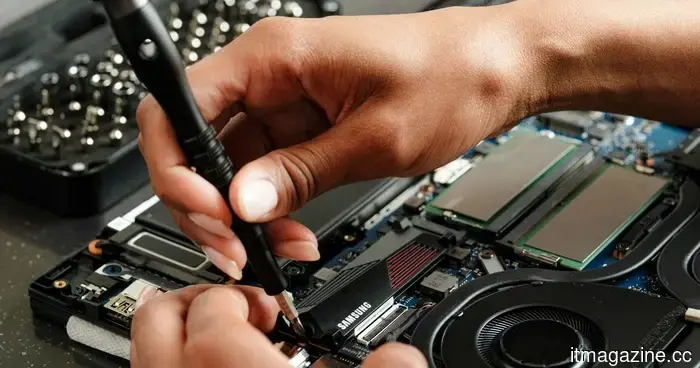 The right to repair is not just a passion for hobbyists. It’s a struggle concerning ownership rights.
The right to repair is often viewed as a concern related to e-waste, but the more pressing issue is ownership. A failing battery shouldn't revert a device that you purchased back into the property of the company.
The right to repair is not just a passion for hobbyists. It’s a struggle concerning ownership rights.
The right to repair is often viewed as a concern related to e-waste, but the more pressing issue is ownership. A failing battery shouldn't revert a device that you purchased back into the property of the company.
 The post-warranty graveyard is becoming populated with functioning devices.
Software updates are intended to prolong the lifespan of devices, but the battery issues with the Pixel 4a illustrate how quickly they can contribute to rendering older hardware obsolete.
The post-warranty graveyard is becoming populated with functioning devices.
Software updates are intended to prolong the lifespan of devices, but the battery issues with the Pixel 4a illustrate how quickly they can contribute to rendering older hardware obsolete.
The most excellent new feature of ChatGPT is likely one that many users will never take advantage of.
In the realm of AI security, convenience and protection seldom coexist. OpenAI's recent Lockdown Mode serves as evidence of this.