
Self-replicating Miasma worm targets 73 repositories on Microsoft GitHub in a supply chain attack.
**TL;DR** The Miasma worm has infected 73 GitHub repositories owned by Microsoft, including those under Azure and Microsoft, inserting payloads that activate in AI coding tools like Claude Code and Cursor.
The self-replicating Miasma worm has breached Microsoft's GitHub repositories, prompting GitHub to disable 73 repositories from four Microsoft organizations, including Azure and Microsoft Docs, due to the worm's malicious code that steals developer credentials. This incident marks a significant escalation in an ongoing supply chain attack campaign that has been affecting the open-source community for several weeks.
The attack utilized previously compromised credentials. Last month, the threat group TeamPCP infected the “durabletask” PyPI package within Microsoft’s Azure organization to deploy an information-stealing tool. Security researcher Paul McCarty noted that this same repository is central to this month's incident. “When the repo at the root of last month’s compromise becomes the focal point of this month’s takedown, it’s not coincidence; it’s the same wound reopening,” McCarty stated. “The holders of those credentials from May likely never fully lost access.”
The danger of this campaign lies in how the payload activates. The attacker introduced a 4.3 MB payload runner designed to execute automatically across five developer tools: Claude Code, Gemini CLI, Cursor, VS Code, and the npm test script. A developer only has to clone an affected repository and open it in an AI coding tool for the malware to execute.
Once activated, the worm collects credentials for AWS, Azure, GCP, Kubernetes, npm, and GitHub. It then leverages those stolen tokens to commit itself to any repository the victim can access, allowing it to spread autonomously throughout the ecosystem.
Among the disabled repositories are key Azure infrastructure projects, including azure-search-openai-demo, durabletask and its .NET, Go, JS, and MSSQL variations, functions-container-action, llm-fine-tuning, and windows-driver-docs. OpenSourceMalware reported that GitHub managed to contain the attack within 105 seconds, but the extent of affected downstream users is still uncertain.
Miasma is a variant of the Mini Shai-Hulud worm that TeamPCP publicly released in mid-May 2026. The original Shai-Hulud emerged in September 2025 as the first self-replicating malware observed in the npm ecosystem. It has since evolved across npm and PyPI, previously compromising 32 Red Hat packages and affecting TanStack, Mistral AI, and UiPath packages.
The worm has also started to bypass the npm registry altogether. SafeDep discovered it pushing malicious code directly to source repositories, including “icflorescu/mantine-datatable” and four related projects. Currently, over 80 public repositories on GitHub bear the naming pattern associated with the Miasma campaign.
The core issue isn’t a vulnerability within npm or GitHub. “It exploits the trust model that these platforms are built upon,” stated the security firm FalconFeeds.io in its assessment. “The assumption that a package signed with a valid key and published by an authenticated maintainer is safe is flawed.” The worm compromises both the key and the maintainer, then mimics a legitimate publisher. From the registry’s viewpoint, every malicious publish event appears to be a standard update.
The targeting of AI coding agents represents a concerning evolution. Developers increasingly depend on tools like Claude Code and Cursor to interact with unfamiliar repositories. A worm that activates when an AI agent opens a project takes advantage of a new behavioral pattern that did not exist a year ago, representing supply chain malware designed for the era of AI-assisted development.
Other articles
 Trump considers a public share in OpenAI, valued at $850 billion, while Sanders advocates for a 50% share.
Trump is set to meet with AI companies regarding a proposal to provide Americans with equity in firms such as the $850 billion OpenAI. He has already invested in Intel and IBM. Sanders is advocating for a 50% share. Currently, there is no legal framework in place for this.
Trump considers a public share in OpenAI, valued at $850 billion, while Sanders advocates for a 50% share.
Trump is set to meet with AI companies regarding a proposal to provide Americans with equity in firms such as the $850 billion OpenAI. He has already invested in Intel and IBM. Sanders is advocating for a 50% share. Currently, there is no legal framework in place for this.
 A former executive from IBM's cybersecurity division alleges that the company concealed breaches related to Chinese hacking.
A whistleblower lawsuit claims that IBM hid incidents of breaches by Chinese hackers, who attacked its network over 56,000 times, and failed to inform the US government.
An AI agent discovered 21 zero-day vulnerabilities in FFmpeg for $1,000. Chrome recently addressed a historic total of 429 bugs.
An autonomous AI agent from a startup discovered 21 zero-day vulnerabilities in FFmpeg for about $1,000. In contrast, Chrome 149 addressed an unprecedented 429 vulnerabilities in one release.
A former executive from IBM's cybersecurity division alleges that the company concealed breaches related to Chinese hacking.
A whistleblower lawsuit claims that IBM hid incidents of breaches by Chinese hackers, who attacked its network over 56,000 times, and failed to inform the US government.
An AI agent discovered 21 zero-day vulnerabilities in FFmpeg for $1,000. Chrome recently addressed a historic total of 429 bugs.
An autonomous AI agent from a startup discovered 21 zero-day vulnerabilities in FFmpeg for about $1,000. In contrast, Chrome 149 addressed an unprecedented 429 vulnerabilities in one release.
 The EU trade commissioner is advocating for a new mechanism to reduce Europe’s reliance on Chinese semiconductors and rare earth minerals.
Maroš Šefčovič advocated for a "diversification instrument" based on the Energy Union to reduce industry reliance on single suppliers in critical sectors.
The EU trade commissioner is advocating for a new mechanism to reduce Europe’s reliance on Chinese semiconductors and rare earth minerals.
Maroš Šefčovič advocated for a "diversification instrument" based on the Energy Union to reduce industry reliance on single suppliers in critical sectors.
 Lectric flourishes as venture capital-backed e-bike competitors face bankruptcy.
Lectric eBikes sold 30,000 bikes in the previous month and introduced three new brands, all without relying on venture capital, while Rad Power and VanMoof faced collapse despite having raised hundreds of millions.
Lectric flourishes as venture capital-backed e-bike competitors face bankruptcy.
Lectric eBikes sold 30,000 bikes in the previous month and introduced three new brands, all without relying on venture capital, while Rad Power and VanMoof faced collapse despite having raised hundreds of millions.
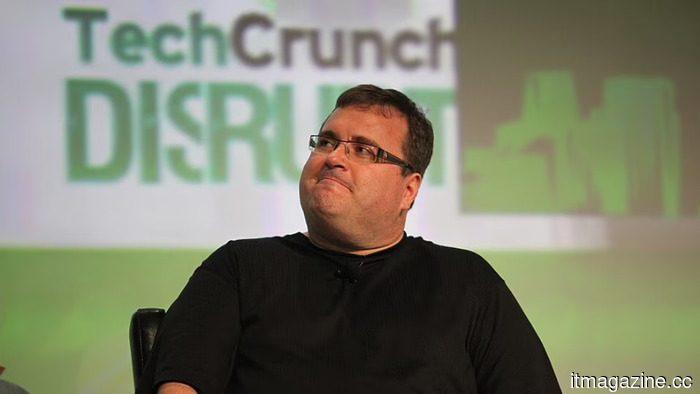 Reid Hoffman steps down from the Microsoft board to enter 'founder mode' with the AI drug company Manus.
Reid Hoffman, co-founder of LinkedIn, is resigning from Microsoft's board after almost ten years in order to concentrate on Manus, his AI-driven drug discovery startup.
Reid Hoffman steps down from the Microsoft board to enter 'founder mode' with the AI drug company Manus.
Reid Hoffman, co-founder of LinkedIn, is resigning from Microsoft's board after almost ten years in order to concentrate on Manus, his AI-driven drug discovery startup.
Self-replicating Miasma worm targets 73 repositories on Microsoft GitHub in a supply chain attack.
GitHub has disabled 73 Microsoft repositories following the Miasma worm's exploitation of previously compromised credentials to introduce malware aimed at AI coding agents.