
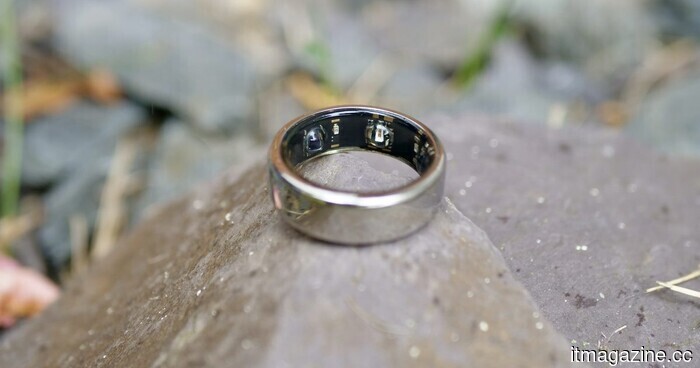
Oura discloses the two activities that its smart ring misinterprets as being tangled in the sheets.
The CEO of Oura Ring has just tackled every uncomfortable question you might have hesitated to ask.
Recently, Oura CEO Tom Hale spoke with the Wall Street Journal about the Oura Ring, and it was as intriguing as anticipated. There are serious discussions regarding health tracking and the prospective role of AI in medicine, but let’s first address the main topic.
Hale disclosed that the smart ring often confuses two activities for sex. In the full interview, he talks about the newly introduced 40% smaller Oura Ring 5, the anxieties surrounding health, and which activities Oura users are most interested in tracking.
Can the Oura Ring recognize sex?
Let’s get to the exciting part. While the Oura Ring can make a fairly accurate guess about whether you’re engaged in that specific activity, as Hale tactfully remarks, the company has intentionally chosen not to delve into that area. However, users have the option to manually label an activity as sex within the app, so it’s not entirely off the list if it’s something you deem significant.
The amusing aspect is what the ring mistakenly identifies as sex. Hale revealed that the Oura team found on Reddit that wrestling and horseback riding are the two activities most often flagged as intimate encounters. He shared this information with a serious expression and concluded, “I’ll leave it there. You can draw your own conclusions.”
What more insights does the CEO provide?
Beyond the intriguing tidbits, Hale shared some genuinely compelling observations. He emphasized that sleep is the metric he values most, calling it the cornerstone of health and recovery. His personal fixation lies with glucose, which has had significant implications for him.
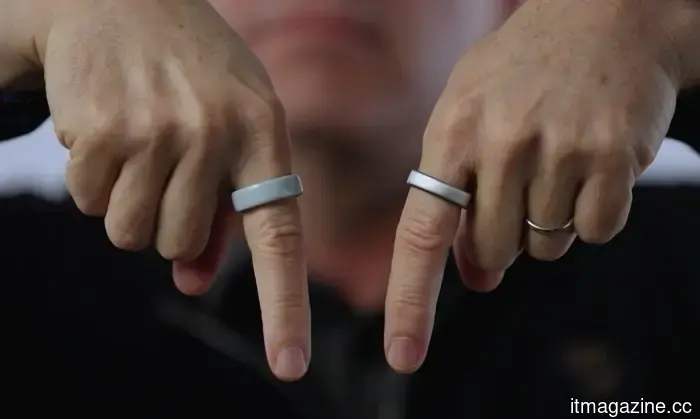
Regarding hardware, Hale also discussed the forthcoming Oura Ring 5, which is approximately 40% smaller than previous models, targeting individuals with smaller hands and men seeking a design reminiscent of a wedding band.
In one of the biggest revelations, Hale hinted at an AI clinician that is set to be integrated into the app, suggesting that the future of healthcare involves a smart ring that possesses deeper knowledge of your body than you do and can provide preventative care guidance.
This aligns with recent trends; Samsung has launched its own AI health coach, and Google’s Fitbit Air is taking similar steps. I remain skeptical about the effectiveness of these AI health coaches, and time will ultimately reveal which ones are truly beneficial and which are merely part of the AI trend.
Rachit is an experienced tech journalist with over a decade of experience in the consumer technology field.
Meta has been accused of planning facial recognition capabilities for its AI smart glasses.
Meta's aspirations for wearable AI have raised privacy concerns following a report that uncovered the company has discreetly integrated facial recognition technology into the software connected to its smart glasses ecosystem, possibly paving the way for a contentious surveillance feature after it publicly stepped back from facial recognition on Facebook.
A WIRED investigation indicates that updates to Meta's AI companion app included an unreleased internal feature named “NameTag,” which is designed to recognize individuals captured by the cameras on Meta’s Ray-Ban and Oakley smart glasses. The report states that the software can convert faces into biometric signatures, compare them with databases stored on a user's phone, and notify wearers when someone is identified.
Open-ear earbuds are finally functioning as genuine daily drivers.
Shokz OpenDots 2 aims to meet the needs of commuters, workouts, calls, and all-day usage, providing improvements that go beyond niche applications.
Open-ear earbuds have always seemed logical on paper, allowing users to enjoy music while remaining aware of traffic, workplace conversations, and their surroundings. The challenge has been whether that level of awareness justifies less bass, isolation, or a secure fit.
Shokz OpenDots 2 addresses this issue by introducing new clip-on earbuds that boast enhanced audio claims, lighter hardware, better battery performance, and controls designed for those sweaty, awkward situations where touch panels often struggle.
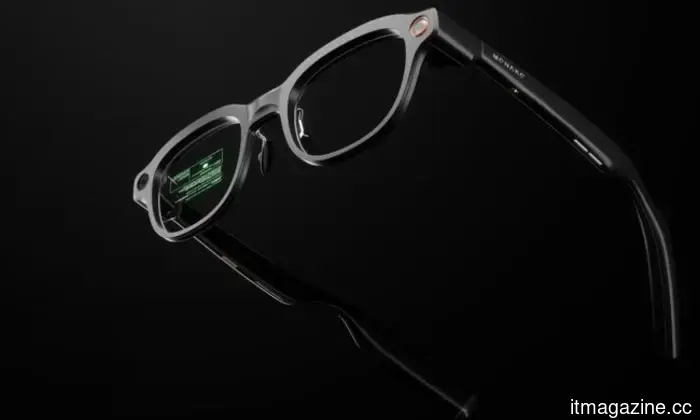
Monako Glass transforms smart glasses into an unusual coding workstation.
Monako is marketing Linux smart glasses for developers who desire AI coding assistants nearby, but the true test will be whether this becomes a practical tool instead of a gimmick.
Monako Glass merges Linux, a waveguide display, camera, speakers, and connections to AI coding agents within a 48-gram frame. The company is making a strong emphasis on input, featuring a bone conduction microphone and a gesture system called Vision Engine.
The list of tools extends beyond coding, with Monako mentioning Claude Code, Codex, Unreal Engine, Blender, After Effects, and other applications, giving the glasses the sound of a wearable command interface for both technical and creative tasks.





Other articles
 Facebook's latest AI Creator Assistant aims to serve as your personal content strategist.
Meta has introduced Creator Assistant, a conversational AI feature integrated into the Facebook creator dashboard. This tool assesses your content's performance, clarifies the reasons behind its success, and proposes new ideas inspired by current trends.
Facebook's latest AI Creator Assistant aims to serve as your personal content strategist.
Meta has introduced Creator Assistant, a conversational AI feature integrated into the Facebook creator dashboard. This tool assesses your content's performance, clarifies the reasons behind its success, and proposes new ideas inspired by current trends.
 Bowers & Wilkins unveils the revamped 800 Series Diamond D5 range at HIGH END Vienna.
Bowers & Wilkins has introduced its latest 800 Series Diamond D5 speakers, featuring enhanced acoustics, revamped cabinets, and high-end finishes aimed at audiophiles and studio experts.
Bowers & Wilkins unveils the revamped 800 Series Diamond D5 range at HIGH END Vienna.
Bowers & Wilkins has introduced its latest 800 Series Diamond D5 speakers, featuring enhanced acoustics, revamped cabinets, and high-end finishes aimed at audiophiles and studio experts.
 Meta is alleged to be developing facial recognition capabilities for its AI smart glasses.
A WIRED investigation suggests that Meta has discreetly integrated facial recognition technology into its smart glasses ecosystem, reigniting privacy worries regarding biometric surveillance and wearable AI.
Meta is alleged to be developing facial recognition capabilities for its AI smart glasses.
A WIRED investigation suggests that Meta has discreetly integrated facial recognition technology into its smart glasses ecosystem, reigniting privacy worries regarding biometric surveillance and wearable AI.
 Brave Origin is a streamlined browser that removes all the unnecessary details, but obtaining it comes at a cost of $60.
Brave has introduced Origin, a browser priced at $59.99 that eliminates several features. Critics, however, contend that these features can already be turned off at no cost.
Brave Origin is a streamlined browser that removes all the unnecessary details, but obtaining it comes at a cost of $60.
Brave has introduced Origin, a browser priced at $59.99 that eliminates several features. Critics, however, contend that these features can already be turned off at no cost.
 U.S. officials have talked about obtaining government shares in AI companies.
According to NOTUS, senior U.S. officials have initiated preliminary discussions with AI companies regarding the government purchasing stakes, a concept that Sam Altman has suggested since 2025.
U.S. officials have talked about obtaining government shares in AI companies.
According to NOTUS, senior U.S. officials have initiated preliminary discussions with AI companies regarding the government purchasing stakes, a concept that Sam Altman has suggested since 2025.
 Bowers & Wilkins unveils the revamped 800 Series Diamond D5 range at HIGH END Vienna.
Bowers & Wilkins has introduced its latest 800 Series Diamond D5 speakers, featuring enhanced acoustics, revamped cabinets, and premium finishes aimed at audiophiles and studio experts.
Bowers & Wilkins unveils the revamped 800 Series Diamond D5 range at HIGH END Vienna.
Bowers & Wilkins has introduced its latest 800 Series Diamond D5 speakers, featuring enhanced acoustics, revamped cabinets, and premium finishes aimed at audiophiles and studio experts.
Oura discloses the two activities that its smart ring misinterprets as being tangled in the sheets.
Oura CEO Tom Hale spoke with the WSJ to respond to questions about the smart ring, and the responses are both intriguing and amusing.