
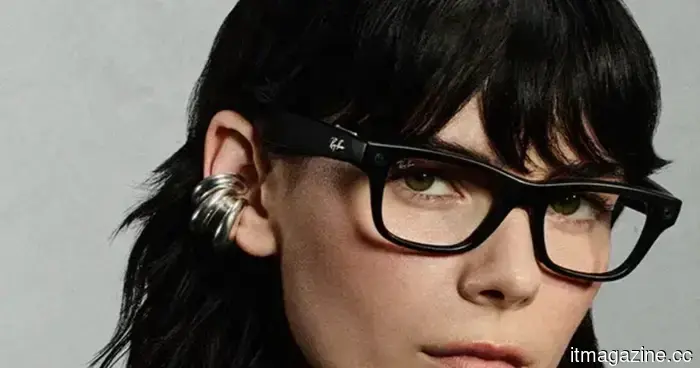
Meta is alleged to be developing facial recognition capabilities for its AI smart glasses.
Meta is now under fresh scrutiny following a report that disclosed the company's discreet integration of face-recognition technology into software associated with its smart glasses ecosystem. This move could pave the way for a controversial surveillance feature, despite Meta's previous decision to withdraw from facial recognition on Facebook.
A WIRED investigation found that updates to Meta's AI companion app included an internal system named “NameTag,” which is intended to recognize individuals captured by the cameras on Meta's Ray-Ban and Oakley smart glasses. The report claims that this software can transform faces into biometric signatures, compare them against databases stored on users' phones, and notify wearers when a person is recognized.
The discovery raises significant privacy concerns, indicating that Meta has continued to advance consumer-level face-recognition technology despite a history of backlash, lawsuits, and regulatory scrutiny regarding its management of biometric data on Facebook. In 2021, the company dismantled Facebook's facial recognition system and erased over a billion faceprints due to increasing pressure from privacy advocates and regulators.
According to WIRED’s findings, essential aspects of the NameTag system had been incorporated into software that had already been distributed to millions of phones as early as January 2026. The app is reported to have been downloaded over 50 million times and serves as a crucial companion platform for Meta's smart glasses ecosystem.
The report indicates that Meta has implemented three AI models related to this feature: one that detects faces, another that crops them from images, and a third that transforms them into biometric data. Security researchers referenced in the report have allegedly replicated parts of the system independently and discovered that the recognition process seems nearly operational.
This is significant because wearable face recognition is perceived as a much more invasive form of surveillance compared to traditional smartphone-based tagging systems. Unlike social media uploads, smart glasses function in real-time and could potentially identify strangers in public without their awareness or consent.
Privacy organizations, such as the American Civil Liberties Union and the Electronic Privacy Information Center, have reportedly expressed concerns that this technology could normalize mass identification in daily life, creating opportunities for misuse ranging from stalking to targeted surveillance.
While Meta contends that nothing has been officially launched yet, worries are already mounting. The company has countered some of the report's claims, asserting that the technology is still in the exploratory phase and that no consumer-facing facial-recognition feature has been released. Meta also stated it is not creating a centralized facial recognition database and plans to approach any public launch with caution.
Nevertheless, the timing of the report is noteworthy. Smart glasses are becoming a significant focus in consumer AI, with companies competing to create wearable assistants capable of seeing, hearing, and processing the world around users. Meta is rapidly advancing its ambitions in AI wearables through collaborations with EssilorLuxottica, while competitors like Apple and Google are pursuing similar mixed-reality technologies.
For consumers, this issue extends beyond yet another AI capability. If wearable face recognition gains mainstream acceptance, it could drastically alter expectations regarding anonymity in public settings. Critics argue that if these systems become widely adopted, opting out might cease to be a feasible option.
The critical forthcoming question is whether Meta will eventually deploy NameTag publicly, alter the technology in response to regulatory pressure, or restrict it to experimental use. Regardless, the report suggests that facial recognition technology within wearable devices may no longer be a distant idea; it might already be quietly embedded in apps that millions of people have downloaded.


Other articles
 Oura discloses the two activities that its smart ring mistakenly interprets as being involved in unsanitary bed activities.
Oura CEO Tom Hale spoke with the WSJ to address inquiries about the smart ring, and his responses are both intriguing and amusing.
Oura discloses the two activities that its smart ring mistakenly interprets as being involved in unsanitary bed activities.
Oura CEO Tom Hale spoke with the WSJ to address inquiries about the smart ring, and his responses are both intriguing and amusing.
 The top 10 mobile app builders for ecommerce targeted at mid-market and enterprise brands.
From completely managed native applications on any technology stack to AI-powered Shopify builders, these are the mobile app platforms that are effective for high-revenue ecommerce brands.
The top 10 mobile app builders for ecommerce targeted at mid-market and enterprise brands.
From completely managed native applications on any technology stack to AI-powered Shopify builders, these are the mobile app platforms that are effective for high-revenue ecommerce brands.
 South Korea's labor minister is urging technology companies to distribute the profits gained from artificial intelligence.
South Korea's labor minister called on companies such as Samsung to distribute their surplus profits from the AI boom with both suppliers and employees. The opposition described this as government interference.
South Korea's labor minister is urging technology companies to distribute the profits gained from artificial intelligence.
South Korea's labor minister called on companies such as Samsung to distribute their surplus profits from the AI boom with both suppliers and employees. The opposition described this as government interference.
 U.S. officials have talked about obtaining government shares in AI companies.
According to NOTUS, senior U.S. officials have initiated preliminary discussions with AI companies regarding the government purchasing stakes, a concept that Sam Altman has suggested since 2025.
U.S. officials have talked about obtaining government shares in AI companies.
According to NOTUS, senior U.S. officials have initiated preliminary discussions with AI companies regarding the government purchasing stakes, a concept that Sam Altman has suggested since 2025.
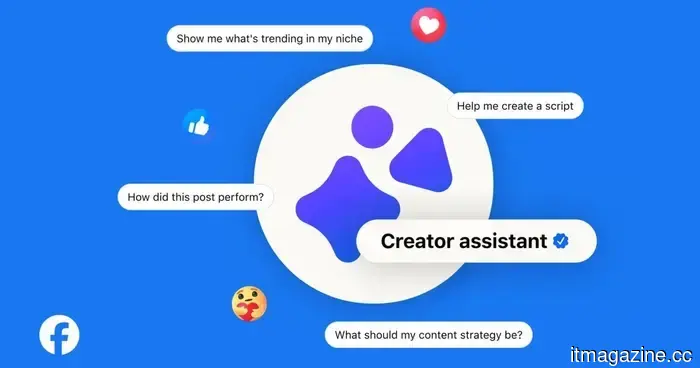 Facebook's latest AI Creator Assistant aims to serve as your personal content strategist.
Meta has introduced Creator Assistant, a conversational AI feature integrated into the Facebook creator dashboard. This tool assesses your content's performance, clarifies the reasons behind its success, and proposes new ideas inspired by current trends.
Facebook's latest AI Creator Assistant aims to serve as your personal content strategist.
Meta has introduced Creator Assistant, a conversational AI feature integrated into the Facebook creator dashboard. This tool assesses your content's performance, clarifies the reasons behind its success, and proposes new ideas inspired by current trends.
 Bowers & Wilkins unveils the revamped 800 Series Diamond D5 range at HIGH END Vienna.
Bowers & Wilkins has introduced its latest 800 Series Diamond D5 speakers, featuring enhanced acoustics, revamped cabinets, and high-end finishes aimed at audiophiles and studio experts.
Bowers & Wilkins unveils the revamped 800 Series Diamond D5 range at HIGH END Vienna.
Bowers & Wilkins has introduced its latest 800 Series Diamond D5 speakers, featuring enhanced acoustics, revamped cabinets, and high-end finishes aimed at audiophiles and studio experts.
Meta is alleged to be developing facial recognition capabilities for its AI smart glasses.
A WIRED investigation suggests that Meta has discreetly integrated facial recognition technology into its smart glasses ecosystem, reigniting privacy worries regarding biometric surveillance and wearable AI.