

You can genuinely help the planet by being less considerate when interacting with AI bots like ChatGPT and Gemini.
Every "please" you send to ChatGPT is quietly impacting the planet.
Here’s something to ponder before you submit a lengthy, detailed prompt to ChatGPT or Gemini: every word you enter consumes energy, and it costs more than you might imagine.
A recent report from the United Nations University Institute for Water, Environment and Health presents a concerning view of AI's environmental impact. The statistics are shocking and may cause you to reconsider before asking something of your favorite AI chatbot.
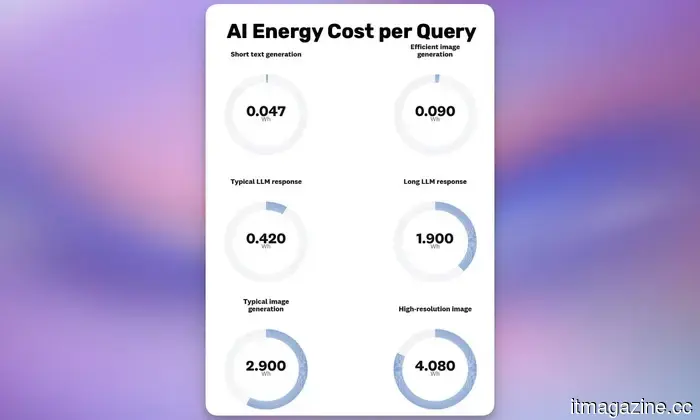
The report indicates that ChatGPT alone handles approximately 2.5 billion prompts daily, and at a modest 0.42 Wh per prompt, that equates to around 383 GWh of electricity annually. This amount is sufficient to fulfill the yearly electricity requirements of nearly 3 million individuals in Sub-Saharan Africa.
Does the length of your prompt really have an effect?
The report notes that the length of your prompt significantly affects the energy consumption of AI chatbots. It emphasizes a concept known as “concise mode,” which suggests that shorter prompts utilize less energy since AI inference energy increases with the number of tokens processed.
If concise mode could reduce tokens by merely 30% for typical interactions, leading to an approximate 25% decrease in per-query energy, it could save between 87 and 98 GWh of electricity each year. To illustrate, this saving represents the yearly residential electricity consumption of up to 756,000 people.
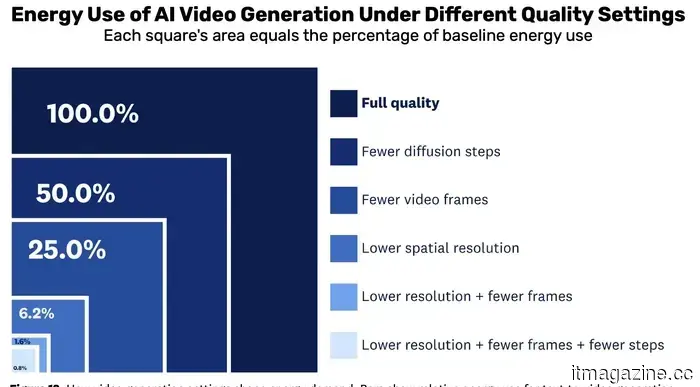
This reasoning also applies to the type of AI task you select. A standard ChatGPT-style text query requires about 200 times more energy than basic spam filtering. Generating a single AI image demands 2.9 Wh, which is 60 times more energy-intensive than a brief text response. Video creation is even more energy-consuming, with complex videos needing over 415 Wh each.
It’s difficult to accept that AI-generated videos are not only cluttering our streaming platforms but also consuming such vast amounts of electricity.
What actions can you take?
You don’t have to eliminate your use of AI if it assists you with daily tasks or work. However, you should avoid using it for creating trivial memes or nonsensical content.
Next time you have a simple question for ChatGPT, keep your request brief. Skip the niceties, get straight to the point, and opt for a lighter model when the task doesn’t require significant computational resources. Small changes, when made consistently, can lead to significant differences.
Rachit is an experienced technology journalist with over ten years of expertise in covering consumer technology.
Google is eager to acquire your app code and is willing to pay for it.
Google has been discreetly approaching Android developers with an offer to purchase access to their code. As reported by 404 Media, the company has sent emails to a select group of Google Play developers, inviting them to participate in what it calls a "confidential content offer pilot."
The email presents this as a revenue opportunity, stating that developers can "get paid for sharing the code that powers your apps, as well as your archived projects." Google assures developers that they will retain their intellectual property rights and that the license is non-exclusive.
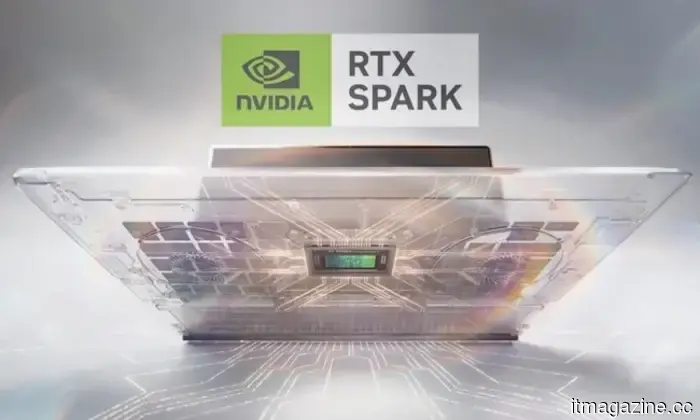
Nvidia confirms more RTX Spark processors are on the way, with the N2X and N3 series set to be released.
Huang confirming a multi-generation roadmap before the initial device has even shipped is the clearest indication yet of a long-term commitment spanning a decade.
The PC and laptop industry has relied on Intel and AMD silicon for so long that most don’t question whether these are the sole options available. At Computex 2026, Nvidia responded to this question with the RTX Spark superchip, and Jensen Huang’s comments regarding future developments suggest that it was not just a one-off experiment.
AI fitness coach detects muscle mechanics during your workouts and helps prevent novice injuries.
While most fitness apps offer motivation disguised as coaching, BioCoach provides anatomy-specific corrections, and I can foresee it becoming a smartphone app soon.
During the pandemic, the US Consumer Product Safety Commission noted a 48% increase in at-home exercise injuries. One might assume that the issue was poor equipment, but it was actually poor form. Without a coach present to correct it, many fell victim to improper technique.
Researchers from Drexel University and Michigan State University have created a prototype that directly addresses this issue, using your phone camera in real time. There is significant potential for it to evolve into a legitimate fitness app in the future (via Tech Xplore).



Other articles
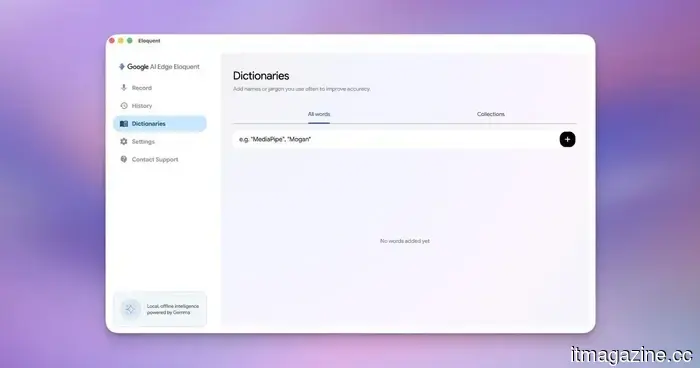 Google aims to eliminate your costly voice transcription subscription.
Google AI Edge Eloquent is a complimentary dictation application for Mac that converts your speech into text and refines it on your device, without the need for a subscription, cloud services, or privacy issues.
Google aims to eliminate your costly voice transcription subscription.
Google AI Edge Eloquent is a complimentary dictation application for Mac that converts your speech into text and refines it on your device, without the need for a subscription, cloud services, or privacy issues.
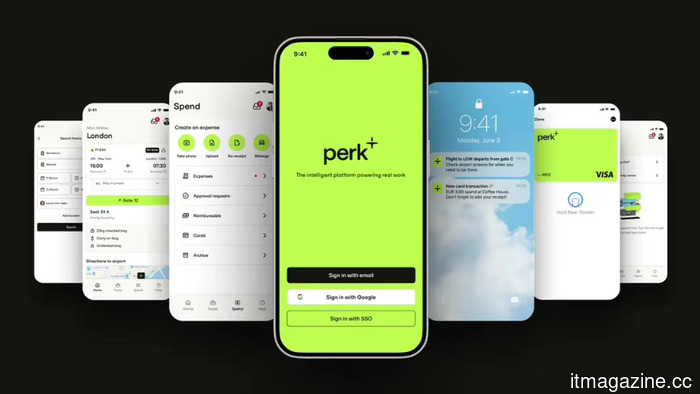 Perk secures a $300 million credit facility to advance its AI platform in the United States.
Perk, which was previously known as TravelPerk, has secured a $300 million private credit facility led by Neuberger Specialty Finance to support investment in AI and the launch of a spending platform in the US.
Perk secures a $300 million credit facility to advance its AI platform in the United States.
Perk, which was previously known as TravelPerk, has secured a $300 million private credit facility led by Neuberger Specialty Finance to support investment in AI and the launch of a spending platform in the US.
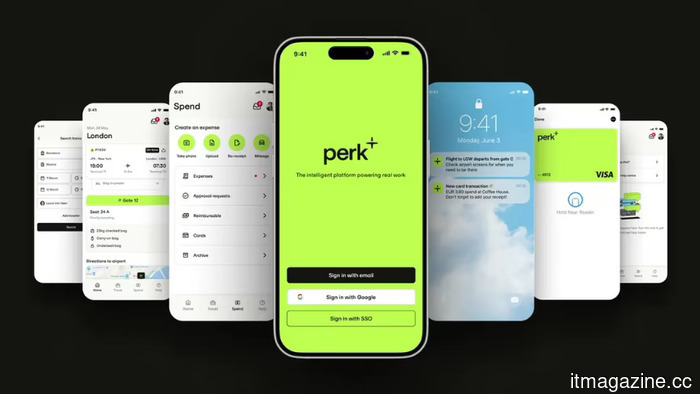 Perk secures a $300 million credit facility to advance its AI platform in the US market.
Perk, previously known as TravelPerk, has secured a $300 million private credit facility, spearheaded by Neuberger Specialty Finance, aimed at financing AI investments and launching a spending platform in the US.
Perk secures a $300 million credit facility to advance its AI platform in the US market.
Perk, previously known as TravelPerk, has secured a $300 million private credit facility, spearheaded by Neuberger Specialty Finance, aimed at financing AI investments and launching a spending platform in the US.
 Apple is said to have significantly reduced its Vision timeline for smart glasses, making Meta's leadership even more crucial.
Apple's Vision range has been reduced from seven products to two, and the individual responsible for that decision is the same one set to become CEO on September 1.
Apple is said to have significantly reduced its Vision timeline for smart glasses, making Meta's leadership even more crucial.
Apple's Vision range has been reduced from seven products to two, and the individual responsible for that decision is the same one set to become CEO on September 1.
 The excitement surrounding AI will begin to diminish. The decisions made next will determine who the winners are.
Joe Hipsky contends that the AI market is experiencing a correction rather than a collapse, and that the companies that will endure are those that transitioned from AI-first narratives to human-centered, outcome-oriented systems.
The excitement surrounding AI will begin to diminish. The decisions made next will determine who the winners are.
Joe Hipsky contends that the AI market is experiencing a correction rather than a collapse, and that the companies that will endure are those that transitioned from AI-first narratives to human-centered, outcome-oriented systems.
You can genuinely help the planet by being less considerate when interacting with AI bots like ChatGPT and Gemini.
A recent UN report shows that using brief and succinct AI prompts could conserve enough electricity to power millions of households. Here's the reason your word choice truly has an impact.