

Synthesia collaborates with Cinder to enhance moderation prior to the rendering of a frame.
The AI video company is enhancing its moderation framework specifically designed for AI-generated content and reinforcing its screen-at-creation approach that has been in place since 2017. Synthesia evaluates whether a video can proceed prior to its creation. The London-based AI video firm, which allows users to create avatar-led videos from scripts, revealed on June 4 that it is bolstering its trust and safety measures by collaborating with Cinder, a firm specializing in moderation infrastructure for AI-generated materials. This partnership strengthens a model Synthesia has adhered to since its inception: assessing the request instead of the completed video.
This sequence is what sets it apart. Traditionally, online platforms have typically focused on post facto detection, hosting content and waiting for it to be flagged. Instead, Synthesia examines each script according to its policies at the moment of generation, prior to any frame being rendered by the model.
Cinder integrates into this process as what the company refers to as an in-house agent, conducting a secondary review of every decision made by the model, collecting relevant context and deferring to a human reviewer only when a substantial judgment is needed. Every reviewer action helps retrain the system, and Cinder’s classifiers support over 100 languages right out of the box.
The rationale for this partnership is based on volume. In 2025, Synthesia’s automated systems reviewed over 11.5 million content pieces and identified 841,957 that breached its policies, while a manual review managed an additional 382,792 items, resulting in 70,272 removals.
The volume of automated reviews increased by approximately 77% year-on-year, rising from 6.56 million to 11.58 million items, whereas the content requiring human review fell from 792,586 to 441,086. This approach is intentional: delegate clear-cut cases to machines and keep human reviewers for appeals and nuanced scenarios. In 2025, the firm addressed 12,450 user appeals, reversing about 31% of those on review.
Synthesia regards safety as a commercial benefit rather than an expense. Its clientele is primarily enterprises, with over 60% of the Fortune 100 spanning industries like financial services, healthcare, defense, and the public sector, for whom a platform that could potentially serve as a deepfake creator is unacceptable. The company possesses ISO 27001, ISO 42001, and ISO 27701 certifications, and releases an annual responsible-creation report branded Futuresafe.
A recent external evaluation provided tangible evidence of their claims. When Belgian public broadcaster RTBF examined AI video technologies for a report titled IA, la fabrique à arnaques (AI, the scam factory), Synthesia successfully blocked the generation of non-consensual deepfakes, political propaganda, racist material, and crypto investment scams, while several competitor platforms produced all of them.
For a company that has established its enterprise reputation by rejecting certain prompts, having an independent broadcaster document this refusal acts as a form of validation that marketing cannot replicate.
The partnership with Cinder aims to preserve this record as the product evolves. As Synthesia introduces new avatar types, languages, and platforms, its trust and safety team seeks moderation that keeps pace with its roadmap rather than lagging behind it. Whether this combined system will withstand the scale that Synthesia aims for can only be determined by future Futuresafe reports. The underlying assumption of this announcement predates the partnership: in AI video, the best time to decline is before content is created.

Other articles
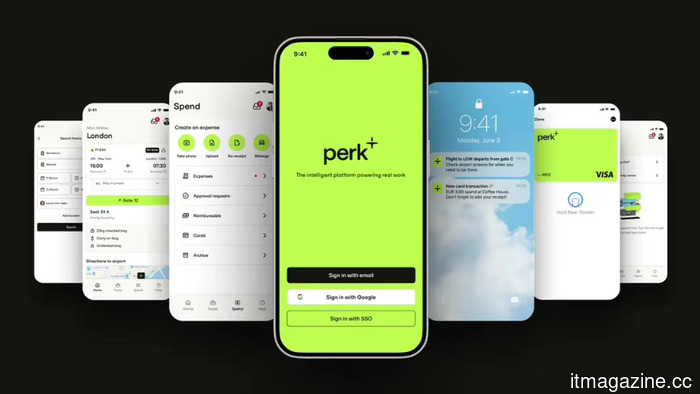 Perk secures a $300 million credit facility to advance its AI platform in the United States.
Perk, which was previously known as TravelPerk, has secured a $300 million private credit facility led by Neuberger Specialty Finance to support investment in AI and the launch of a spending platform in the US.
Perk secures a $300 million credit facility to advance its AI platform in the United States.
Perk, which was previously known as TravelPerk, has secured a $300 million private credit facility led by Neuberger Specialty Finance to support investment in AI and the launch of a spending platform in the US.
 The excitement surrounding AI will begin to diminish. What comes next will determine who the eventual winners are.
Joe Hipsky contends that the AI market is undergoing a correction rather than a collapse, and that the companies that will thrive are those that have transitioned from AI-first narratives to human-first, outcome-oriented systems.
The excitement surrounding AI will begin to diminish. What comes next will determine who the eventual winners are.
Joe Hipsky contends that the AI market is undergoing a correction rather than a collapse, and that the companies that will thrive are those that have transitioned from AI-first narratives to human-first, outcome-oriented systems.
 Within the thoughts of a viral indie hacker.
Samuel Rizzon transitioned from creating a billion-document signature platform in Brazil to transforming GitCity into a viral success, boasting 80,000 buildings and 180,000 visitors, all by incorporating distribution as an integral aspect of the product.
Within the thoughts of a viral indie hacker.
Samuel Rizzon transitioned from creating a billion-document signature platform in Brazil to transforming GitCity into a viral success, boasting 80,000 buildings and 180,000 visitors, all by incorporating distribution as an integral aspect of the product.
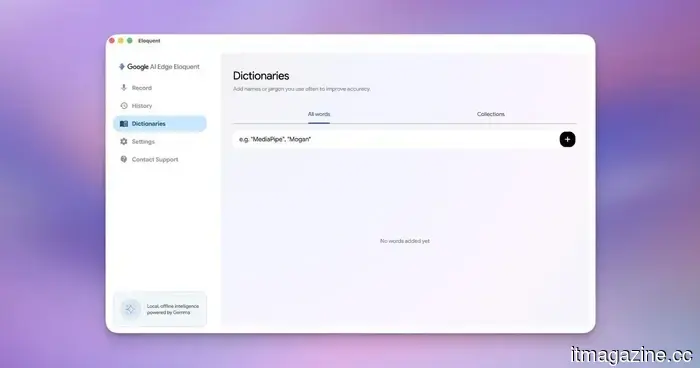 Google aims to eliminate your costly voice transcription subscription.
Google AI Edge Eloquent is a complimentary dictation application for Mac that converts your speech into text and refines it on your device, without the need for a subscription, cloud services, or privacy issues.
Google aims to eliminate your costly voice transcription subscription.
Google AI Edge Eloquent is a complimentary dictation application for Mac that converts your speech into text and refines it on your device, without the need for a subscription, cloud services, or privacy issues.
 China is progressing past super-apps to adopt AI agents that handle everything on your behalf.
Alibaba’s Qwen and Tencent’s WeChat are driving China’s app economy towards AI agents capable of ordering food, booking travel, shopping, making payments, and navigating services all from a chat prompt.
China is progressing past super-apps to adopt AI agents that handle everything on your behalf.
Alibaba’s Qwen and Tencent’s WeChat are driving China’s app economy towards AI agents capable of ordering food, booking travel, shopping, making payments, and navigating services all from a chat prompt.
 Google's latest AI application aims to substitute infinite scrolling with personal narratives from your own life.
Google's latest app, Dreambeans, operates while you sleep and presents a brief selection of AI-generated stories about your life every morning.
Google's latest AI application aims to substitute infinite scrolling with personal narratives from your own life.
Google's latest app, Dreambeans, operates while you sleep and presents a brief selection of AI-generated stories about your life every morning.
Synthesia collaborates with Cinder to enhance moderation prior to the rendering of a frame.
Synthesia is enhancing its trust and safety measures with Cinder, which includes an AI agent that reviews each script prior to the avatars producing video.