

Google's latest AI application aims to substitute infinite scrolling with personal narratives from your own life.
Dreambeans represents Google's clearest indication that the issue with social media lies not in the content, but rather in the endless feed.
Most applications are engineered to maximize your time spent on them, particularly content consumption apps where users can scroll through an infinite array of content.
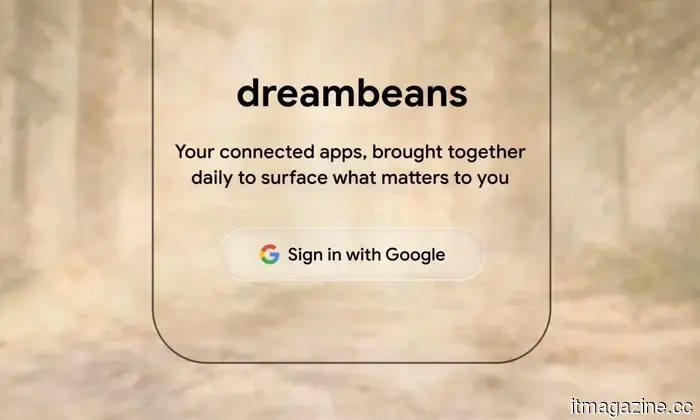
In contrast, Dreambeans, a new experimental app from Google Labs, takes a different approach. Each morning, it provides a curated selection of AI-illustrated stories and encourages users to engage with their real lives.
What type of stories does Dreambeans produce?
While you are asleep, the app gathers necessary data from your Google apps and services like Gmail, Calendar, Google Photos, YouTube, and your search history, compiling them into 10 to 14 tailored stories.
These narratives offer lifestyle suggestions tailored to your interests and activities. They might include a recommendation for a nearby coffee shop based on your searches, insights into an upcoming trip listed in your calendar, or ideas related to a hobby that has appeared frequently in your YouTube feed.
Some stories may prompt an action, like a link to purchase tickets or book a show.
Each story features AI-generated artwork that is customized with your Google Photos and Nano Banana 2. If a story from Dreambeans pertains to you or acquaintances, the app utilizes face grouping from your Photos to include them in the imagery.
Who is eligible to use it, and what’s the downside?
Currently, Dreambeans is exclusively available to Google AI Ultra subscribers aged 18 and older in the U.S., on both Android and iOS devices. It appears that Google is intentionally limiting the audience, as AI Ultra is their highest subscription tier, costing $100 per month.
Privacy-conscious users have the option to decide which services interact with the app and can delete their data at any time via the in-app settings. Choices made in Dreambeans do not impact preferences in Gemini or AI Mode.
The app also features a feedback mechanism. Since it is still in the experimental stage, users might encounter some irrelevant stories or incorrect visuals. The real experiment lies in determining whether users accustomed to years of infinite scrolling will embrace a daily content limit, in my opinion.
For over five years, Shikhar has steadily broken down developments in consumer technology and presented them succinctly.
Google is eager to obtain your app code and is willing to pay for it.
Google has been discreetly reaching out to Android developers with an offer to purchase access to their code. According to a report by 404 Media, the company has sent emails to a selected group of Google Play developers, inviting them to participate in what it calls a "confidential content offer pilot." The email presents it as a revenue opportunity, stating that developers can “get paid for sharing the code behind their apps, as well as their archived projects.” Google also reassures developers that they will retain their intellectual property rights and the license will be non-exclusive.
Nvidia confirms upcoming RTX Spark processors with the N2X and N3 series set to launch.
Huang's affirmation of a multi-generational roadmap before any device has even been released is a clear indication of a long-term commitment.
The PC and laptop sectors have relied on Intel and AMD processors for so long that most people hardly consider alternative options. Nvidia recently addressed this at Computex 2026, unveiling the RTX Spark superchip, and Jensen Huang's remarks about future plans suggest it is not just a one-off test.
AI fitness coach analyzes muscle mechanics during exercise to prevent beginner injuries.
While most fitness apps provide motivation disguised as coaching, BioCoach offers anatomy-specific corrections, and I can envision it becoming a smartphone application very soon.
During the pandemic, the US Consumer Product Safety Commission documented a 48% increase in home exercise injuries. While one might assume that poor equipment was the problem, it actually stemmed from improper form. Without a coach present to provide corrections, individuals faced challenges. Researchers from Drexel University and Michigan State University created a prototype that addresses this issue in real-time using your phone's camera, showing significant potential to evolve into a viable fitness app in the future (via Tech Xplore).






Other articles
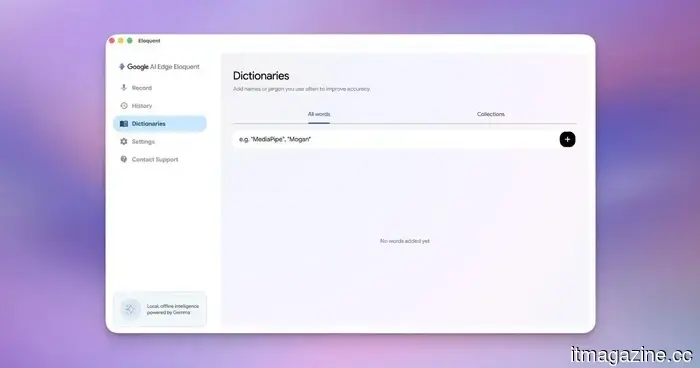 Google aims to eliminate your pricey voice transcription subscription.
Google AI Edge Eloquent is a complimentary dictation application for Mac that converts and refines your spoken words on the device, without any subscription fees, cloud usage, or privacy issues.
Google aims to eliminate your pricey voice transcription subscription.
Google AI Edge Eloquent is a complimentary dictation application for Mac that converts and refines your spoken words on the device, without any subscription fees, cloud usage, or privacy issues.
 Within the mindset of a viral indie hacker
Samuel Rizzon transitioned from creating a billion-document signature platform in Brazil to developing GitCity into a viral success, featuring 80,000 buildings and 180,000 visitors, by integrating distribution as a key component of the product.
Within the mindset of a viral indie hacker
Samuel Rizzon transitioned from creating a billion-document signature platform in Brazil to developing GitCity into a viral success, featuring 80,000 buildings and 180,000 visitors, by integrating distribution as a key component of the product.
 Leaked wallpapers for the Pixel 11 suggest the possible color choices that may be available.
Leaked wallpapers for the Pixel 11 series indicate a shift towards a more subdued color palette for Google's upcoming smartphones, featuring gentle greens, beiges, and pinks in place of the brighter hues seen in previous years.
The EU's tech sovereignty initiative limits US cloud services and introduces Chips Act 2.0.
Europe's technology sovereignty initiative limits US cloud services for government data and introduces Chips Act 2.0 to enhance advanced chip production.
Leaked wallpapers for the Pixel 11 suggest the possible color choices that may be available.
Leaked wallpapers for the Pixel 11 series indicate a shift towards a more subdued color palette for Google's upcoming smartphones, featuring gentle greens, beiges, and pinks in place of the brighter hues seen in previous years.
The EU's tech sovereignty initiative limits US cloud services and introduces Chips Act 2.0.
Europe's technology sovereignty initiative limits US cloud services for government data and introduces Chips Act 2.0 to enhance advanced chip production.
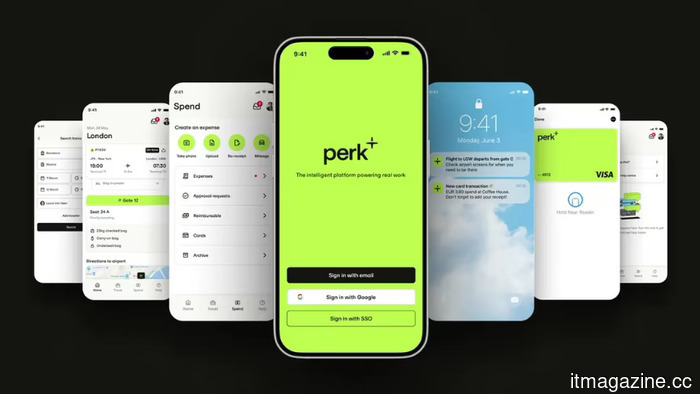 Perk secures a $300 million credit facility to advance its AI platform in the US market.
Perk, previously known as TravelPerk, has secured a $300 million private credit facility, spearheaded by Neuberger Specialty Finance, aimed at financing AI investments and launching a spending platform in the US.
Perk secures a $300 million credit facility to advance its AI platform in the US market.
Perk, previously known as TravelPerk, has secured a $300 million private credit facility, spearheaded by Neuberger Specialty Finance, aimed at financing AI investments and launching a spending platform in the US.
 Google aims to eliminate your costly voice transcription subscription.
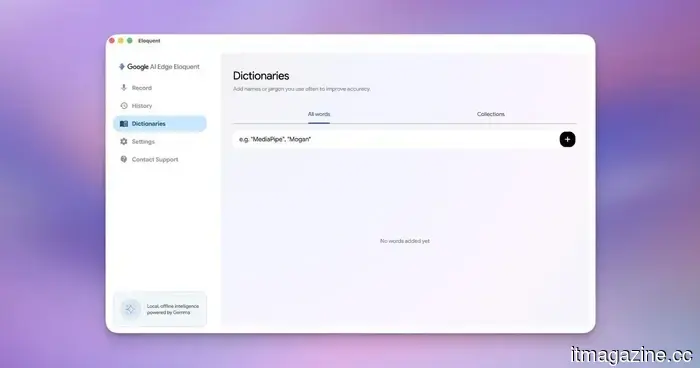
Google AI Edge Eloquent is a complimentary dictation application for Mac that converts your speech into text and refines it on your device, without the need for a subscription, cloud services, or privacy issues.
Google aims to eliminate your costly voice transcription subscription.
Google AI Edge Eloquent is a complimentary dictation application for Mac that converts your speech into text and refines it on your device, without the need for a subscription, cloud services, or privacy issues.
Google's latest AI application aims to substitute infinite scrolling with personal narratives from your own life.
Google's latest app, Dreambeans, operates while you sleep and presents a brief selection of AI-generated stories about your life every morning.