

Within the thoughts of a viral indie hacker.
When asked about his profession, 29-year-old Samuel Rizzon responds simply with “developer.” While that description is accurate, it doesn’t fully capture the breadth of his work, which extends well beyond coding. At an age when many engineers are still defining their specific niche, Rizzon has created products that have been adopted by large enterprises, online classrooms, and the open-source community—three areas that typically do not nurture the same instincts. His journey illustrates versatility, showcasing an engineer who refuses to limit himself to a single identity.
From a bedroom application to processing a billion documents
Rizzon developed an interest in technology and software development early in life, culminating in his first product release—a Bible quiz—when he was just 19. He published it on the Play Store and App Store in 2015, garnering 22,000 downloads, which encouraged him to pursue creating practical solutions. Shortly thereafter, he joined TOTVS, Brazil’s largest tech firm, where he dedicated the next five years to establishing his career.
The foundation of his career revolved around a singular product. It began as a proof of concept for a client who needed a method for digital document signing. Rizzon built it from the ground up, resulting in a prototype that proved successful enough to evolve into a standalone product. This platform grew into an independent electronic signature solution, similar to DocuSign, now processing over a billion documents for over a million users.
The development of this product was mainly a solo endeavor. Long before the emergence of AI coding assistants, Rizzon designed the entire stack himself—encompassing an Angular front end, a C# back end, a Chrome extension, and a desktop application that reverse-engineered the A1 and A3 devices used in Brazil for document authentication. As the product matured, a team was formed around him, eventually comprising about ten engineers, designers, and product staff, with Rizzon overseeing the transformation of the prototype into a comprehensive product line.
After a year with consultancy CI&T, Rizzon took on a remote role as a full-stack engineer for a startup in New York, giving him his first taste of the U.S. tech landscape.
Gaining experience as a founder
Simultaneously, Rizzon embarked on creating his own company from his room in Brazil, without investors, a team, or a supportive network. What he did possess was determination, leading him to grow the business from nothing into a venture with 30 paying customers across Brazil, the United States, and Ireland, and 8,000 users on its web application.
With no one else to rely on, Rizzon managed sales, client interactions, support, and marketing—tasks most engineers typically don’t engage with. During this time, he also launched a YouTube channel, which attracted 3,000 subscribers. He doesn’t romanticize the challenges he faced, particularly the struggle of operating from Brazil, far from a robust startup ecosystem. “I had nothing, really nothing,” he recalls. “It was just me in my room, trying to create something and reach customers. It was a very specific and challenging niche.” This isolation compelled him to rely solely on himself, nurturing the founder instincts that would later emerge in his popular consumer projects.
A one-click solution that attracted 150,000 users
In the wake of the 2020 COVID-19 pandemic, as remote work and schooling surged, Rizzon developed a Chrome extension that could mute all participants on Google Meet with a single click—an answer to a recurring problem he encountered himself. The solution was straightforward, and it quickly became apparent that others shared the same need.
This became evident fast. Within one year, the extension amassed 150,000 users, primarily through word of mouth. Its most dedicated users were teachers conducting online classes of 15 to 30 students, who found it cumbersome to mute each participant individually. “It was a hassle for me, and I just built an extension to fix that,” Rizzon notes. “It turned out to be particularly helpful for many teachers.”
The growing traction captured the attention of the MP3.com founder, who reached out to Rizzon with a purchase offer. Upon selling the extension, he marked his first exit, reinforcing his knack for launching consumer products, a skill that would influence his future endeavors. He has since remained active in open source, co-founding and developing Zard UI, a component library for Angular developers that has gained over 1,000 stars on GitHub.
The city he designed to go viral
After years of consistent project releases, the one that gained major traction was GitCity. The concept stemmed from a post on X about creating a city, and Rizzon managed to launch an initial version within a single day, using Claude Code to generate the entire codebase. The result was a pixel-art 3D city that represented GitHub developers as individual buildings.
“
Other articles
 The most significant update for Samsung Health will transform your Galaxy Watch into a personal health coach.
Samsung Health is undergoing a significant update that will transform your Galaxy Watch into an active health coach, simplifying complex biometric data into clear, actionable advice that you can utilize.
The EU's tech sovereignty initiative limits US cloud services and introduces Chips Act 2.0.
Europe's technology sovereignty initiative limits US cloud services for government data and introduces Chips Act 2.0 to enhance advanced chip production.
The most significant update for Samsung Health will transform your Galaxy Watch into a personal health coach.
Samsung Health is undergoing a significant update that will transform your Galaxy Watch into an active health coach, simplifying complex biometric data into clear, actionable advice that you can utilize.
The EU's tech sovereignty initiative limits US cloud services and introduces Chips Act 2.0.
Europe's technology sovereignty initiative limits US cloud services for government data and introduces Chips Act 2.0 to enhance advanced chip production.
 Former DeepMind founders secure $20 million for Airspeed's AI sales representatives.
Airspeed has secured $20 million in a Series A funding round led by DN Capital to develop agentic AI capable of autonomously carrying out go-to-market tasks, rather than merely providing insights.
Former DeepMind founders secure $20 million for Airspeed's AI sales representatives.
Airspeed has secured $20 million in a Series A funding round led by DN Capital to develop agentic AI capable of autonomously carrying out go-to-market tasks, rather than merely providing insights.
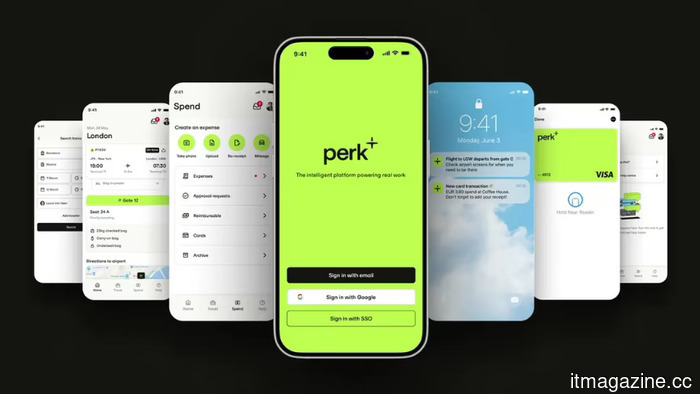 Perk secures a $300 million credit facility to advance its AI platform in the US market.
Perk, previously known as TravelPerk, has secured a $300 million private credit facility, spearheaded by Neuberger Specialty Finance, aimed at financing AI investments and launching a spending platform in the US.
Perk secures a $300 million credit facility to advance its AI platform in the US market.
Perk, previously known as TravelPerk, has secured a $300 million private credit facility, spearheaded by Neuberger Specialty Finance, aimed at financing AI investments and launching a spending platform in the US.
 The excitement surrounding AI will begin to diminish. What comes next will determine who the eventual winners are.
Joe Hipsky contends that the AI market is undergoing a correction rather than a collapse, and that the companies that will thrive are those that have transitioned from AI-first narratives to human-first, outcome-oriented systems.
The excitement surrounding AI will begin to diminish. What comes next will determine who the eventual winners are.
Joe Hipsky contends that the AI market is undergoing a correction rather than a collapse, and that the companies that will thrive are those that have transitioned from AI-first narratives to human-first, outcome-oriented systems.
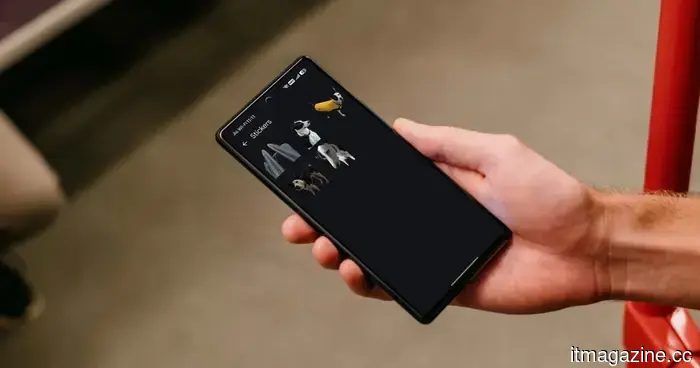 Google Photos on Android now offers a dedicated space for your personalized stickers.
Google Photos on Android is introducing a dedicated Stickers folder within the Collections tab, which will automatically save all custom stickers you create. This update aligns the Android app's features with those of iOS, which received this folder back in January.
Google Photos on Android now offers a dedicated space for your personalized stickers.
Google Photos on Android is introducing a dedicated Stickers folder within the Collections tab, which will automatically save all custom stickers you create. This update aligns the Android app's features with those of iOS, which received this folder back in January.
Within the thoughts of a viral indie hacker.
Samuel Rizzon transitioned from creating a billion-document signature platform in Brazil to transforming GitCity into a viral success, boasting 80,000 buildings and 180,000 visitors, all by incorporating distribution as an integral aspect of the product.