
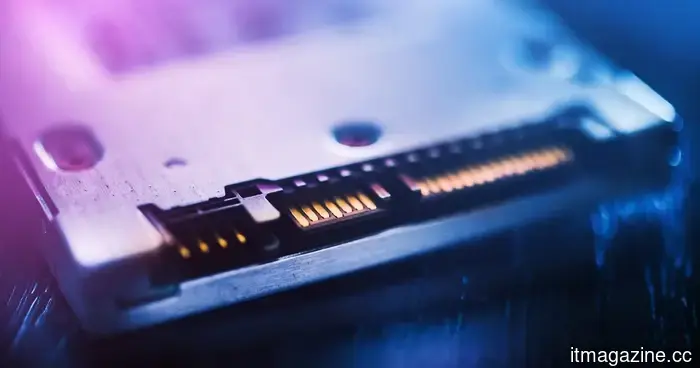
A storage innovation offers the potential for secure data recovery, even in the event that hackers compromise your computer.
This new system allows your deleted files to remain recoverable for up to 126 days following a cyberattack.
When hackers gain access to your computer, one of their initial actions is to delete or lock your files and then disappear. By the time you recognize that something is amiss, the damage is often irreversible. A researcher from Florida International University has discovered a method to change this, and the solution is integrated directly into your storage drive.
Understanding the fate of your deleted files
When you delete a file, it doesn't vanish instantly. Instead, it exists in a sort of digital limbo, present in fragments on your drive until it's permanently erased to make space.
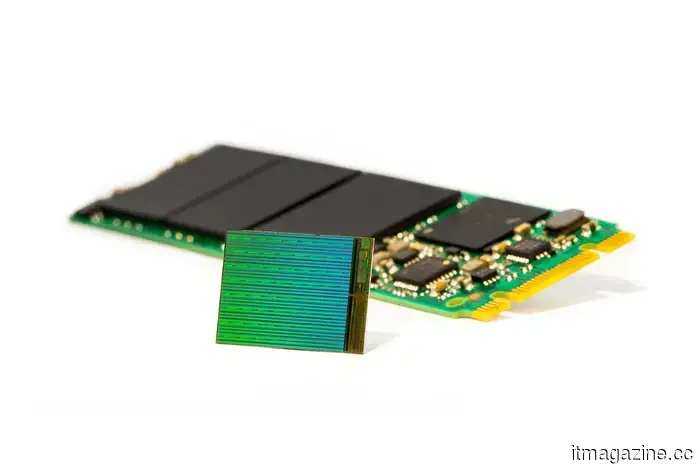
If a hacker encrypts or deletes your data, there’s a theoretical chance to retrieve those files before they are lost forever. The challenge is that contemporary SSDs, which power most laptops and computers today, manage storage inefficiently.
When space is needed, the drive erases deleted data based solely on efficiency, without considering how recently files were removed. Files removed during a ransomware attack may be deleted first, while older, unnecessary files from weeks ago may still remain.
Transforming your SSD into a cybersecurity asset
The system organizes deleted data by age, ensuring that the oldest deleted files are removed first while protecting the most recently deleted files for as long as possible. This innovation extends the recovery window for deleted data up to 126 days, enhancing data protection by at least 60% with minimal effect on drive performance.
Because the storage drive functions independently from your operating system, it can continue to safeguard your data even after hackers have taken control of your software. The research is currently in discussions with industry partners to bring this technology to market.
If this research has piqued your curiosity about your storage drive's activities, you may also want to learn how websites can track your browsing habits via your hard drive.
Manisha Priyadarshini is a technology and entertainment writer with over nine years of editorial experience.
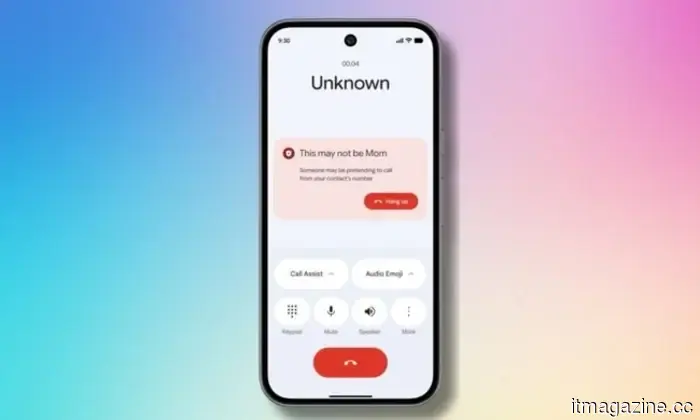
Android will now alert you if AI is being used to imitate your contact’s voice during a call.
Google's fake call detection represents the first instance of a phone platform implementing a real-time cryptographic safeguard against AI voice cloning scams.
Although advancements in AI benefit people from various fields, they also come with drawbacks. One of the most frequently exploited downsides is AI voice cloning, which has advanced to a point where many individuals struggle to distinguish a deepfake voice from a genuine one. Scammers are aware of this and have been mimicking users' contacts, cloning their voices, and committing financial fraud for some time. Android's new fake call detection aims to prevent such scenarios before they lead to losses.
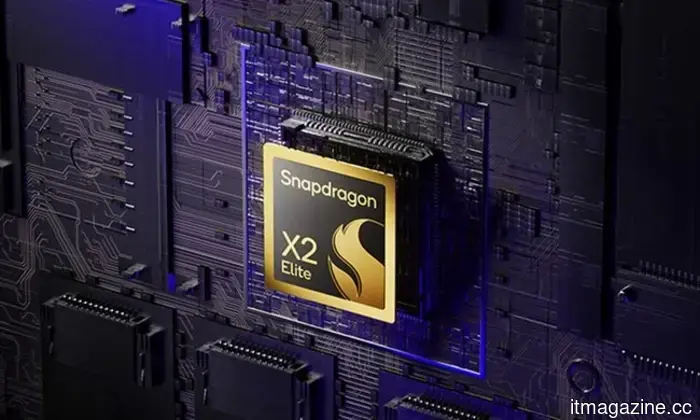
Qualcomm’s Snapdragon X2 Elite finally debuts in a mini PC, appearing to be Windows’ response to the Mac mini.
For the past two years, Qualcomm's Snapdragon X series has primarily been limited to notebooks. While these chips offered excellent battery life and surprisingly competitive performance, they haven't had the opportunity to compete with compact desktop devices like Apple's Mac mini or the more robust Mac Studio. The Ascent QN10 changes that.
Equipped with the 18-core Snapdragon X2 Elite processor alongside Qualcomm's integrated Adreno GPU, this mini desktop also becomes the world's first to offer 80 TOPS of AI performance via its dedicated Hexagon NPU. Consequently, ASUS is presenting a new form factor for Qualcomm's most powerful PC silicon.
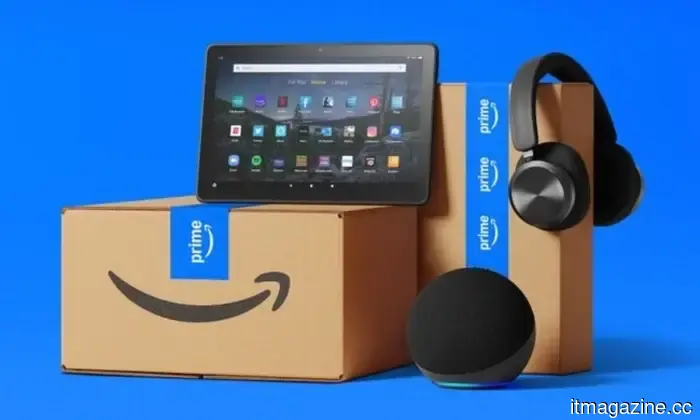
Amazon has announced the date for its Prime Day sales, which will take place slightly earlier this year.
For the first time, Amazon has shifted Prime Day to June, strategically placing it before the back-to-school shopping season. Prime Day returns as a four-day event, and, in a historic change, it will start in June instead of July. So if you were waiting last summer until mid-July to purchase items at a discounted rate, you now have about two less weeks to decide.


Other articles
 DeepSeek secures its initial external funding: a $7 billion round valuing the company at up to $59 billion.
China's DeepSeek plans to raise approximately $7 billion in its initial funding round, with supporters including Tencent and CATL, at a valuation of as much as $59 billion.
DeepSeek secures its initial external funding: a $7 billion round valuing the company at up to $59 billion.
China's DeepSeek plans to raise approximately $7 billion in its initial funding round, with supporters including Tencent and CATL, at a valuation of as much as $59 billion.
 Applied Aerospace & Defense secures $650 million in an IPO that was oversubscribed by a factor of ten.
Applied Aerospace & Defense secured $650 million in its NYSE initial public offering, setting the price at $20 per share, which resulted in a valuation of $3.4 billion following a book that was ten times oversubscribed.
SpaceX sets its IPO price at $135 per share, valuing the company at $1.75 trillion and making it a record listing.
SpaceX intends to set the price of its IPO at $135 per share, aiming for a historic $75 billion raise and a valuation of $1.75 trillion, finalizing the price ahead of its roadshow.
Applied Aerospace & Defense secures $650 million in an IPO that was oversubscribed by a factor of ten.
Applied Aerospace & Defense secured $650 million in its NYSE initial public offering, setting the price at $20 per share, which resulted in a valuation of $3.4 billion following a book that was ten times oversubscribed.
SpaceX sets its IPO price at $135 per share, valuing the company at $1.75 trillion and making it a record listing.
SpaceX intends to set the price of its IPO at $135 per share, aiming for a historic $75 billion raise and a valuation of $1.75 trillion, finalizing the price ahead of its roadshow.
 Flok Health secures $12.5M to expand an AI physiotherapist approved by the NHS for unsupervised operations.
Flok Health secured $12.5 million in a Series A funding round led by AlbionVC to expand its CQC-approved AI physiotherapy clinic, which is currently providing treatment for back pain to 2.4 million NHS patients.
Flok Health secures $12.5M to expand an AI physiotherapist approved by the NHS for unsupervised operations.
Flok Health secured $12.5 million in a Series A funding round led by AlbionVC to expand its CQC-approved AI physiotherapy clinic, which is currently providing treatment for back pain to 2.4 million NHS patients.
 Amazfit has just released a smartwatch designed for individuals who train intensely but find it challenging to recover.
The Amazfit Balance Ultra is designed for individuals who frequently run, lift weights, and train, equipped with features that indicate when the body is prepared to exert itself and when it might require recovery.
Amazfit has just released a smartwatch designed for individuals who train intensely but find it challenging to recover.
The Amazfit Balance Ultra is designed for individuals who frequently run, lift weights, and train, equipped with features that indicate when the body is prepared to exert itself and when it might require recovery.
A storage innovation offers the potential for secure data recovery, even in the event that hackers compromise your computer.
A storage-oriented cybersecurity system allows for the recovery of deleted data for up to 126 days while only slightly affecting drive performance.