
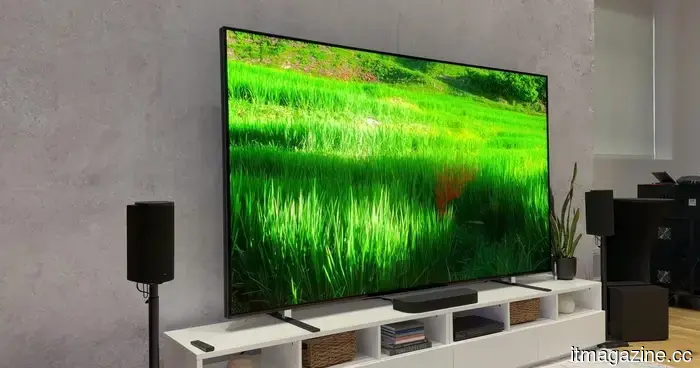
Sony's True RGB technology strives to combine the advantages of both OLED and Mini LED.
In recent years, the competition for premium television buyers has centered on two technologies: OLED and Mini LED. OLED is renowned for providing outstanding contrast and viewing angles, while Mini LED has significantly increased brightness levels. The dilemma often involves determining which trade-off is more suitable for your environment and viewing preferences.
Sony believes this discussion may shift soon. At a private media event in New York City, the company introduced a new display technology called True RGB, which reimagines the functionality of TV backlights and seeks to combine the key advantages of both OLED and Mini LED.
Sony claims that most TVs are made for unsuitable environments.
One of the more intriguing points made by Sony during the presentation was its observation regarding viewing conditions. The company noted that only 13% of viewers watch TV in completely dark environments typical of product showcases, cinemas, or professional color grading rooms. The other 87% watch in living rooms, family rooms, and settings with fluctuating lighting conditions.
Sony argues that many high-end displays still struggle to achieve a balance of brightness, color accuracy, and contrast when outside of ideal viewing conditions. True RGB is intended to address this problem.
What distinguishes True RGB?
To grasp why Sony views this innovation as significant, it helps to examine how most high-end TVs currently generate color.
In traditional Mini LED or QLED displays, a blue or white light source collaborates with quantum dots, phosphor layers, and LCD structures to produce the colors displayed on screen. In simple terms, much of the color production occurs after the light has exited the backlight.
True RGB takes a distinct approach. Rather than depending on a single color light source that is later filtered, Sony employs independently controlled red, green, and blue diodes within the backlight system. This allows the desired color to be created at the light source before it reaches the LCD layer.
To facilitate this, Sony’s professional monitor engineers collaborated with the BRAVIA consumer team to develop a new RGB Backlight Master Drive. According to Sony, the revamped driver architecture enables real-time individual control of millions of tiny red, green, and blue diodes.
The most notable enhancement may be color volume.
Sony conducted a series of side-by-side comparisons of True RGB against competing flagship displays, including tests with both 100% and 90% raster windows. While several differences were highlighted, color volume emerged as a particularly significant factor.
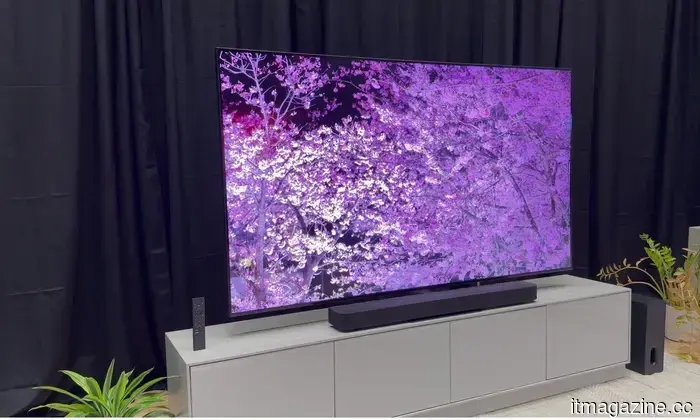
The key distinction is that True RGB produces pure red, green, and blue light directly at the source instead of relying on a single backlight color that is subsequently filtered through the display. Sony asserts that this allows for substantially richer color expression while maintaining high brightness. The company claims that True RGB achieves double the color volume of the BRAVIA 9 Mini LED and up to four times that of the BRAVIA 8 OLED.
The outcome is a display that can attain high brightness while preserving color saturation rather than washing colors out at elevated brightness levels.
Sony also emphasized viewing angles.
Historically, viewing angles have been one of OLED’s chief advantages. Mini LED displays can experience some color inconsistency when viewed from the side due to the nature of color generation occurring through the LCD structure.
Sony contends that True RGB mitigates this issue since color is generated through both the LED and LCD layers, rather than depending on a single stage in the display pipeline. During comparisons, the company demonstrated that colors appeared more consistent from extreme angles.
Smooth gradation is aimed at eliminating visible banding.
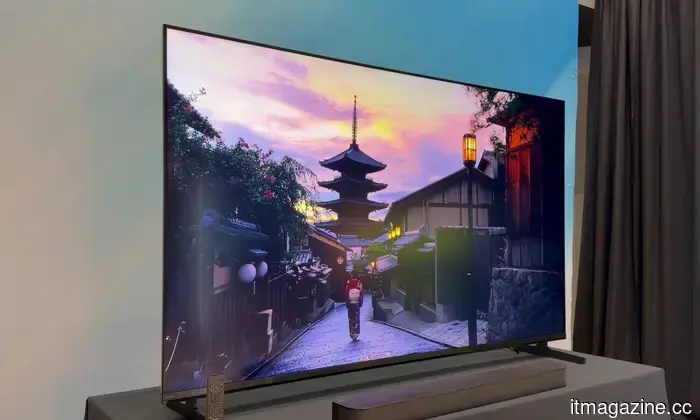
The third major benefit Sony highlighted was the performance of color gradation. Color banding can be noticeable in scenes with subtle transitions, such as skies or sunsets, especially on bright displays.
By integrating its image processing technologies with independent control of the red, green, and blue backlight system, Sony claims True RGB significantly minimizes visible banding and produces smoother color transitions.
True RGB will first feature in Sony’s top-tier TVs.
The initial model featuring True RGB will be positioned at the pinnacle of Sony’s lineup as the BRAVIA 9 II. This flagship model will be offered in sizes of 65, 75, 85, and 115 inches and will include technologies such as RGB Backlight Master Drive Pro and Luminance Booster Pro. Sony states that the TV is designed to align with the creative intent and brightness capabilities of its professional BVM studio monitors.
However, this technology will not be exclusive to the flagship category. Sony has also announced the BRAVIA 7 II, which introduces True RGB across a wider array of screen sizes from 50 inches to 98 inches. Below these models will be the company’s OLED lineup, led by the BRAVIA 8 II and the standard BRAVIA 8.
Sony is also addressing reflections.
Alongside True RGB, Sony unveiled an optional high-end anti-glare technology called Immersive Black Screen Pro for the BRAVIA 9 II. The company claims this patent-pending nanostructure layer is engineered to absorb reflections while
Other articles
 Wondershare PDFelement: Optimize Your PDF Workflow with One Click — Save Hours Each Day
Handling PDFs frequently involves navigating multiple OCR websites, editing tools, conversion utilities, and approval platforms within the same workflow. Wondershare PDFelement consolidates these processes into a single productivity-oriented workspace designed for document-intensive office tasks.
Wondershare PDFelement: Optimize Your PDF Workflow with One Click — Save Hours Each Day
Handling PDFs frequently involves navigating multiple OCR websites, editing tools, conversion utilities, and approval platforms within the same workflow. Wondershare PDFelement consolidates these processes into a single productivity-oriented workspace designed for document-intensive office tasks.
 Wondershare PDFelement: Streamline PDF Workflows with a Single Click — Save Hours Daily
Handling PDFs frequently involves a mix of OCR websites, editing applications, conversion tools, and approval systems within the same workflow. Wondershare PDFelement consolidates these processes into a single productivity-oriented workspace designed for document-intensive office activities.
Wondershare PDFelement: Streamline PDF Workflows with a Single Click — Save Hours Daily
Handling PDFs frequently involves a mix of OCR websites, editing applications, conversion tools, and approval systems within the same workflow. Wondershare PDFelement consolidates these processes into a single productivity-oriented workspace designed for document-intensive office activities.
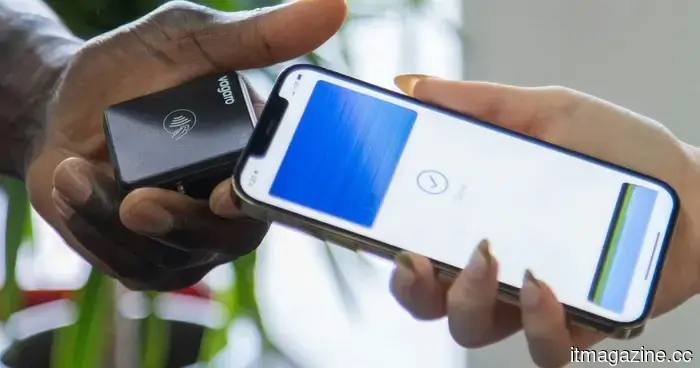 Apple may be considering the introduction of a feature that allows users to split expenses in iOS 27.
Apple is said to be introducing a feature for built-in bill splitting on iPhones, enabling users to scan receipts and automatically distribute expenses using Apple Cash.
Apple may be considering the introduction of a feature that allows users to split expenses in iOS 27.
Apple is said to be introducing a feature for built-in bill splitting on iPhones, enabling users to scan receipts and automatically distribute expenses using Apple Cash.
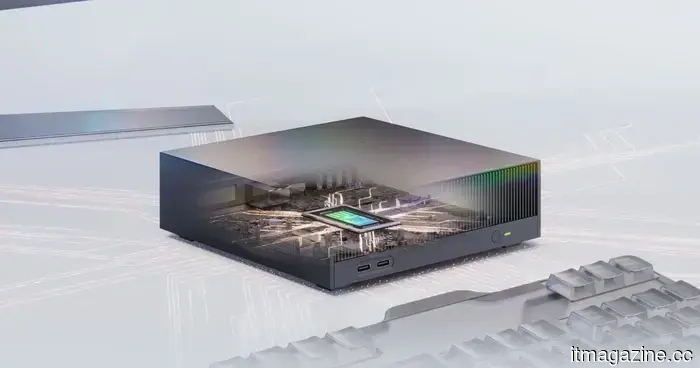 Nvidia’s RTX Spark chip is aimed at the Mac Studio, with Asus and MSI being the first to seize the opportunity.
MSI and Asus are implementing Nvidia’s new RTX Spark platform to create compact desktops centered on AI, targeting creators and professional tasks.
Nvidia’s RTX Spark chip is aimed at the Mac Studio, with Asus and MSI being the first to seize the opportunity.
MSI and Asus are implementing Nvidia’s new RTX Spark platform to create compact desktops centered on AI, targeting creators and professional tasks.
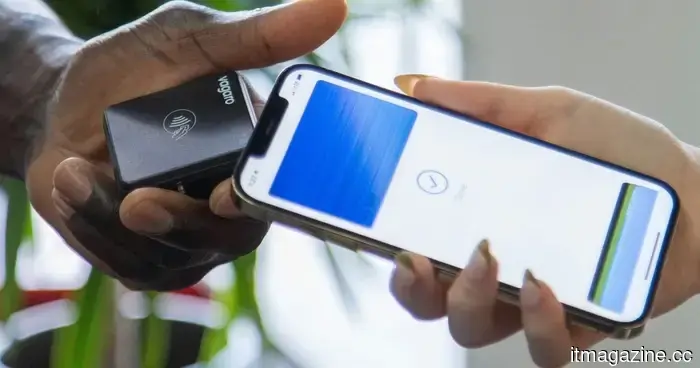 Apple may be intending to introduce a feature for splitting expenses in iOS 27.
Apple is said to be introducing a feature for bill splitting on iPhones, enabling users to scan receipts and automatically distribute expenses using Apple Cash.
Apple may be intending to introduce a feature for splitting expenses in iOS 27.
Apple is said to be introducing a feature for bill splitting on iPhones, enabling users to scan receipts and automatically distribute expenses using Apple Cash.
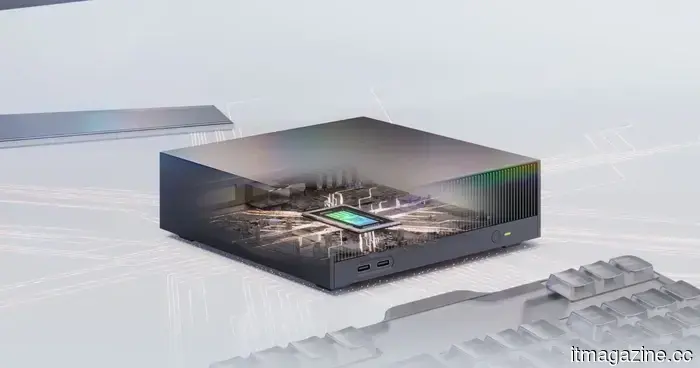 Nvidia’s RTX Spark chip is aimed at the Mac Studio, with Asus and MSI being the first to take advantage of it.
MSI and Asus are adopting Nvidia's latest RTX Spark platform to create compact AI-oriented desktops designed for creators and professional tasks.
Nvidia’s RTX Spark chip is aimed at the Mac Studio, with Asus and MSI being the first to take advantage of it.
MSI and Asus are adopting Nvidia's latest RTX Spark platform to create compact AI-oriented desktops designed for creators and professional tasks.
Sony's True RGB technology strives to combine the advantages of both OLED and Mini LED.
Sony has introduced True RGB, a novel display technology that utilizes independently managed red, green, and blue diodes to generate color directly at the light source. After witnessing a side-by-side demonstration with flagship displays, it is evident why Sony envisions this as the future of high-end televisions.