
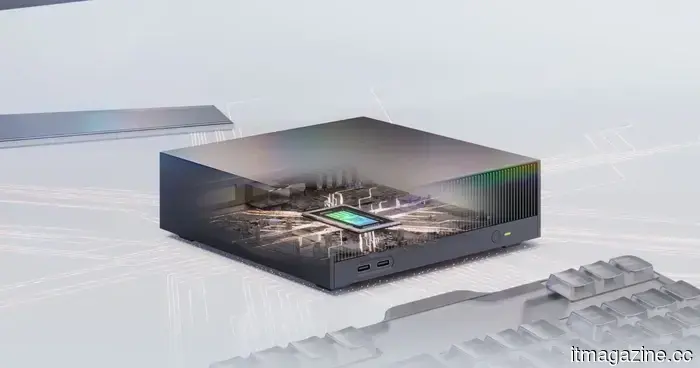
Nvidia’s RTX Spark chip is aimed at the Mac Studio, with Asus and MSI being the first to take advantage of it.
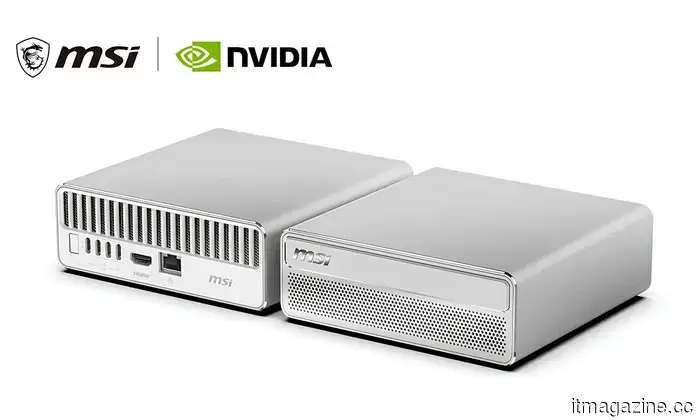
The competition for compact, high-performance desktops is intensifying, and Nvidia seems poised to challenge Apple's long-held dominance with the Mac Studio. During Computex 2026, MSI introduced a new AI-centric mini PC named the MSI EdgeMesa N AI, which operates on Nvidia’s latest RTX Spark platform.
This launch indicates Nvidia's ambition to extend AI computing beyond typical gaming desktops and into smaller creator and workstation systems. Notably, it reflects a trend among PC brands aggressively pursuing Apple's successful strategy of delivering powerful desktop performance within compact and minimalist designs.
A compact AI workstation based on Nvidia’s RTX Spark platform
The MSI EdgeMesa N AI is among the first mini PCs using Nvidia’s innovative RTX Spark chip architecture. It is specifically built to handle AI workloads, local generative AI applications, creative software acceleration, and edge computing tasks.
While MSI has not revealed all hardware specifics yet, the company has confirmed that the mini PC integrates Nvidia RTX Spark graphics with Intel-based processing components within a compact chassis targeted at creators, developers, and users focused on AI.
The system is positioned more as a local AI workstation rather than a traditional gaming PC, capable of managing generative AI models, enhanced creative tasks, and productivity workloads directly on the device. This positioning naturally draws comparisons to Apple's Mac Studio, which has gained popularity among creators, video editors, and developers seeking desktop-level performance in smaller formats.
MSI states that the EdgeMesa N AI is engineered for local AI inference, AI-assisted workflows, content creation, and advanced multitasking scenarios that typically require larger desktop systems.
Asus ProArt powered by RTX Spark
MSI is not the only player in this field; other PC manufacturers like ASUS are also expected to leverage Nvidia’s RTX Spark platform for their compact, AI-focused desktops. ASUS is advancing the RTX Spark platform beyond laptops with its new ProArt Mini PC, a compact workstation measuring just 150 × 150 × 51mm. Despite its small size, this system can support up to 128GB of unified LPDDR5X memory, offer up to 1 petaflop of AI performance, and features Nvidia’s 20-core Grace CPU alongside a Blackwell RTX GPU with 6,144 CUDA cores.
ASUS claims that this mini PC can manage 90GB+ 3D scenes and 120B-parameter large language models with up to one million tokens of context, in addition to running AI-assisted creative tasks locally. It also boasts 10GbE networking, PCIe Gen 5 x4 storage expansion, and a thermal solution designed for sustained workloads of up to 140W.
Why this is significant
For many years, Apple maintained a stronghold on the premium compact workstation market with products such as the Mac Studio and Mac mini. Now, Nvidia, along with major PC brands, seems prepared to directly contest this territory. The RTX Spark platform represents Nvidia’s effort to establish a standardized AI-oriented desktop ecosystem for Windows PCs, particularly as AI tasks become increasingly vital for creators, developers, researchers, and companies.
This transition also underscores a broader industry shift currently underway. AI acceleration is swiftly becoming as crucial as traditional CPU and GPU performance for next-generation PCs.
What lies ahead
MSI has yet to announce pricing or final availability details for the EdgeMesa N AI. However, the company is anticipated to provide more specifications and launch timelines later this year. ASUS is also developing its own lineup of RTX Spark-powered ProArt Mini PCs, which take the concept further with up to 128GB of unified LPDDR5X memory, Nvidia Blackwell-based graphics, 10GbE networking, PCIe Gen 5 storage options, and a claimed AI performance of up to 1 petaflop within an ultra-compact chassis.
As more manufacturers adopt Nvidia’s RTX Spark platform, compact AI desktops may quickly evolve into one of the most significant new hardware categories emerging from the generative AI surge. Rather than relying on large workstation towers, creators and developers could soon utilize AI-centric machines small enough to fit alongside a monitor while still managing local LLMs, advanced rendering, and optimized AI workflows.
The larger question remains whether Windows-based AI mini PCs from brands like MSI and ASUS can truly rival Apple's ecosystem advantage and silicon efficiency. However, one thing is becoming increasingly evident: the contest for the future of desktop computing is shifting focus from just raw performance to who can construct the most intelligent AI workstation in the smallest possible form.
Other articles
 Wondershare PDFelement: Streamline PDF Workflows with a Single Click — Save Hours Daily
Handling PDFs frequently involves a mix of OCR websites, editing applications, conversion tools, and approval systems within the same workflow. Wondershare PDFelement consolidates these processes into a single productivity-oriented workspace designed for document-intensive office activities.
Wondershare PDFelement: Streamline PDF Workflows with a Single Click — Save Hours Daily
Handling PDFs frequently involves a mix of OCR websites, editing applications, conversion tools, and approval systems within the same workflow. Wondershare PDFelement consolidates these processes into a single productivity-oriented workspace designed for document-intensive office activities.
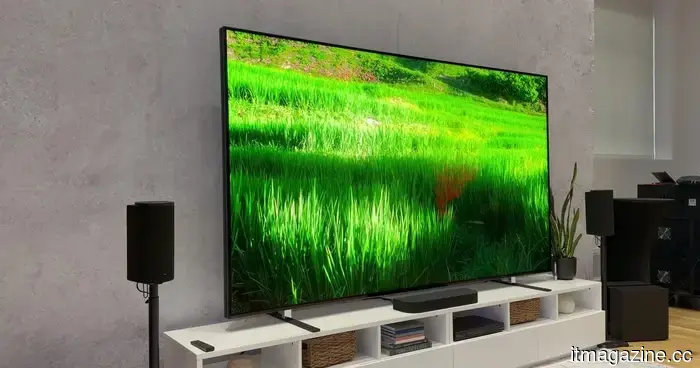 Sony's True RGB technology seeks to combine the advantages of both OLED and Mini LED.
Sony has introduced True RGB, an innovative display technology that employs separately managed red, green, and blue diodes to generate color right at the light source. Following a demonstration next to top-tier displays, it's evident why Sony sees this as a potential future for high-end televisions.
Sony's True RGB technology seeks to combine the advantages of both OLED and Mini LED.
Sony has introduced True RGB, an innovative display technology that employs separately managed red, green, and blue diodes to generate color right at the light source. Following a demonstration next to top-tier displays, it's evident why Sony sees this as a potential future for high-end televisions.
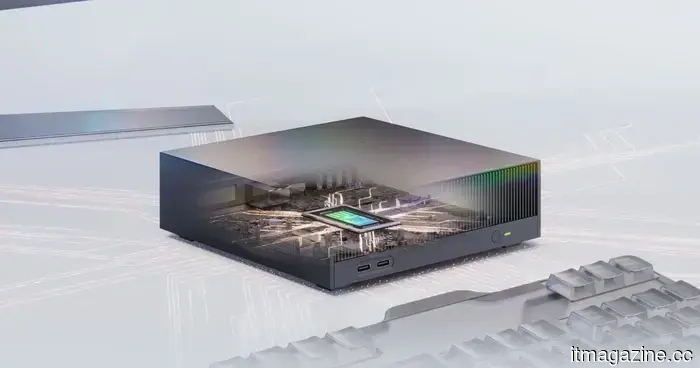 Nvidia’s RTX Spark chip is aimed at the Mac Studio, with Asus and MSI being the first to seize the opportunity.
MSI and Asus are implementing Nvidia’s new RTX Spark platform to create compact desktops centered on AI, targeting creators and professional tasks.
Nvidia’s RTX Spark chip is aimed at the Mac Studio, with Asus and MSI being the first to seize the opportunity.
MSI and Asus are implementing Nvidia’s new RTX Spark platform to create compact desktops centered on AI, targeting creators and professional tasks.
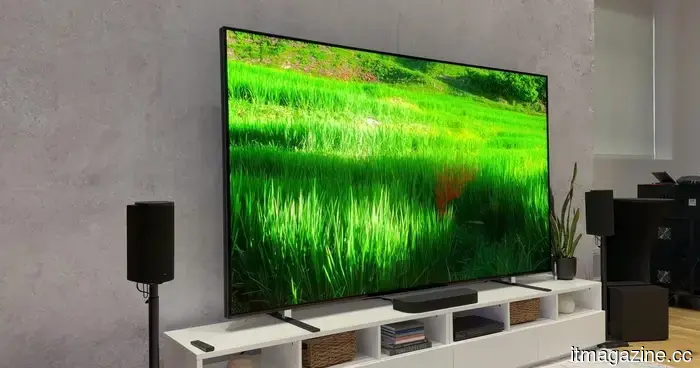 Sony's True RGB technology strives to combine the advantages of both OLED and Mini LED.
Sony has introduced True RGB, a novel display technology that utilizes independently managed red, green, and blue diodes to generate color directly at the light source. After witnessing a side-by-side demonstration with flagship displays, it is evident why Sony envisions this as the future of high-end televisions.
Sony's True RGB technology strives to combine the advantages of both OLED and Mini LED.
Sony has introduced True RGB, a novel display technology that utilizes independently managed red, green, and blue diodes to generate color directly at the light source. After witnessing a side-by-side demonstration with flagship displays, it is evident why Sony envisions this as the future of high-end televisions.
 Wondershare PDFelement: Optimize Your PDF Workflow with One Click — Save Hours Each Day
Handling PDFs frequently involves navigating multiple OCR websites, editing tools, conversion utilities, and approval platforms within the same workflow. Wondershare PDFelement consolidates these processes into a single productivity-oriented workspace designed for document-intensive office tasks.
Wondershare PDFelement: Optimize Your PDF Workflow with One Click — Save Hours Each Day
Handling PDFs frequently involves navigating multiple OCR websites, editing tools, conversion utilities, and approval platforms within the same workflow. Wondershare PDFelement consolidates these processes into a single productivity-oriented workspace designed for document-intensive office tasks.
 Basic ebook readers are set to become much smarter with the addition of helpful AI and Android support.
E Ink and MediaTek are transforming e-readers into intelligent devices by incorporating on-device AI, real-time translation, quicker color displays, and support for Android.
Basic ebook readers are set to become much smarter with the addition of helpful AI and Android support.
E Ink and MediaTek are transforming e-readers into intelligent devices by incorporating on-device AI, real-time translation, quicker color displays, and support for Android.
Nvidia’s RTX Spark chip is aimed at the Mac Studio, with Asus and MSI being the first to take advantage of it.
MSI and Asus are adopting Nvidia's latest RTX Spark platform to create compact AI-oriented desktops designed for creators and professional tasks.