
ByteDance and Oracle are utilizing Arm's proprietary AGI CPU, marking the conclusion of the hyperscaler-x86 transition.
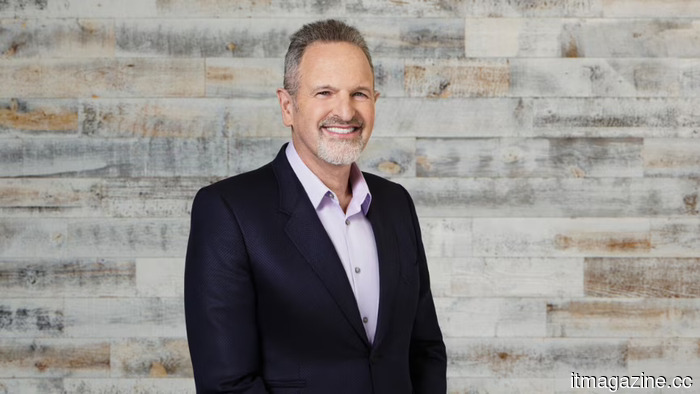
Arm CEO René Haas confirmed at Computex that ByteDance and Oracle have joined Meta as clients for Arm's own data-center CPU, reinforcing the company's transition from being a licensor to becoming a silicon vendor. During the event, Haas announced that ByteDance and Oracle are now using AGI, Arm's inaugural in-house data-center CPU, alongside Meta as the third and fourth identified users of a chip that the Cambridge-based firm is presenting as an alternative to Intel’s Xeon and AMD’s EPYC server products.
This strategic shift highlighted by the customer announcement is significant. For thirty years, Arm focused on licensing CPU intellectual property to chipmakers who would design and market their own silicon, such as AWS’s Graviton, Microsoft’s Cobalt, Google’s Axion, Nvidia’s Grace, and now Vera. AGI signifies Arm’s decision to create and sell complete silicon directly. The customers being announced for this finished chip are not Arm's existing licensees; instead, they are the same hyperscalers and enterprise-cloud clients that those licensees would have aimed to target.
The launch of Arm-AGI thus serves as both a vertical-integration move against its own customer base and a horizontal-integration strategy against Intel and AMD. The list of customers illustrates this. Meta was the first publicly acknowledged AGI customer, revealed at the AGI launch event in San Francisco in March. ByteDance stands out as the largest Chinese AI workload client, particularly notable given its concurrent custom-CPU initiatives on both Arm and RISC-V pathways reported last week.
Oracle operates as the enterprise-cloud pillar, linking Arm-based servers with its database offerings for customer deployments. The mix of customers is significant: one US frontier-AI laboratory, one Chinese hyperscaler, and one US enterprise-cloud provider. With just these three named customers, Arm has shown that AGI is being embraced across three distinctly strategic categories of data-center purchasers.
The financial projections behind this are key. At the AGI launch, Haas indicated that sales of the chip alone could contribute $15 billion to Arm by 2031. Designed in collaboration with Meta, the chip uses a chiplet architecture built on TSMC’s 3nm N3P process, aligning with the same node Nvidia employs for Rubin. The $15 billion projection suggests an ambitious doubling of Arm’s current annual revenue base if realized. The recent customer announcement provides the most solid affirmation that this projection is feasible.
The broader structure of the CPU market is also worth noting. Nvidia’s Vera CPU was launched recently with OpenAI, Anthropic, and SpaceX recognized as customers. Last week, Snowflake made a major commitment of $6 billion to AWS's Graviton, adding a significant enterprise-data-platform customer to Arm’s server-side records. Simultaneously, ByteDance is developing its own custom Arm and RISC-V CPUs. Arm is now selling AGI to Meta, ByteDance, and Oracle.
Every significant AI-data-center customer publicly acknowledged is now aligned with Arm-based silicon within at least one level of their computing stack, whether through direct purchases, custom designs by hyperscalers, or co-developed products. Evidence suggests that x86 incumbents have lost ground in the hyperscaler-CPU battle in the month since Computex 2026 began.
The repercussions for Intel and AMD are serious. Traditionally, both companies have relied heavily on hyperscaler purchases for the majority of their server-CPU revenue, and the hyperscaler sector of the data-center CPU market typically represents the highest-margin tier. The current public commitments to Arm silicon, when viewed collectively, significantly reduce the addressable market for the x86 incumbents.
This compression has not yet appeared in Intel’s and AMD’s reported earnings because hyperscaler purchasing is typically conducted over multi-year cycles, but the trajectory heading into 2028 is now evident. A challenging question for Arm remains whether selling finished silicon to the customers of its existing licensees will diminish its core IP-licensing revenue stream. Hyperscalers that formerly paid Arm royalties through their own custom CPUs (like Graviton, Cobalt, Axion) may have less incentive to continue those programs if Arm's in-house AGI design effectively addresses the same workloads at similar price-performance ratios. Thus, this vertical-integration strategy poses its own competitive risks.
Arm’s shares saw a modest increase in pre-market trading following the announcement. The AGI chip has commenced shipping to all three named customers.
Other articles
 Sony's FlexStrike fight stick and gaming monitor featuring a charging hook will be available for purchase starting in June.
Sony's eagerly anticipated gaming accessories now have official launch dates. One is designed for fans of fighting games, while the other offers a unique perspective on desk configurations.
Sony's FlexStrike fight stick and gaming monitor featuring a charging hook will be available for purchase starting in June.
Sony's eagerly anticipated gaming accessories now have official launch dates. One is designed for fans of fighting games, while the other offers a unique perspective on desk configurations.
 Vinted Ventures supports Tilt's $26 million funding round for live-commerce as pressure from Whatnot increases.
London's Tilt has secured $26 million in funding, with Vinted Ventures coming on board as a new investor. This appears to be a strategic response to Whatnot's expansion into European live commerce.
Vinted Ventures supports Tilt's $26 million funding round for live-commerce as pressure from Whatnot increases.
London's Tilt has secured $26 million in funding, with Vinted Ventures coming on board as a new investor. This appears to be a strategic response to Whatnot's expansion into European live commerce.
 Amazon has rescheduled Prime Day to June and will maintain it as a four-day event.
Amazon has scheduled Prime Day 2026 for June 23 to 26, moving its members-only event earlier than its traditional July timeframe while maintaining the four-day format.
Amazon has rescheduled Prime Day to June and will maintain it as a four-day event.
Amazon has scheduled Prime Day 2026 for June 23 to 26, moving its members-only event earlier than its traditional July timeframe while maintaining the four-day format.
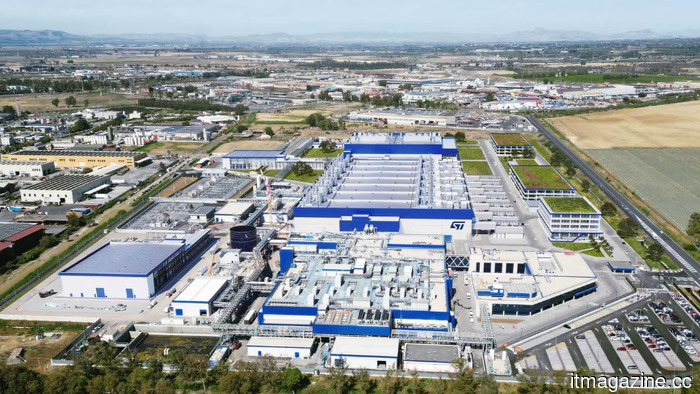 STMicroelectronics increases its revenue forecast for data centers to $1 billion.
STMicroelectronics now anticipates approximately $1 billion in revenue from data centers by 2026, an increase from over $500 million, attributing this growth to demand for AI infrastructure and a partnership with AWS.
STMicroelectronics increases its revenue forecast for data centers to $1 billion.
STMicroelectronics now anticipates approximately $1 billion in revenue from data centers by 2026, an increase from over $500 million, attributing this growth to demand for AI infrastructure and a partnership with AWS.
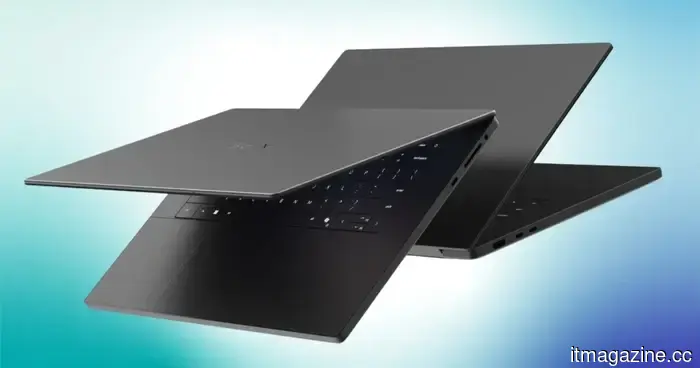 Dell's latest XPS 16 Creator Edition aims to serve as a substitute for your MacBook Pro.
Dell's XPS 16 Creator Edition features Nvidia RTX Spark, a Tandem OLED screen, as much as 128GB of unified memory, and includes the ports that MacBook Pro users have been longing for.
Dell's latest XPS 16 Creator Edition aims to serve as a substitute for your MacBook Pro.
Dell's XPS 16 Creator Edition features Nvidia RTX Spark, a Tandem OLED screen, as much as 128GB of unified memory, and includes the ports that MacBook Pro users have been longing for.
 SEALSQ acquires a majority stake in WeCan to develop a post-quantum AI compliance co-pilot for private banking institutions.
The Swiss post-quantum crypto company SEALSQ has purchased a controlling stake in WeCan Group and has pledged CHF 5 million to expedite the development of an AI compliance co-pilot aimed at private banks such as Pictet, Lombard Odier, and Barclays.
SEALSQ acquires a majority stake in WeCan to develop a post-quantum AI compliance co-pilot for private banking institutions.
The Swiss post-quantum crypto company SEALSQ has purchased a controlling stake in WeCan Group and has pledged CHF 5 million to expedite the development of an AI compliance co-pilot aimed at private banks such as Pictet, Lombard Odier, and Barclays.
ByteDance and Oracle are utilizing Arm's proprietary AGI CPU, marking the conclusion of the hyperscaler-x86 transition.
Arm has officially acknowledged ByteDance and Oracle as clients for its proprietary AGI CPU, confirming its transition from being a CPU-IP licensor to a silicon supplier and increasing competitive pressure on Intel and AMD from hyperscalers.