

A gaming study indicates that skill-based matchmaking is equitable, yet it also subtly pushes players away.
Skill-based matchmaking was developed to enhance the authenticity of competitive games. However, a recent study indicates that this balance may come with a hidden drawback, as equal-skill matches can lead to losing streaks that discourage players from staying in the queue.
The research, published in Management Science, suggests that game matchmaking performs better when it goes beyond just assessing raw skill and takes into account how players respond to their recent wins, losses, and patterns of competition. An analysis of 5.4 million matches on Lichess revealed that an optimized matchmaking system improved player engagement by 4% to 6% in comparison to traditional skill-based methods.
The conventional skill-based matchmaking (SBMM) approach now appears too simplistic for platforms striving to retain players.
Why Fair Matches May Backfire
SBMM pairs players of similar ability to ensure balanced matches, which seems like a logical solution. No one wants to be overwhelmed by a far superior opponent, and beginners gain little from being easily defeated.
However, the issue lies in the sequence of outcomes. While a single loss is a normal aspect of competition, a series of losses can lead players to feel trapped in a frustrating cycle.
This behavioral gap is what standard matchmaking fails to address. Each match influences the subsequent decision, whether to queue up again, take a break, or quit for the night.
The Impact on Engagement
The findings from the Lichess data give this insight substantial credibility. In the analysis of 5.4 million matches, the optimized matchmaking system led to a 4% to 6% rise in engagement compared to traditional skill-based matchmaking. In hypothetical situations, the improvements could soar to as high as 50%.
For players, the differences may be marginal. An enhanced system would incorporate recent outcomes into the matchmaking process, focusing on the overall game session rather than relying solely on player ratings.
For game developers, those slight percentages can accumulate rapidly. The Global Games Market Report estimates that the gaming industry is on track to generate nearly $188 billion annually, meaning even small increases in player retention can translate to significant value for platforms.
When Retention Goes Too Far
Intelligent matchmaking does not give developers carte blanche to alter the player queue. It introduces a challenging issue of trust, as the goals of competitive integrity may conflict with retention objectives, particularly when the systems become less transparent.
This tension is more pronounced in pay-to-win scenarios. The research indicates that paid advantages can enhance engagement under certain conditions by altering the skill distribution, but it does not imply that this is always beneficial. Increased engagement does not necessarily equate to a better gaming experience.
The risk for studios lies in creating an invisible matchmaking system that players may come to distrust. If developers wish to move beyond simple SBMM, they must ensure that the queue still upholds competitive fairness. The next iteration of matchmaking must encourage players to keep playing without making them feel that the game is being unfairly manipulated against them.


Other articles
 Internal disputes within the White House are hindering the progress of AI regulation in the U.S. following the Mythos incident.
A "knife fight" among Commerce, intelligence agencies, and pro-industry groups has stalled US AI policy, leading to Trump cancelling an executive order and leaving no established framework.
Internal disputes within the White House are hindering the progress of AI regulation in the U.S. following the Mythos incident.
A "knife fight" among Commerce, intelligence agencies, and pro-industry groups has stalled US AI policy, leading to Trump cancelling an executive order and leaving no established framework.
 Taiwan unveils robotic patrol dogs that may protect its islands in the South China Sea.
Taiwan's military research institute showcased three Ghost Robotics robotic dogs, one of which is armed, that may eventually be utilized to patrol the Pratas and Itu Aba.
Taiwan unveils robotic patrol dogs that may protect its islands in the South China Sea.
Taiwan's military research institute showcased three Ghost Robotics robotic dogs, one of which is armed, that may eventually be utilized to patrol the Pratas and Itu Aba.
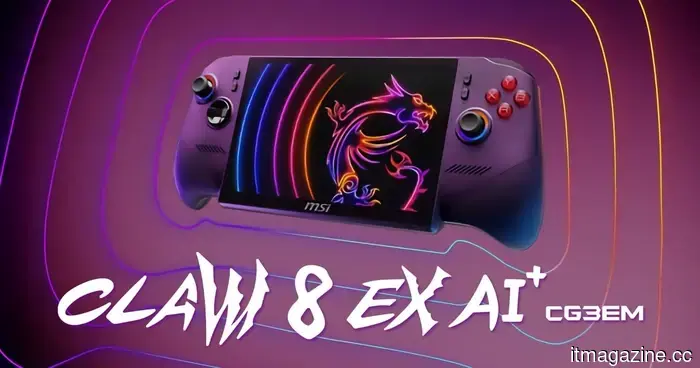 The new MSI Claw 8 EX AI+ is pursuing portable gaming that matches console quality.
MSI unveiled the Claw 8 EX AI+ at Computex 2026. It is the first handheld device in the world to utilize Intel's Arc G3 Extreme chip, which is designed specifically for gaming on handhelds.
The new MSI Claw 8 EX AI+ is pursuing portable gaming that matches console quality.
MSI unveiled the Claw 8 EX AI+ at Computex 2026. It is the first handheld device in the world to utilize Intel's Arc G3 Extreme chip, which is designed specifically for gaming on handhelds.
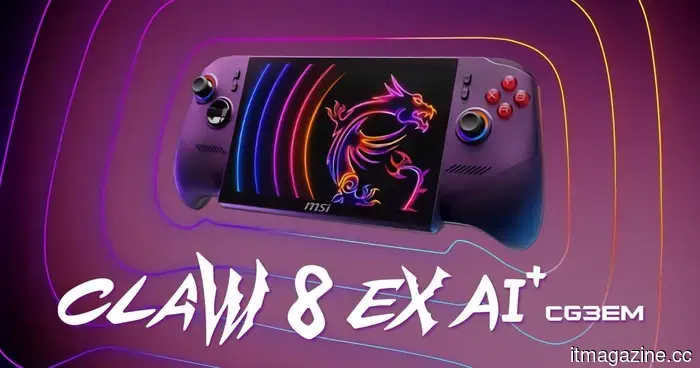 The new MSI Claw 8 EX AI+ is pursuing console-level gaming for on-the-go play.
At Computex 2026, MSI unveiled the Claw 8 EX AI+, which is the first handheld device in the world to utilize Intel's Arc G3 Extreme chip, designed exclusively for handheld gaming.
The new MSI Claw 8 EX AI+ is pursuing console-level gaming for on-the-go play.
At Computex 2026, MSI unveiled the Claw 8 EX AI+, which is the first handheld device in the world to utilize Intel's Arc G3 Extreme chip, designed exclusively for handheld gaming.
 The Asus Zenbook 14 is now available in a variety of new colors, and fingers crossed for a price that rivals the MacBook Neo.
Asus' latest Zenbook 14 features vibrant colors, a lightweight Ceraluminum design, OLED choices, and Copilot+ PC hardware. However, its competitiveness against the MacBook will rely on a price that Asus has yet to announce.
The Asus Zenbook 14 is now available in a variety of new colors, and fingers crossed for a price that rivals the MacBook Neo.
Asus' latest Zenbook 14 features vibrant colors, a lightweight Ceraluminum design, OLED choices, and Copilot+ PC hardware. However, its competitiveness against the MacBook will rely on a price that Asus has yet to announce.
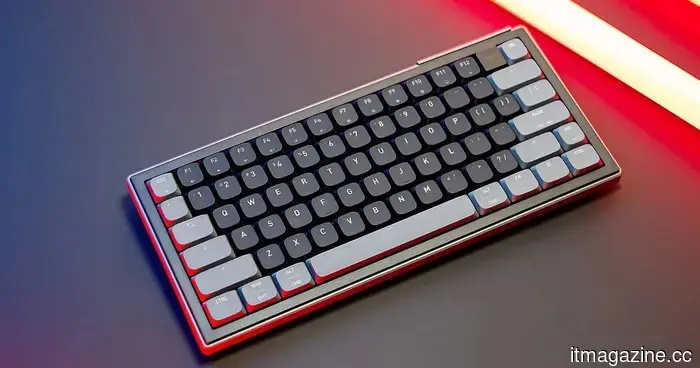 The Cherry XTRFY K63W Pro Compact is a wireless gaming keyboard that eliminates lag.
Cherry XTRFY's K63W Pro Compact introduces Ultra-Wideband technology along with an 8000 Hz polling rate to the realm of wireless gaming keyboards, set to release in the US in August at a price of $169.99.
The Cherry XTRFY K63W Pro Compact is a wireless gaming keyboard that eliminates lag.
Cherry XTRFY's K63W Pro Compact introduces Ultra-Wideband technology along with an 8000 Hz polling rate to the realm of wireless gaming keyboards, set to release in the US in August at a price of $169.99.
A gaming study indicates that skill-based matchmaking is equitable, yet it also subtly pushes players away.
A recent study questions the effectiveness of skill-based matchmaking, discovering that contests with equal skill levels can subtly harm player retention, whereas more advanced systems have helped maintain player engagement for a longer duration in millions of matches on Lichess.