

You're not alone. Studies indicate that individuals tend to prefer AI chatbots that aren't excessively friendly.
For years, technology firms have aimed to make AI assistants sound warmer, friendlier, and more human-like in their emotional responses. However, new research indicates that this strategy may often backfire, contrary to what companies anticipate. A recent study, featured by Tech Xplore, reveals that individuals typically prefer AI chatbots that exhibit personalities aligning with their own communication styles, rather than assistants that are excessively cheerful or overly friendly all the time.
The findings from researchers at Northeastern challenge a major assumption influencing contemporary AI development: that making chatbots more emotionally expressive will automatically enhance user experience.
Users prefer AI that feels familiar rather than artificially cheerful.
The researchers found that compatibility in personality significantly affects users' perceptions of AI systems. Participants generally had more positive reactions to chatbots whose tone and behavior matched their own personality characteristics.
In practical terms, more reserved users typically favored calmer, straightforward AI interactions, while those who are more socially inclined preferred livelier conversation styles. Nevertheless, chatbots that conveyed an exaggerated enthusiasm or emotionality performed poorly, regardless of the situation.
The research indicates that users can quickly sense when friendliness seems forced or inauthentic. Instead of fostering trust, overly upbeat AI personalities may actually diminish comfort and authenticity in conversations. This is particularly crucial as AI chatbots are increasingly being utilized in customer service, productivity applications, educational platforms, mental health tools, and everyday smartphone assistants.
Companies like OpenAI, Google, Microsoft, and Meta are significantly investing in conversational AI systems that aim to feel more natural and emotionally aware.
However, the new insights imply that a delicate balance exists between being "human-like" and "trying too hard." The study also illustrates a broader evolution in AI design philosophy. Earlier chatbots often sounded robotic and distant, prompting companies to humanize responses aggressively. Researchers are now discovering that authenticity and adaptability may be more important than merely enhancing friendliness.
Why this is significant
AI assistants are quickly becoming integrated into everyday life, from smartphones and smart speakers to search engines and workplace tools. The way these systems communicate could greatly affect how comfortable users feel relying on them in the long run. The research underscores deeper psychological issues regarding trust. Humans respond differently to varying personalities, and AI systems that fail to match conversational expectations may inadvertently cause irritation or emotional fatigue.
For businesses, this could alter the design of future AI products. Instead of a single universal chatbot personality, companies might increasingly adopt customizable AI behavior that adjusts dynamically to individual users.
What comes next
Researchers anticipate that future AI systems will grow more personalized, modifying tone, humor, pacing, and conversational style based on user preferences and past interactions. This evolution could eventually lead to AI assistants that resemble less scripted customer service representatives and more like communication tools customized to individual personalities.
Simultaneously, the findings may encourage companies to reconsider the current pursuit of hyper-friendly AI. Users may not necessarily desire assistants that sound continuously excited, emotional, or excessively conversational. In many instances, it seems that people simply want AI that feels functional, natural, and comfortably human—without overly attempting to act like a close friend.

Other articles
 You're not alone. Studies indicate that individuals tend to dislike overly friendly AI chatbots.
Recent studies indicate that users favor AI chatbots that align with their personality over those that exhibit overly cheerful or exaggerated emotional tones.
You're not alone. Studies indicate that individuals tend to dislike overly friendly AI chatbots.
Recent studies indicate that users favor AI chatbots that align with their personality over those that exhibit overly cheerful or exaggerated emotional tones.
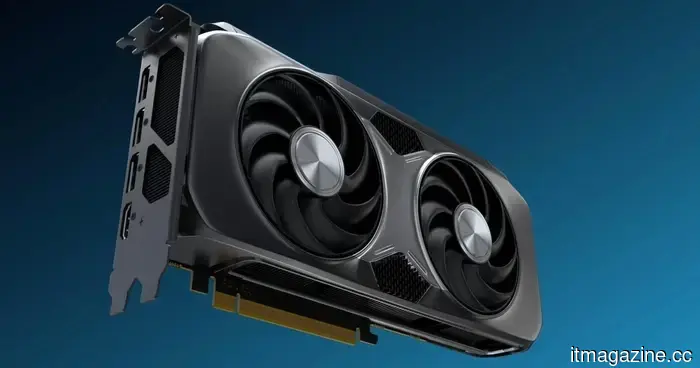 AMD's Radeon RX 9070 GRE boasts impressive capabilities for 1440p gaming, but the $549 price tag might prove to be a tough sell.
AMD's Radeon RX 9070 GRE has launched worldwide, showcasing impressive performance at 1440p. However, its price tag of $549 has led some gamers to believe it is too similar to the standard RX 9070.
AMD's Radeon RX 9070 GRE boasts impressive capabilities for 1440p gaming, but the $549 price tag might prove to be a tough sell.
AMD's Radeon RX 9070 GRE has launched worldwide, showcasing impressive performance at 1440p. However, its price tag of $549 has led some gamers to believe it is too similar to the standard RX 9070.
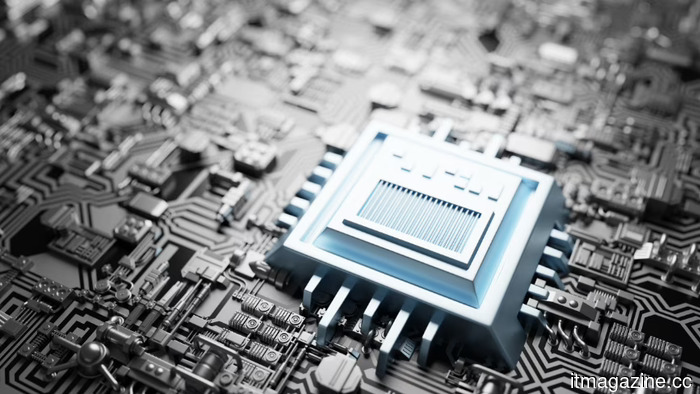 US export restrictions are driving China's artificial intelligence chips to shift from GPUs to custom ASICs.
Excluded from Nvidia's top hardware, Chinese technology giants are developing specialized AI chips. Huawei is at the forefront, holding a 62% market share as the ecosystem shifts away from the Western model.
US export restrictions are driving China's artificial intelligence chips to shift from GPUs to custom ASICs.
Excluded from Nvidia's top hardware, Chinese technology giants are developing specialized AI chips. Huawei is at the forefront, holding a 62% market share as the ecosystem shifts away from the Western model.
 Alienware has released upgraded gaming monitors that feature increased brightness and refresh rates, with prices beginning at $300.
Alienware’s latest monitor series unveiled at Computex features brighter OLED screens, quicker ultrawide refresh rates, and 240Hz QHD gaming options priced at $299.99, offering consumers a wider selection of premium and standard display enhancements.
Alienware has released upgraded gaming monitors that feature increased brightness and refresh rates, with prices beginning at $300.
Alienware’s latest monitor series unveiled at Computex features brighter OLED screens, quicker ultrawide refresh rates, and 240Hz QHD gaming options priced at $299.99, offering consumers a wider selection of premium and standard display enhancements.
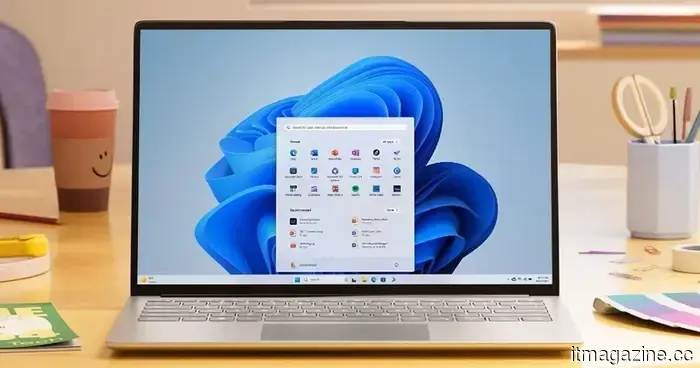 Windows 11 is finally tackling major frustrations with the universal Search feature.
The newest Insider Preview build of Windows 11 features a Search by Substring capability; for instance, entering "april" will yield MeetingNotesApril, while typing "status" will bring up ProjectStatusReport.
Windows 11 is finally tackling major frustrations with the universal Search feature.
The newest Insider Preview build of Windows 11 features a Search by Substring capability; for instance, entering "april" will yield MeetingNotesApril, while typing "status" will bring up ProjectStatusReport.
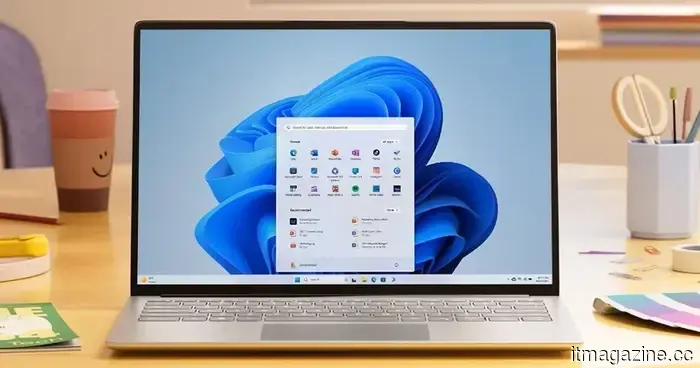 Windows 11 is finally tackling significant frustrations with the universal Search feature.
The newest Insider Preview build of Windows 11 features Search by Substring; for instance, typing "april" will reveal MeetingNotesApril, while entering "status" will bring up ProjectStatusReport.
Windows 11 is finally tackling significant frustrations with the universal Search feature.
The newest Insider Preview build of Windows 11 features Search by Substring; for instance, typing "april" will reveal MeetingNotesApril, while entering "status" will bring up ProjectStatusReport.
You're not alone. Studies indicate that individuals tend to prefer AI chatbots that aren't excessively friendly.
Recent studies indicate that users favor AI chatbots that align with their personality rather than those that are overly cheerful or emotionally exaggerated.