
US export restrictions are driving China's artificial intelligence chips to shift from GPUs to custom ASICs.
TL;DRUS export controls are steering China's AI chip sector away from general-purpose GPUs and towards custom ASICs. Huawei is expected to hold a leading 62% market share, while Alibaba and Cambricon are exploring alternative architectures that may lead to a fundamentally different ecosystem compared to the Nvidia-centric West.
China's AI chip industry has shifted from attempting to create a clone of Nvidia. Due to ongoing US export restrictions that limit access to the most advanced general-purpose GPUs, the major tech firms in China are focusing on application-specific integrated circuits (ASICs). These custom chips are designed to excel at specific tasks rather than handle a wide range of workloads. This transition is fostering a domestic semiconductor environment that may differ architecturally from the Nvidia-led model prevalent in the West.
The crux of this divergence stems from a design decision that export controls have expedited. General-purpose GPUs, like those offered by Nvidia, are adaptable and programmable, making them suitable for the dynamic research phase of AI where model architectures frequently evolve. In contrast, ASICs prioritize efficiency, offering superior performance with lower power consumption for designated AI jobs. In a landscape where leading Nvidia hardware is off-limits, the argument for custom silicon becomes more attractive.
Three approaches to custom chips are being pursued by Chinese firms. Huawei focuses on neural processing units with its Ascend lineup, which includes the popular 910C and the forthcoming Ascend 950. Cambricon Technologies is developing domain-specific architectures with its Siyuan 590 and 690 series. Meanwhile, Alibaba’s semiconductor branch, T-Head, has introduced the Zhenwu M890 parallel processing unit, claiming it delivers threefold performance compared to its predecessor.
On the GPU front, Moore Threads spearheads the domestic initiative. Launched in 2020 by former Nvidia China executive Zhang Jianzhong, the firm specializes in general-purpose chips like the MTT S5000 series. Other contenders in this arena include Biren Technology, Enflame, and Iluvatar CoreX, but none have matched the scale of the ASIC leaders.
A Morgan Stanley report from May 8 laid out the market landscape clearly. It forecasts Huawei to capture 62% of China's AI accelerator market by 2026, followed by Cambricon at 14%. Among major tech players producing proprietary chips, Baidu and Alibaba are each projected to secure around 5%. The leading ASIC providers are gaining ground based on volume and momentum.
The performance disparity between Chinese chips and Nvidia’s export-compliant hardware has significantly diminished. Data from Morgan Stanley indicates that Huawei’s Ascend 950 and Cambricon’s Siyuan 690 can outperform Nvidia’s H20, the most powerful chip Nvidia is allowed to sell to China, by 50 to 150% as measured in tokens per second.
Huawei anticipates AI chip revenue to hit approximately $12 billion in 2026, up from about $7.5 billion in 2025. Nvidia’s share of the Chinese AI accelerator market has virtually plummeted to zero, which CEO Jensen Huang has called a “horrible outcome” for the United States, as it disrupts the software dependency on Nvidia’s CUDA ecosystem developed over two decades.
In China’s highly commercialized AI market, which is more focused on deploying applications to vast user bases than on pioneering research, the ASIC strategy is particularly logical. Inference, which involves executing a trained model at scale, rewards the kind of narrow optimization that custom silicon offers. Training new models still benefits from GPU flexibility, but the real revenue comes from deployment.
The software stack issue remains a significant hurdle. Hardware performance is only part of the challenge facing China’s chip industry, which must also overcome the lock-in stemming from Nvidia’s CUDA platform, the software foundation that countless AI developers around the world rely on for coding Nvidia hardware. The network effects of CUDA are immense, as virtually all AI frameworks, research papers, and pre-trained models depend on CUDA compatibility.
Huawei is developing CANN as its alternative, while Moore Threads is working on MUSA. DeepSeek has been modifying its core code for compatibility with Huawei’s CANN framework, distancing itself from the CUDA ecosystem. However, semiconductor analyst Zhang Haijun notes that as AI models become more complex, the distinction between custom ASICs and adaptable GPUs is increasingly becoming unclear, hinting that the winning architecture might eventually integrate both types.
Omdia chief analyst Su Lian Jye sums up the situation: enterprises with strong AI engineering capabilities and a clear strategy benefit from ASICs, while those handling diverse workloads still prefer general-purpose GPUs. Presently, the momentum in China leans towards the specialized approach, partly by choice and partly due to the unavailability or restrictions around Nvidia’s general-purpose options.
The long-term impact of this divergence could be more significant than immediate performance indicators. If China’s AI sector standardizes on a blend of Huawei NPUs, Alibaba PPUs, and Cambricon domain-specific chips, with each utilizing its
Other articles
 Asus may face a chip disappointment with its upcoming ROG Ally gaming handheld.
A recently uncovered ASUS handheld might introduce a quicker processor, but the absence of one upgrade could leave gamers desiring additional features.
Asus may face a chip disappointment with its upcoming ROG Ally gaming handheld.
A recently uncovered ASUS handheld might introduce a quicker processor, but the absence of one upgrade could leave gamers desiring additional features.
 A leak from Nvidia has revealed details about several versions of its forthcoming N1-series processors.
Nvidia's anticipated PC processor plans might have been revealed earlier than intended, and the leak suggests that there is something significantly larger than just one flagship chip.
A leak from Nvidia has revealed details about several versions of its forthcoming N1-series processors.
Nvidia's anticipated PC processor plans might have been revealed earlier than intended, and the leak suggests that there is something significantly larger than just one flagship chip.
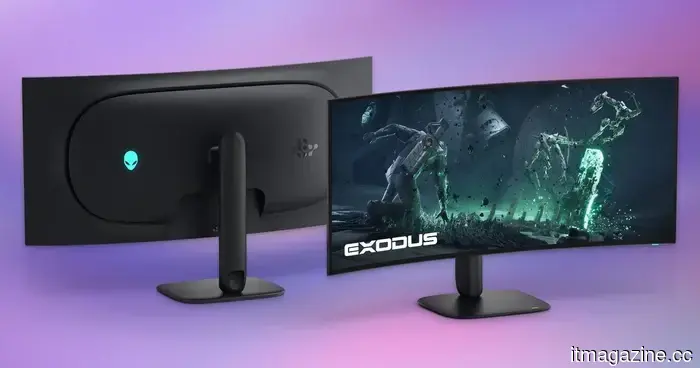 Dell's Alienware has introduced the world's first 39-inch 5K OLED monitor featuring RGB screen technology.
Alienware's latest 39-inch 5K OLED monitor employs RGB stripe tandem technology to achieve a peak brightness of 1,300 nits while maintaining the deep blacks and vibrant colors that justify the purchase of OLED displays.
Dell's Alienware has introduced the world's first 39-inch 5K OLED monitor featuring RGB screen technology.
Alienware's latest 39-inch 5K OLED monitor employs RGB stripe tandem technology to achieve a peak brightness of 1,300 nits while maintaining the deep blacks and vibrant colors that justify the purchase of OLED displays.
 Asus may face a chip disappointment with its upcoming ROG Ally gaming handheld.
A recently leaked ASUS handheld might offer a quicker chip, but the absence of one enhancement could leave gamers unsatisfied.
Asus may face a chip disappointment with its upcoming ROG Ally gaming handheld.
A recently leaked ASUS handheld might offer a quicker chip, but the absence of one enhancement could leave gamers unsatisfied.
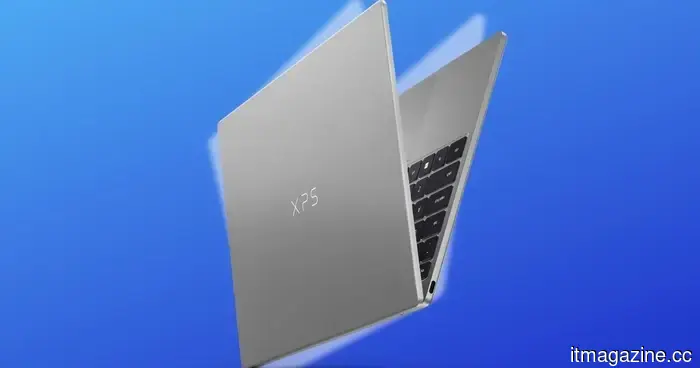 Dell introduces its slimmest and lightest XPS 13 priced at only $699 to compete with the MacBook Neo.
The Dell XPS 13 features a sharper 120Hz display, a backlit keyboard, quicker ports, and a biometric face scanning option to address the shortcomings of the MacBook Air.
Dell introduces its slimmest and lightest XPS 13 priced at only $699 to compete with the MacBook Neo.
The Dell XPS 13 features a sharper 120Hz display, a backlit keyboard, quicker ports, and a biometric face scanning option to address the shortcomings of the MacBook Air.
 AI is now focusing on uncovering historical mysteries and is already deciphering documents that are centuries old.
Researchers are utilizing AI to decipher ancient texts, damaged letters, and historical records that have posed challenges for human interpretation for hundreds of years.
AI is now focusing on uncovering historical mysteries and is already deciphering documents that are centuries old.
Researchers are utilizing AI to decipher ancient texts, damaged letters, and historical records that have posed challenges for human interpretation for hundreds of years.
US export restrictions are driving China's artificial intelligence chips to shift from GPUs to custom ASICs.
Excluded from Nvidia's top hardware, Chinese technology giants are developing specialized AI chips. Huawei is at the forefront, holding a 62% market share as the ecosystem shifts away from the Western model.