
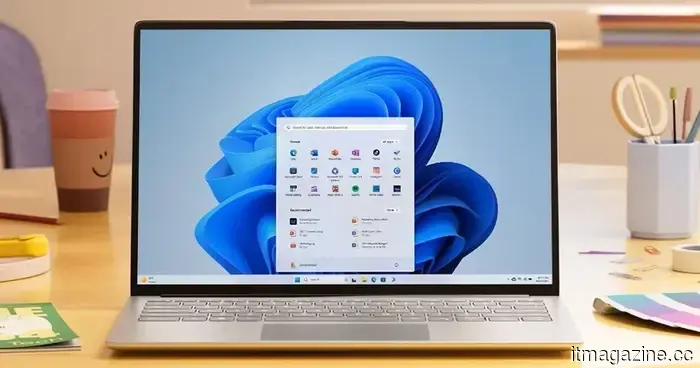
Windows 11 is finally tackling significant frustrations with the universal Search feature.
Partial terms can now identify compound file names regardless of their position, not just at the beginning.
If you’ve ever entered a file name into Windows Search but stopped partway through because you could only recall part of it, Microsoft has an update for you.
In its most recent Windows 11 Insider Preview build, Microsoft has incorporated a specific yet genuinely beneficial enhancement to the Windows Search feature for locating files. This adjustment makes one wonder why it took so long to implement.
What is Search by Substring and why is it significant?
Launched on May 29 to both the Experimental and Beta channels, this new feature is referred to as Search by Substring, and its functionality is quite straightforward.
Before this change, finding a file in Windows meant you had to input the beginning of its name. For instance, typing “april” wouldn’t reveal a file named MeetingNotesApril, simply because Windows was not searching within more complex file names.
Search by Substring rectifies that limitation. Now, if you type “april,” Windows will return files containing that string anywhere in the name—whether at the start, end, or middle.
The same principle applies to the content within files. If you type “status,” documents titled ProjectStatusReport will be immediately discoverable.
Is this truly a major development?
For anyone who organizes files with descriptive compound names—such as those working with documents, project folders, or any systematic file organization—the new Search by Substring feature is indeed quite significant.
The previous method required precise recollection of a file’s initial letters, which does not align with how human memory functions. This small adjustment has a disproportionately large impact on everyday usability.
The Search by Substring enhancement is accessible in the Experimental channel with Build 26300.8553 and in the Beta channel with Build 26220.8544. In the same update, Microsoft also introduced enhancements to the Start menu, including section-level toggles, a renamed Recommended section now labeled Recent, and resizing options for the Start menu itself.
For more than five years, Shikhar has been dedicated to making advancements in consumer technology clear and comprehensible…
Nvidia’s RTX Spark chip positions itself against the Mac Studio, with Asus and MSI being the first to seize the opportunity.
Nvidia has created a compact AI device aimed at competing with the Mac Studio. The competition for compact, high-performance desktops is intensifying, and Nvidia seems poised to challenge Apple’s dominance with its Mac Studio. At Computex 2026, MSI launched a new AI-driven mini PC called the MSI EdgeMesa N AI, powered by Nvidia’s latest RTX Spark platform. This launch indicates Nvidia’s ambitions to extend AI computing beyond conventional gaming desktops into compact creator and workstation machines. More significantly, it also illustrates how PC brands are aggressively adopting Apple’s increasingly popular strategy of powerful desktop capabilities within smaller, minimalist designs.
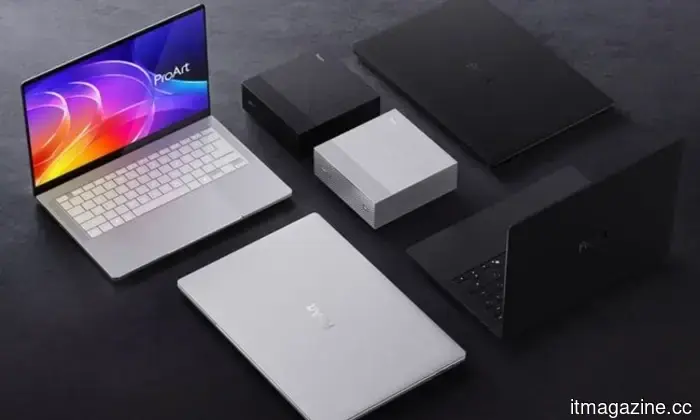
Asus equips its new ProArt P16 and P14 laptops with Nvidia’s robust RTX Spark processor.
The race in AI PCs has largely revolved around integrating more neural processing power into slimmer laptops. Asus is taking a different approach. Its new ProArt P16 and ProArt P14 creator laptops are designed around Nvidia’s RTX Spark platform, a chip package typically expected in workstations. This is precisely their aim. The new ProArt models are aimed at creatives, developers, and power users who increasingly desire desktop-level AI performance while remaining untethered from a desk.
Asus unveils the world’s first OLED esports monitor and a Color ePaper secondary display.
For years, gaming monitors have pursued one goal: achieving higher refresh rates. Asus has taken that pursuit to new heights with its announcement of what it claims to be the world’s first OLED monitor designed specifically for esports enthusiasts. Under the ROG branding, the new Strix OLED XG259QWPG Ace features a compact 24.5-inch display with an impressive 540Hz refresh rate, bringing the rich visuals of OLED technology to a category that has typically prioritized speed over image quality. However, that’s not the only innovative display Asus introduced. The company also revealed a color ePaper monitor intended for productivity, reading, and reducing eye strain. Although it may seem like an unusual pairing, both products indicate how display technology is evolving beyond traditional LCD screens.




Other articles
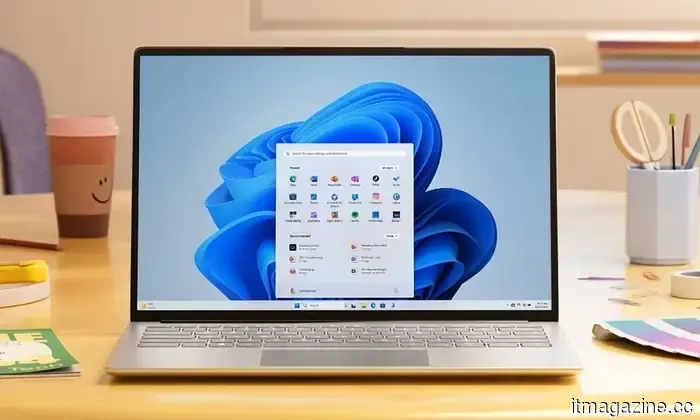
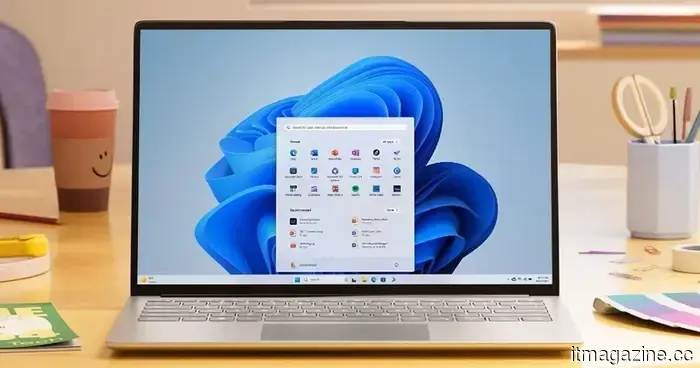 Windows 11 is finally tackling major frustrations with the universal Search feature.
The newest Insider Preview build of Windows 11 features a Search by Substring capability; for instance, entering "april" will yield MeetingNotesApril, while typing "status" will bring up ProjectStatusReport.
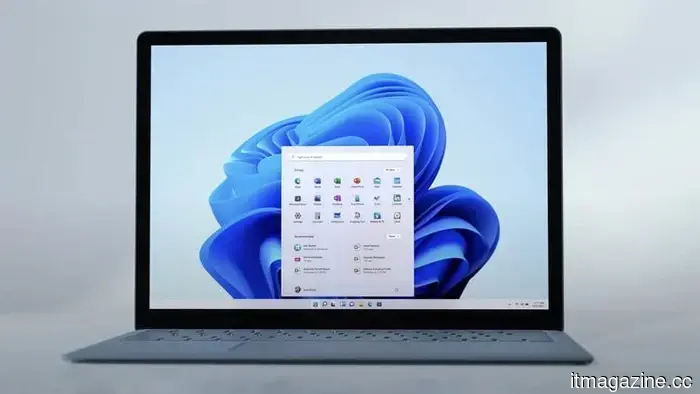
Windows 11 is finally tackling major frustrations with the universal Search feature.
The newest Insider Preview build of Windows 11 features a Search by Substring capability; for instance, entering "april" will yield MeetingNotesApril, while typing "status" will bring up ProjectStatusReport.
 Alienware's enhanced gaming monitors provide increased brightness and refresh rates, with prices beginning at $300.
Alienware's latest monitor lineup unveiled at Computex features brighter OLED screens, quicker refresh rates for ultrawide displays, and 240Hz QHD gaming options priced at $299.99, offering consumers enhanced options for both premium and standard display enhancements.
Alienware's enhanced gaming monitors provide increased brightness and refresh rates, with prices beginning at $300.
Alienware's latest monitor lineup unveiled at Computex features brighter OLED screens, quicker refresh rates for ultrawide displays, and 240Hz QHD gaming options priced at $299.99, offering consumers enhanced options for both premium and standard display enhancements.
 AMD's Radeon RX 9070 GRE boasts impressive capabilities for 1440p gaming, but the $549 price tag might prove to be a tough sell.
AMD's Radeon RX 9070 GRE has launched worldwide, showcasing impressive performance at 1440p. However, its price tag of $549 has led some gamers to believe it is too similar to the standard RX 9070.
AMD's Radeon RX 9070 GRE boasts impressive capabilities for 1440p gaming, but the $549 price tag might prove to be a tough sell.
AMD's Radeon RX 9070 GRE has launched worldwide, showcasing impressive performance at 1440p. However, its price tag of $549 has led some gamers to believe it is too similar to the standard RX 9070.
 AMD’s Radeon RX 9070 GRE makes bold promises for 1440p performance, but at $549, it might be a tough sell.
The AMD Radeon RX 9070 GRE has launched worldwide, delivering impressive performance at 1440p. However, its $549 price tag is causing concern among some gamers, who believe it is too similar to the standard RX 9070.
AMD’s Radeon RX 9070 GRE makes bold promises for 1440p performance, but at $549, it might be a tough sell.
The AMD Radeon RX 9070 GRE has launched worldwide, delivering impressive performance at 1440p. However, its $549 price tag is causing concern among some gamers, who believe it is too similar to the standard RX 9070.
 US export restrictions are driving China's artificial intelligence chips to shift from GPUs to custom ASICs.
Excluded from Nvidia's top hardware, Chinese technology giants are developing specialized AI chips. Huawei is at the forefront, holding a 62% market share as the ecosystem shifts away from the Western model.
US export restrictions are driving China's artificial intelligence chips to shift from GPUs to custom ASICs.
Excluded from Nvidia's top hardware, Chinese technology giants are developing specialized AI chips. Huawei is at the forefront, holding a 62% market share as the ecosystem shifts away from the Western model.
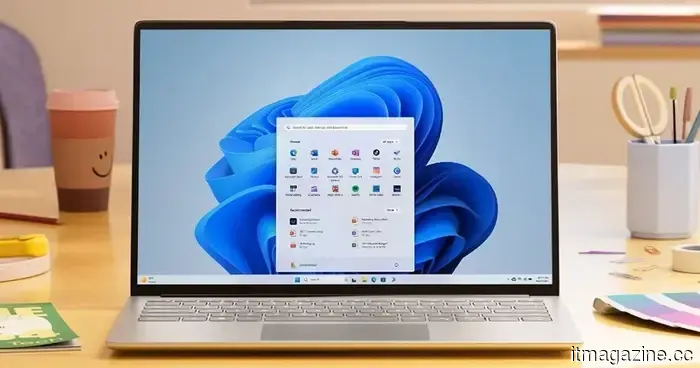 Windows 11 is finally tackling major frustrations with the universal Search feature.
The newest Insider Preview build of Windows 11 introduces a Search by Substring feature. For instance, you can type "april" to locate MeetingNotesApril, or "status" to find ProjectStatusReport.
Windows 11 is finally tackling major frustrations with the universal Search feature.
The newest Insider Preview build of Windows 11 introduces a Search by Substring feature. For instance, you can type "april" to locate MeetingNotesApril, or "status" to find ProjectStatusReport.
Windows 11 is finally tackling significant frustrations with the universal Search feature.
The newest Insider Preview build of Windows 11 features Search by Substring; for instance, typing "april" will reveal MeetingNotesApril, while entering "status" will bring up ProjectStatusReport.