
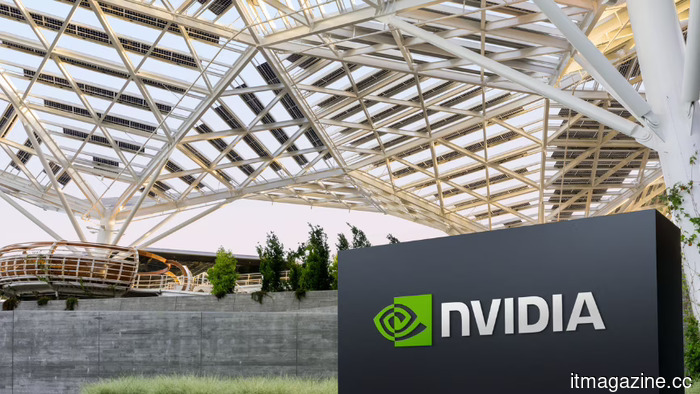
Nvidia is exploring options beyond China’s Unitree for its development of humanoid robots.
The inaugural robot in Nvidia's new research initiative features collaborations from three regions. The body is sourced from China's Unitree, the hands come from Sharpa, based in Singapore, while the computing core is supplied by Nvidia. After Jensen Huang's keynote address in Taipei on Monday, prior to the Computex trade show, the company announced its intention to engage with humanoid manufacturers in the United States, Europe, and South Korea. The robot unveiled this week is a standardized model of Unitree’s H2 robot, designed as a reference platform for academic researchers. This initiative aims to provide laboratories with a uniform piece of hardware to work with, instead of each one constructing or purchasing different machines.
Researchers from Stanford University and the University of California, San Diego, are among those who plan to utilize the robot, alongside Ai2 in Seattle, ETH Zurich in Switzerland, the Stanford Robotics Center, and UC San Diego’s Advanced Robotics and Controls Laboratory. Sales, mainly targeting research institutions, are expected to commence later this year.
This robot operates on Nvidia’s Isaac GR00T platform, which consists of the software and reference hardware stack the company has been developing for humanoid technology. This platform serves as the connective framework for these partnerships, rather than relying on a specific chassis.
Nvidia executives informed Reuters that the company aims to establish more partnerships similar to the one with Unitree and is looking to collaborate with robotics firms outside of China. However, they did not disclose the potential partners in the U.S., South Korea, and Europe, citing the confidentiality of the plans. This aspect of the announcement should be regarded with caution, as the intention to collaborate with unnamed companies across three regions signifies a direction rather than an established agreement.
The timing is noteworthy, as the announcement of the Unitree robot coincides with the company’s move towards a public listing, following its achievement of outselling competitors, including Tesla, in humanoid units last year. Unitree has emerged as a leading name within a Chinese sector that accounted for approximately 90 percent of the world’s humanoid robots shipped in 2025, making it both a strategic and somewhat uncomfortable partner for Nvidia. The firm delivered more humanoid units last year than any other competitor, including Tesla, and is preparing for a public listing in Shanghai alongside fellow company AgiBot.
This underlying tension reflects the broader strategy. Nvidia's proposition is that it offers the intelligence, regardless of the physical design, and engaging with partners from the U.S., Europe, and South Korea in addition to Unitree diversifies its investments across geopolitical regions, rather than being concentrated in China.
For a company whose chips are already intertwined with export-control issues, a robotics strategy that isn't reliant on a single country holds significant appeal.
At this point, the tangible outcome is one research robot featuring a Chinese body, Singaporean hands, and a Nvidia brain, which will be distributed to a list of specified universities later this year. The remainder represents a plan shared with a news agency by anonymous sources.
Other articles
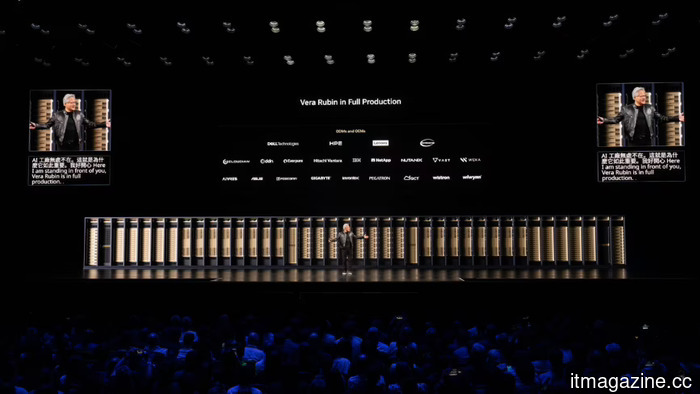 Jensen Huang kicks off Computex with the announcement of Vera Rubin entering production and a shift towards Windows PCs.
During his Computex keynote, Jensen Huang announced that Vera Rubin is now in full production and introduced RTX Spark, Nvidia's Arm-powered Windows device.
Jensen Huang kicks off Computex with the announcement of Vera Rubin entering production and a shift towards Windows PCs.
During his Computex keynote, Jensen Huang announced that Vera Rubin is now in full production and introduced RTX Spark, Nvidia's Arm-powered Windows device.
 AI surpasses nuclear weapons at the Shangri-La Dialogue defense summit.
High-ranking military leaders from Pakistan, the Netherlands, China, and the ICRC cautioned at the Shangri-La Dialogue that artificial intelligence is accelerating wartime decision-making beyond the capacity of human thought.
AI surpasses nuclear weapons at the Shangri-La Dialogue defense summit.
High-ranking military leaders from Pakistan, the Netherlands, China, and the ICRC cautioned at the Shangri-La Dialogue that artificial intelligence is accelerating wartime decision-making beyond the capacity of human thought.
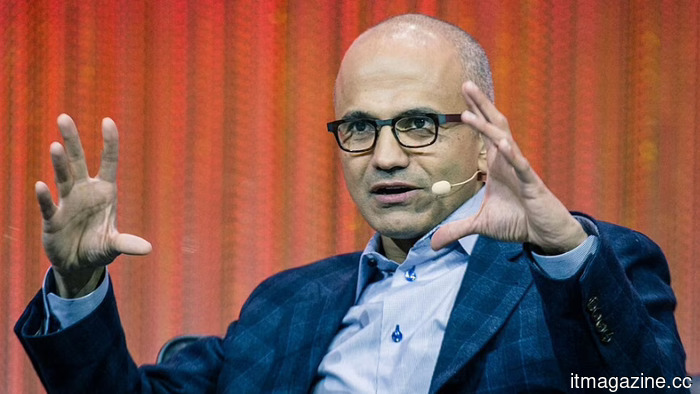 Nadella discreetly broke down Microsoft's leadership framework. The senior leadership team that managed the company for many years has been eliminated.
The CEO of Microsoft has substituted the senior leadership team with engineering groups modeled after startups. He conducts a personal review of AI metrics on a weekly basis.
Nadella discreetly broke down Microsoft's leadership framework. The senior leadership team that managed the company for many years has been eliminated.
The CEO of Microsoft has substituted the senior leadership team with engineering groups modeled after startups. He conducts a personal review of AI metrics on a weekly basis.
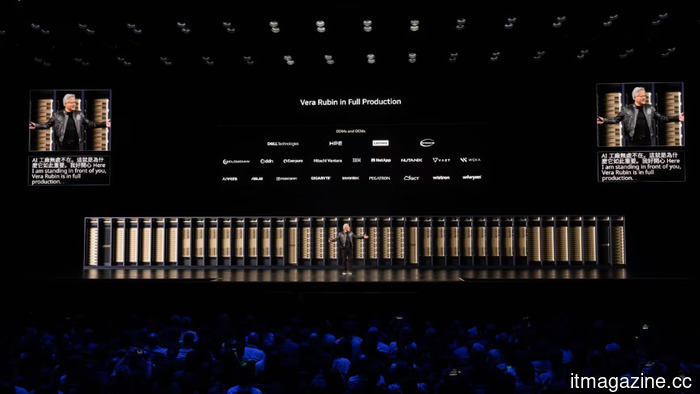 Jensen Huang kicks off Computex by announcing Vera Rubin is in production and the company's expansion into Windows PCs.
Jensen Huang announced during his Computex keynote that Vera Rubin is now in full production and introduced RTX Spark, Nvidia’s Arm-based Windows device.
Jensen Huang kicks off Computex by announcing Vera Rubin is in production and the company's expansion into Windows PCs.
Jensen Huang announced during his Computex keynote that Vera Rubin is now in full production and introduced RTX Spark, Nvidia’s Arm-based Windows device.
 LG Electronics has seen a fourfold increase this year, driven by a meeting with Jensen Huang regarding physical AI.
LG reached its 30% daily limit for two consecutive sessions following news that the chair of LG Group will meet with Nvidia's CEO to talk about robots and smart factories.
PLD Space increases its investment in the Kourou launch complex to €35 million.
PLD Space has announced plans to invest €35 million in its MIURA 5 launch facility at the Guiana Space Centre, with the inaugural flight still anticipated for 2026.
LG Electronics has seen a fourfold increase this year, driven by a meeting with Jensen Huang regarding physical AI.
LG reached its 30% daily limit for two consecutive sessions following news that the chair of LG Group will meet with Nvidia's CEO to talk about robots and smart factories.
PLD Space increases its investment in the Kourou launch complex to €35 million.
PLD Space has announced plans to invest €35 million in its MIURA 5 launch facility at the Guiana Space Centre, with the inaugural flight still anticipated for 2026.
Nvidia is exploring options beyond China’s Unitree for its development of humanoid robots.
Nvidia will collaborate with humanoid manufacturers in the US, Europe, and South Korea, as well as China's Unitree, beginning with a research robot intended for universities.