
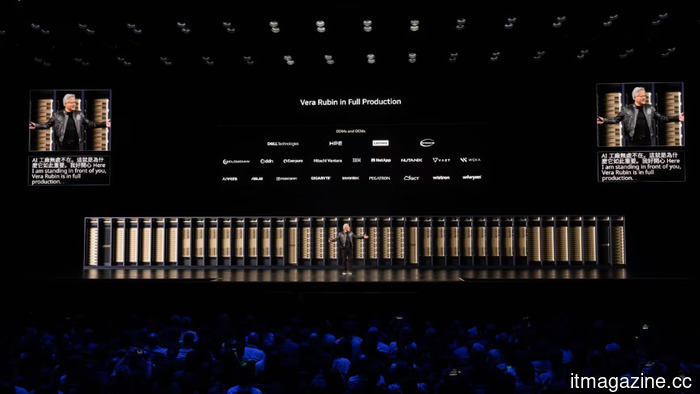
Jensen Huang kicks off Computex by announcing Vera Rubin is in production and the company's expansion into Windows PCs.
Nvidia’s CEO utilized the GTC Taipei keynote to announce the shipping of its upcoming platform and unveil RTX Spark, an Arm-based Windows device. Jensen Huang, who often takes the keynote slot, inaugurated Computex 2026 in Taipei on Monday with a speech that establishes the framework for the week. During his presentation, he made two significant announcements: the company's next-generation Vera Rubin platform is now in full production, and Nvidia is stepping into the realm of Windows PCs, a segment it has mostly overlooked until now. This keynote, held at the Taipei Music Center at 11am local time, also served as GTC Taipei, Nvidia's developer conference.
Huang stated that the Vera Rubin platform, which consists of the proprietary Vera CPU paired with the Rubin GPU, has achieved full production. He claimed that Nvidia now offers the lowest token cost globally for AI inference, attributed to the design of the chips and the rack as an integrated system. The more recent development, RTX Spark, is an all-in-one Arm-based Windows device.
Nvidia announced that this new machine includes a 20-core Grace CPU, created in collaboration with MediaTek, coupled with a Blackwell GPU featuring 6,144 CUDA cores, up to 128GB of memory, and what the company claims is one petaflop of AI performance. Jensen Huang also introduced three Windows products based on this technology: RTX Spark laptops, RTX Spark desktops, and a DGX Station for Windows, targeting developers who operate outside the Linux environment.
This marks an extension beyond the data center. Nvidia’s business thrives on the growth of AI, and nearly all of its announcements cater to companies investing billions in this area. Conversely, an Arm-based Windows PC addresses a market already contested by Intel, AMD, Apple, and Qualcomm. The keynote did not clarify whether RTX Spark will achieve significant sales, and the comparisons made during the presentation relied on Nvidia’s own benchmarks.
Huang returned to the theme of AI agents, describing them as workers in a workshop capable of reasoning, planning, and executing tasks. He noted that currently, they function merely as users of tools, implying that a substantial amount of Nvidia silicon will be necessary for them to evolve further. This perspective aligns with the rationale behind the Vera CPU, which the company claims is specifically designed for these workloads. Huang also mentioned Anthropic, OpenAI, SpaceX, and Oracle as among the initial recipients of this CPU.
The claim regarding Vera Rubin carries substantial weight. Huang referred to this platform as the largest product launch in Taiwan’s history, with each system consisting of nearly two million parts and developed with around 150 ecosystem partners on the island.
Announcing the full production milestone is crucial for Nvidia, allowing them to prepare for the next wave of data center orders. Declaring this from the Computex stage serves as a message to suppliers and investors as well as customers. Computex will continue throughout the week, and the upcoming announcements from both partners and competitors will take place within the context set by Huang on Monday. He has consistently referred to Taiwan as the center of the AI economy and positioned Nvidia as its primary supplier, with no indications in the keynote of any intention to change that narrative.
Other articles
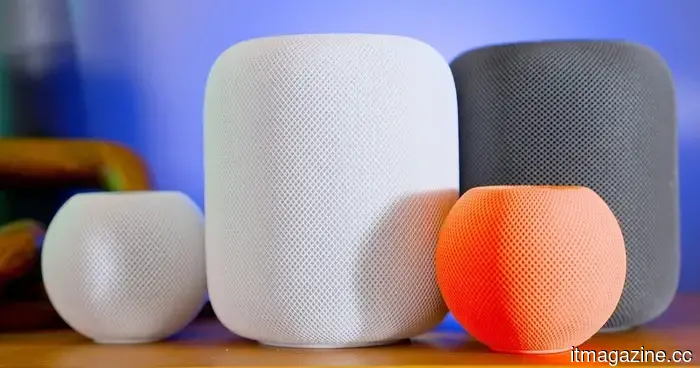 The new Apple TV and HomePod mini seem to be set for a launch this fall.
Apple is said to be readying updated Apple TV and HomePod mini devices featuring enhanced Siri and Apple Intelligence capabilities, anticipated to be launched this fall.
The new Apple TV and HomePod mini seem to be set for a launch this fall.
Apple is said to be readying updated Apple TV and HomePod mini devices featuring enhanced Siri and Apple Intelligence capabilities, anticipated to be launched this fall.
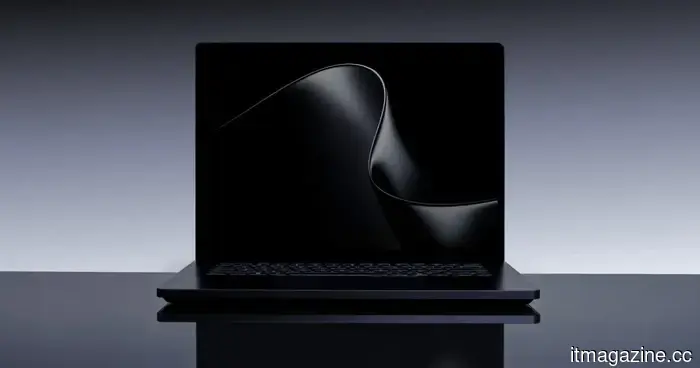 Microsoft unveils the Surface Laptop Ultra featuring Nvidia's RTX Spark chip.
Microsoft has just unveiled the Surface Laptop Ultra, its most powerful laptop to date. It is capable of handling intensive AI tasks entirely on the device without needing cloud support, and it can last all day on a single charge.
Microsoft unveils the Surface Laptop Ultra featuring Nvidia's RTX Spark chip.
Microsoft has just unveiled the Surface Laptop Ultra, its most powerful laptop to date. It is capable of handling intensive AI tasks entirely on the device without needing cloud support, and it can last all day on a single charge.
 Asus may face a chip disappointment with its upcoming ROG Ally gaming handheld.
A recently leaked ASUS handheld might offer a quicker chip, but the absence of one enhancement could leave gamers unsatisfied.
Asus may face a chip disappointment with its upcoming ROG Ally gaming handheld.
A recently leaked ASUS handheld might offer a quicker chip, but the absence of one enhancement could leave gamers unsatisfied.
 AI is now focusing on uncovering historical mysteries and is already deciphering documents that are centuries old.
Researchers are utilizing AI to decipher ancient texts, damaged letters, and historical records that have posed challenges for human interpretation for hundreds of years.
AI is now focusing on uncovering historical mysteries and is already deciphering documents that are centuries old.
Researchers are utilizing AI to decipher ancient texts, damaged letters, and historical records that have posed challenges for human interpretation for hundreds of years.
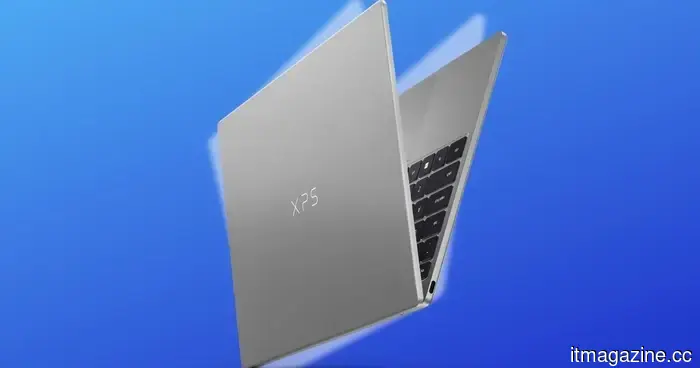 Dell introduces its slimmest and lightest XPS 13 priced at only $699 to compete with the MacBook Neo.
The Dell XPS 13 features a sharper 120Hz display, a backlit keyboard, quicker ports, and a biometric face scanning option to address the shortcomings of the MacBook Air.
Dell introduces its slimmest and lightest XPS 13 priced at only $699 to compete with the MacBook Neo.
The Dell XPS 13 features a sharper 120Hz display, a backlit keyboard, quicker ports, and a biometric face scanning option to address the shortcomings of the MacBook Air.
 Nvidia is exploring options beyond China’s Unitree for its development of humanoid robots.
Nvidia will collaborate with humanoid manufacturers in the US, Europe, and South Korea, as well as China's Unitree, beginning with a research robot intended for universities.
Nvidia is exploring options beyond China’s Unitree for its development of humanoid robots.
Nvidia will collaborate with humanoid manufacturers in the US, Europe, and South Korea, as well as China's Unitree, beginning with a research robot intended for universities.
Jensen Huang kicks off Computex by announcing Vera Rubin is in production and the company's expansion into Windows PCs.
Jensen Huang announced during his Computex keynote that Vera Rubin is now in full production and introduced RTX Spark, Nvidia’s Arm-based Windows device.