
In China, low-cost sodium batteries are now achieving performance levels comparable to those of Tesla.
A commercial sodium-ion battery currently being utilized in China is entering a competitive space similar to Tesla's, increasing the pressure on lithium-ion batteries' cost benefits.
Researchers examining Hina’s cells discovered consistent performance across a broad sample, impressive power capacity, and a design that mirrors essential elements found in Tesla batteries. While the low-cost sodium battery still has challenges to overcome, notably in charging under freezing conditions, it indicates a more affordable option for electric vehicles (EVs), grid storage, and commercial vehicles that do not require optimal driving range.
For car manufacturers, the supply-chain aspect could be as significant as the performance outcomes. Sodium is readily available and less expensive to procure compared to lithium, which may help battery producers avoid some of the price fluctuations and supply challenges that have affected lithium-ion manufacturing.
How does it compare to Tesla's performance?
The Hina cell was notable because researchers did not just test a single remarkable sample. They evaluated 120 cells using impedance spectroscopy and found strong uniformity across the results.
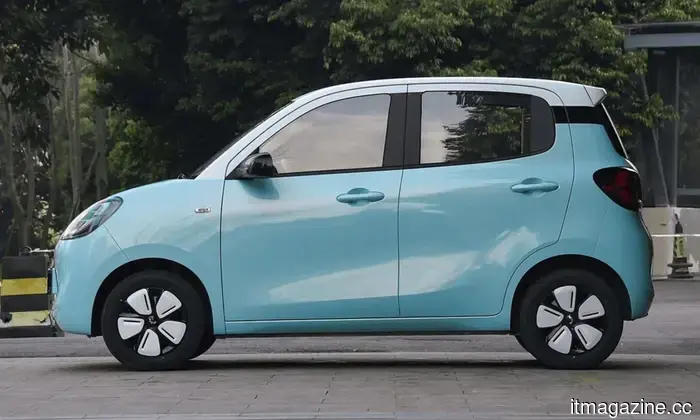
SAIC-GM-Wuling
Such consistency is a crucial indicator for practical production. A cell that demonstrates strong peak performance is less valuable if it's not reproducible in factories, especially for vehicles or grid systems where large packs require reliable behavior.
The team also assessed the cells under various currents and temperatures ranging from minus 20 degrees Celsius to 45 degrees Celsius, using X-rays and a teardown to examine the internal structure. The outcome was a commercial sodium cell displaying notable power characteristics for an early-stage product in this sector.
How does sodium affect the cost dynamics?
The teardown revealed another cost advantage within the cell. Its cathode composition includes sodium, copper, nickel, iron, and manganese, with copper arranged in a way that could decrease reliance on more expensive metals like nickel and cobalt.
Additionally, the cell features a tabless double-aluminum design. Unlike lithium, sodium does not interact with aluminum in the same manner, allowing manufacturers to use aluminum foil on both sides of the cell instead of depending on copper for the anode current collector.
EV Charging Unsplash
This structural choice could reduce not only material costs but also simplify the current collector setup by utilizing cheaper aluminum. If sodium-ion cells continue to improve without relying heavily on costly metals, they could pose a significant challenge to lithium-ion batteries in cost-sensitive segments.
What needs to improve next
The primary shortcoming remains cold-weather charging. Researchers found that charging at low temperatures continues to be problematic, indicating that these cells would require appropriate thermal management before they can support frequent charging below 0 degrees Celsius.
Energy density also presents an issue. Currently, sodium-ion cells typically do not match the performance of top lithium-ion batteries in terms of long-range EVs, meaning Tesla's primary advantage in building vehicles centered around maximum driving range remains unchanged.
However, there is potential for growth. If Hina and other battery manufacturers can enhance cold weather charging, improve hard-carbon anodes, and advance electrolyte chemistry, sodium-ion batteries could play a significant role in grid storage, shorter-range EVs, and commercial vehicles, where the benefits of lithium may not justify the added cost.
Other articles
 Tesla's main competitor introduces self-driving capabilities with comprehensive crash coverage at a significantly lower price.
BYD is promoting its God’s Eye assisted-driving system by offering a crash-cost coverage guarantee and a 12,000 yuan upgrade fee, which is lower than Tesla's assisted-driving package.
Tesla's main competitor introduces self-driving capabilities with comprehensive crash coverage at a significantly lower price.
BYD is promoting its God’s Eye assisted-driving system by offering a crash-cost coverage guarantee and a 12,000 yuan upgrade fee, which is lower than Tesla's assisted-driving package.
 As AI proliferates with rapid responses, studies indicate that the essence of the internet is fading.
A recent joint research effort by UC Riverside scientists reveals that as an increasing number of individuals rely on AI for information, the internet is diminishing in the emotional richness and human reasoning that initially made it valuable to explore.
CoStar acquires Zonda for $800 million to finalize its real estate data empire.
CoStar has purchased the new-home data platform Zonda for $800 million in cash, completing the final piece of a real estate information empire established through over 40 acquisitions totaling $7.3 billion.
As AI proliferates with rapid responses, studies indicate that the essence of the internet is fading.
A recent joint research effort by UC Riverside scientists reveals that as an increasing number of individuals rely on AI for information, the internet is diminishing in the emotional richness and human reasoning that initially made it valuable to explore.
CoStar acquires Zonda for $800 million to finalize its real estate data empire.
CoStar has purchased the new-home data platform Zonda for $800 million in cash, completing the final piece of a real estate information empire established through over 40 acquisitions totaling $7.3 billion.
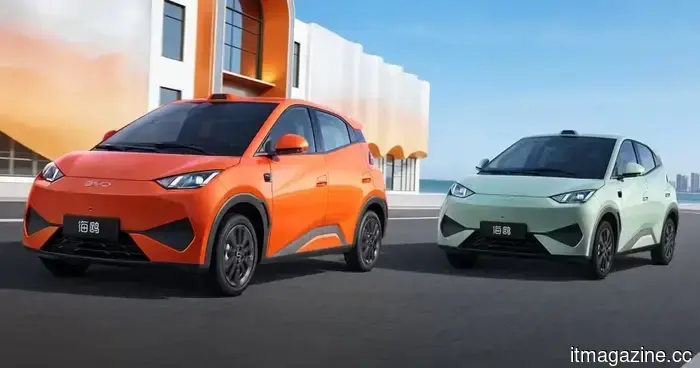 Tesla’s biggest competitor introduces self-driving technology with comprehensive crash coverage at a much lower price.
BYD is promoting its God’s Eye assisted-driving system by offering a crash-cost coverage guarantee and a 12,000 yuan upgrade fee, which is lower than Tesla’s assisted-driving package.
Tesla’s biggest competitor introduces self-driving technology with comprehensive crash coverage at a much lower price.
BYD is promoting its God’s Eye assisted-driving system by offering a crash-cost coverage guarantee and a 12,000 yuan upgrade fee, which is lower than Tesla’s assisted-driving package.
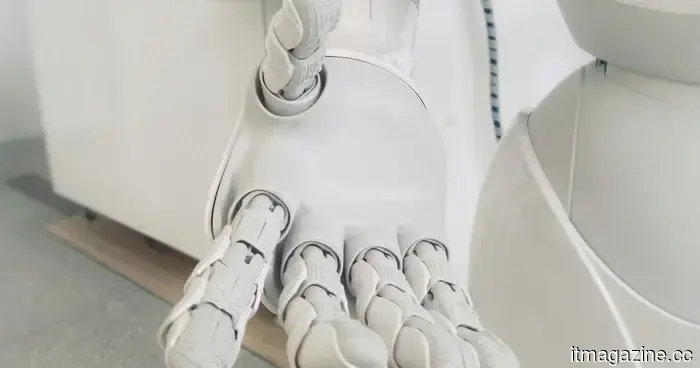 Similar to humans, this robot is capable of hearing music and can play it after only two minutes of self-training.
USC's Musician Hand learned to play the piano by ear in just two minutes through a process resembling infant motor babbling.
Similar to humans, this robot is capable of hearing music and can play it after only two minutes of self-training.
USC's Musician Hand learned to play the piano by ear in just two minutes through a process resembling infant motor babbling.
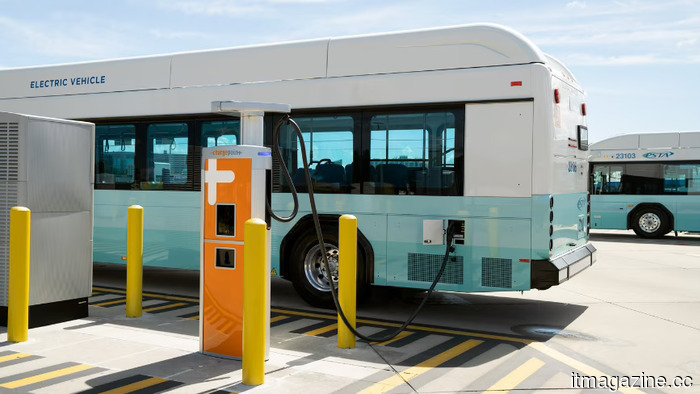 ChargePoint partners with Powers Parts to provide charging solutions for transit electric buses.
ChargePoint and Powers Parts have teamed up to provide charging solutions and fleet telematics to transit agencies operating PhoenixEV buses, filling the service void created by Proterra's bankruptcy.
ChargePoint partners with Powers Parts to provide charging solutions for transit electric buses.
ChargePoint and Powers Parts have teamed up to provide charging solutions and fleet telematics to transit agencies operating PhoenixEV buses, filling the service void created by Proterra's bankruptcy.
In China, low-cost sodium batteries are now achieving performance levels comparable to those of Tesla.
A commercial sodium-ion battery being developed in China is approaching Tesla-level performance, utilizing less expensive materials and a double-aluminum design that might compete with lithium-ion batteries in terms of cost for electric vehicles and grid storage.